
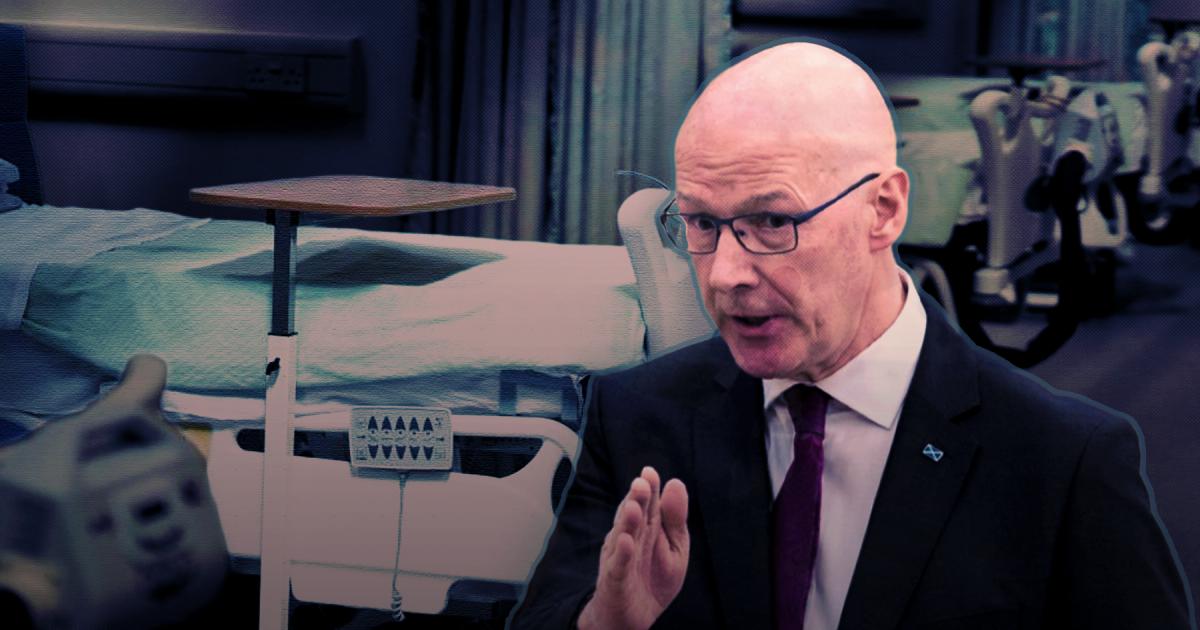
District general hospitals provide a range of local services, including planned and emergency surgery, with many particularly important to patients in rural communities who would otherwise face long journeys for treatment.
Dr Bredski warned that hospitals could struggle to retain enough surgeons and anaesthetists, putting the future of local services at risk.
Her comments come as Scotland’s consultants and other senior doctors prepare to vote on industrial action from Monday, amid a dispute with ministers over pay and working conditions.
The ballot, which also covers specialist, associate specialist and specialty (SAS) doctors, will run from October 26 to December 7.
Speaking to The Herald, Dr Bredski said moving planned orthopaedic surgery, including hip and knee replacements, away from smaller hospitals could have serious consequences.
“The minute you take out elective surgery from a district general, it has enormous knock-on effects on everything else,” she said, “If you’re not doing the elective work, that number of surgeons will decrease. You find yourself without enough surgeons to cover an on-call rota, so you can’t do emergency procedures either.”
She warned that losing surgeons could also mean fewer anaesthetists, making it harder to staff intensive care units and provide other specialist treatments.
“It just leads to the small death of the district general,” she said.
Her warning follows The Herald’s revelation of leaked plans for a major shake-up of Scottish orthopaedics.
Joanna Bredski, chair of BMA Scotland’s Consultant Committee. (Image: BMA)
The draft five-year blueprint proposes concentrating planned operations in specialist regional centres, with patients expected to travel further for treatment.
It also envisages longer operating hours, six-day working and potential changes to consultants’ terms and conditions.
Dr Bredski accused ministers of hypocrisy over proposals to change consultants’ working arrangements while refusing to negotiate with the BMA over pay and conditions.
“It’s fascinating and hypocritical that they’re putting out documents saying they want to change consultants’ terms and conditions, and yet they’re totally refusing to talk to us and negotiate with us about our working lives and pay,” she said.
She also questioned whether doctors had been properly consulted on the orthopaedics plans.
“If it were the case that patients who want to travel are happy to travel and are able to take up a space that’s available somewhere else in the country, perhaps that’s a good idea,” she said.
“But if it’s the case that we’re removing elective orthopaedics from district general hospitals, that is really bad.”
READ MORE:
The Scottish Government is also planning to reduce Scotland’s 14 territorial health boards to two, covering the east and west of the country.
Asked whether doctors had been consulted about the wider shake-up, Dr Bredski replied: “No consultation whatsoever.”
She added: “It’s completely unacceptable. No consultation with the unions. No consultation with the royal colleges. No consultation with clinicians. No consultation with patients or patient groups. It’s just completely not on.”
Dr Bredski, who works as a consultant in NHS Borders, said she was personally worried about what the changes could mean for smaller health boards.
“I am afraid for the future of my service,” she said.
“I’ve invested over 10 years as clinical lead of my service, and the idea that that decision could be made about my service without me being involved frightens the life out of me.”
She stressed that she was speaking about her own experience, rather than on behalf of NHS Borders.
“The further away senior decision makers are from frontline services, the more difficult it is to make sure that services are protected and quality is improved,” she said.
Dr Bredski also accused the Scottish Government of refusing to negotiate over pay and working conditions.
She said the Health Secretary had kept BMA representatives waiting around three months for a meeting before ruling out talks on either issue.
“The Scottish government is completely refusing to talk to us either about working lives or about pay,” she said.
“We don’t think we’ve got any other choice but to move towards a ballot for industrial action. We think it’s the only way that the Scottish government is actually going to come back to the table and talk to us.”
Dr Bredski said the BMA had enjoyed a better relationship with the previous Scottish Government.
“I think we enjoyed a better relationship with the previous government than we do with the current one,” she said.
She added that relations had become more difficult even before the latest NHS reforms were announced, with doctors feeling that major changes were being pushed through without their involvement.
She said doctors are currently struggling with mounting workloads, staffing shortages and burnout.
A BMA wellbeing survey found a quarter of senior doctors considered their workloads unmanageable, more than half struggled with work-life balance and around two-thirds said work was damaging their wellbeing.
“I’m hearing stories from around the country of people just with really, really impossible jobs and who are going under, and burnout is endemic,” she said.
She added that consultants were working, on average, at least four extra hours each week without pay.
The BMA is publishing new safe-working guidance to help senior doctors understand their responsibilities and avoid taking on excessive work to compensate for organisational failures.
“Many doctors think that if they’re asked to do more work, they just have to say yes,” Dr Bredski said.
She warned patients were already losing out because of exhausted doctors and staffing shortages.
“Many patients are not getting the service that would be possible if we had enough senior doctors, and we had senior doctors who weren’t burnt out across the board,” she said.
The Scottish Government has defended its NHS reforms, arguing that reducing duplication between health boards will free up resources for frontline services and improve access to treatment.
Ministers say the proposed changes to orthopaedic services are intended to cut waiting times and make better use of specialist capacity across Scotland.
The Scottish Government has been contacted for comment.