
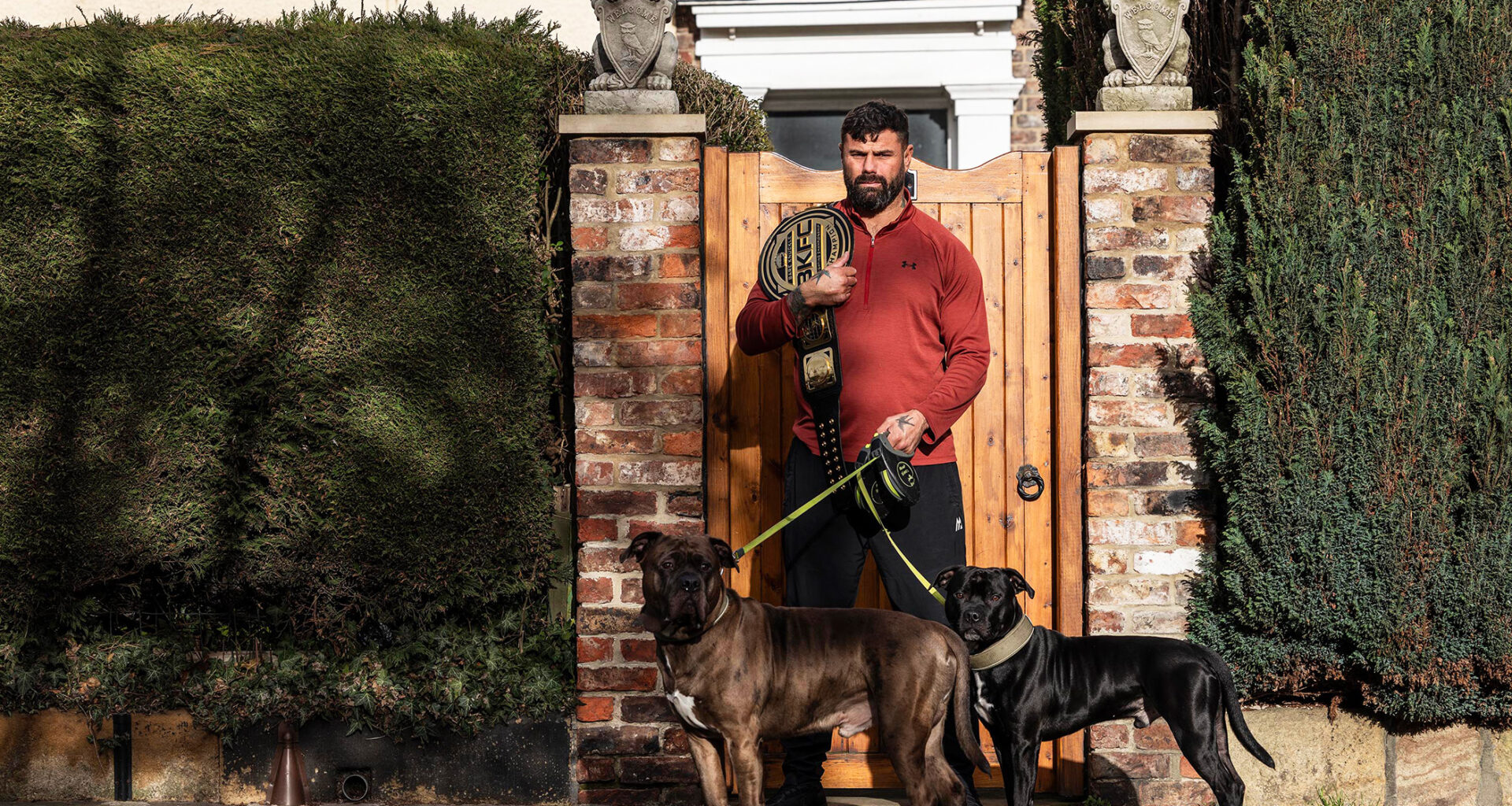
‘Really, deep down, it’s a man’s instinct to want to protect and fight, but you can’t do that any more,” says bareknuckle boxer Mick Terrill. “Back in the day, if someone had an affair with your wife, you chinned them. Now, if your wife’s had an affair, it could be your best pal doing it, but if you chin them, you’re in the wrong. It’s not right. Men know they’re meant to have a fight and they can’t. Then they see this, and it’s the closest thing to a gladiatorial fight. They see the blood and the splatter. It excites people. Men wish they could do it.”
I kept thinking about Dr Jennifer Melfi, Tony Soprano’s shrink in The Sopranos, while writing this story; how she’s faced with two men: Tony, whose physical dominance commands respect from those around him, and her own psychiatrist, clutching a water bottle, whose authority comes from intellect and credentials. Which version of manhood do we prefer? Which do we need?
In March, I watched my first bareknuckle fight. It was at Newcastle’s main indoor arena, with a crowd of thousands. (I can’t get an exact figure, though I’m told it was about 8,000; a bareknuckle event at Manchester Arena in September drew a crowd of almost 16,000.) Similar bareknuckle events are happening pretty much monthly now in the UK. It claims to be the country’s fastest-growing combat sport.
Some of it is predictable: the crowd in Newcastle was mostly hard-looking men. Some is less predictable: many women, dressed up for a night out, and children too (one dad had kitted his three young sons out in bareknuckle merch). The crowd sang Sweet Caroline. Two fights stayed with me.
One involved Danny Wall, a local boxer having his first bareknuckle fight. In the first round, he looked confused, his face covered in blood. He was gesturing to the referee, who stopped the fight. Wall sat on the canvas, his legs apparently limp. He seemed in shock at what had just happened. The beating, I mean. He was helped out of the ring.
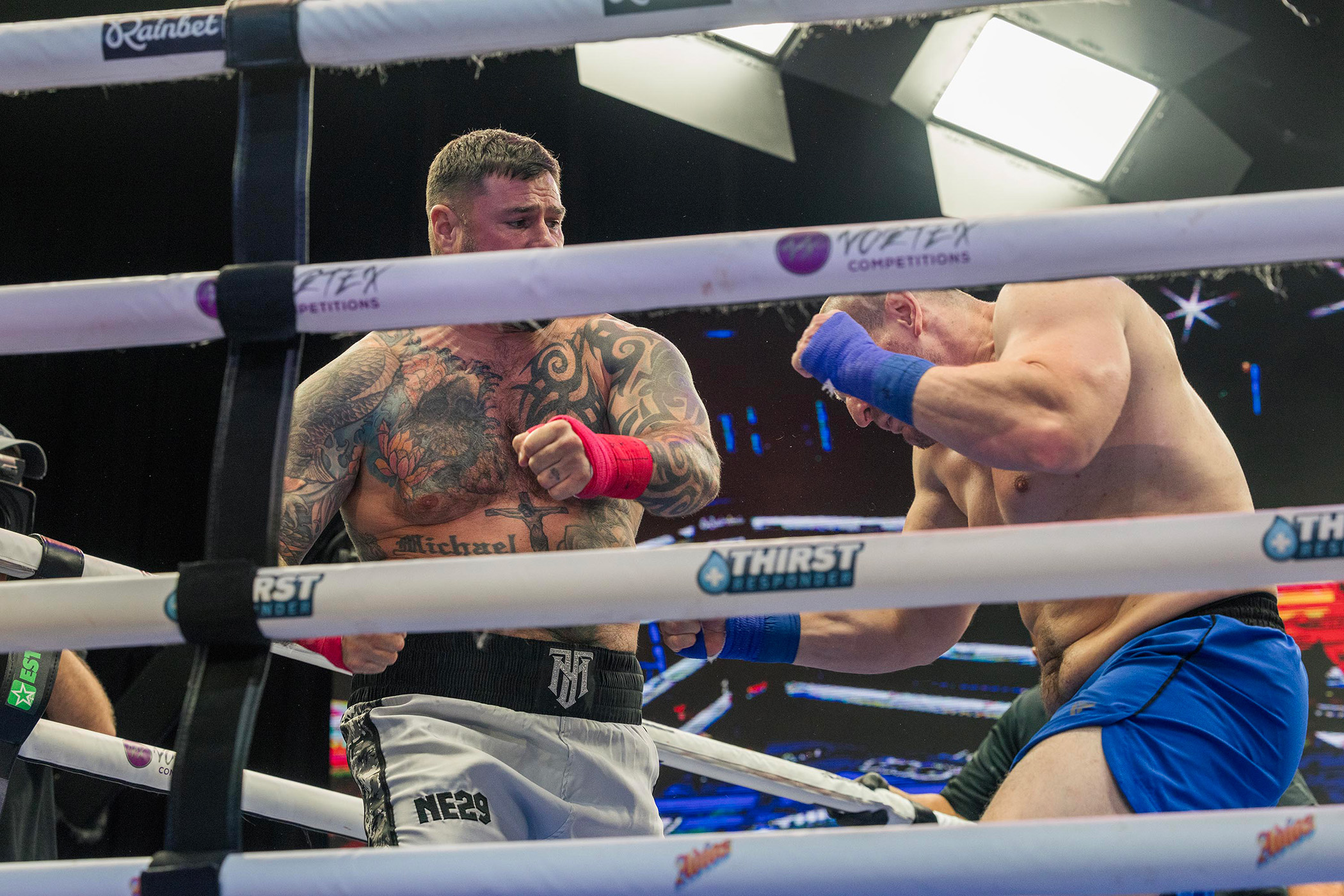
Mick Terrill, left, fighting Florian de la Motte at the Indigo at the O2 in London
The other was Glasgow’s Jay McFarlane, who fought former world heavyweight bareknuckle champion Terrill, a local fighter from North Shields, a few miles along the Tyne. It was the headline fight. After 53 seconds, McFarlane gestured to the referee, panic on his bloodied face. The fight was stopped. Frustrated fans left, and some scrapped with each other instead.
Later that night, McFarlane said in a video on Instagram: “I’ve not been completely honest over the last few years in regards to my medical situation. I’ve had nine procedures done on my right eye that I lost vision in and none have been successful. So I can only see out of my left side. I was caught with an inside that scratched my eye, and for 20 minutes there, I just had complete darkness and I couldn’t see.
“It’s why I had to be escorted to the medics. I’m not one for being scared or shitting myself, but for 20 minutes there, my arsehole collapsed. Thankfully, thank God, I’ve now got some vision back and I can see. It’s hard to say this, but I now know that that was my last roll of the dice. I can’t go through that again.”
I messaged McFarlane, but didn’t hear back. I messaged the event’s organiser, the Bare Knuckle Fighting Championship (BKFC), which is based in Philadelphia and co-owned by former Ultimate Fighting Championship (UFC) champion and would-be politician Conor McGregor (BKFC’s founder, David Feldman, said last month he expects to McGregor will fight bareknuckle after one more UFC fight), but I didn’t hear back.
Six months after that night in Newcastle, though, I’m sitting with Terrill at his gym in Percy Main, a tough part of North Tyneside. Throughout 2026, I’ve visited his gym, watched his fights, tried to understand bareknuckle’s rise. I ask him about the panic I perceived in Wall and McFarlane. He says they’re both experienced boxers, but bareknuckle’s “a different thing. It’s like being hit with a bat.”
I never intended to focus on Terrill, I was looking for a way in. I spoke first to his coach, Andy Davison, in December 2025 at the gym, a flat-roofed building with a sign on the front: “Percy Main community sports club.” Inside, there’s a ring, heavy bags. I asked Davison why boxers fight bareknuckle. “I think they just want to test themselves,” he said.
Why do spectators like it?
“Bareknuckle is boxing in its purest form,” he said. “It’s like a game of chess; you can’t afford to make a mistake.” He’s coached several bareknuckle world champions and says Terrill’s gym is the biggest bareknuckle stable in the UK. Fighters travel to train with Davison. He gets flown around the world.
He was wary, though. Here’s me, a writer from one of the softest parts of Newcastle, doing a piece for The Observer, shining a spotlight (from an angle I choose) on a sport that isn’t really for the likes of me, won’t be understood by the likes of me, potentially drawing the kind of attention that jeopardises its future. The wariness is justified.
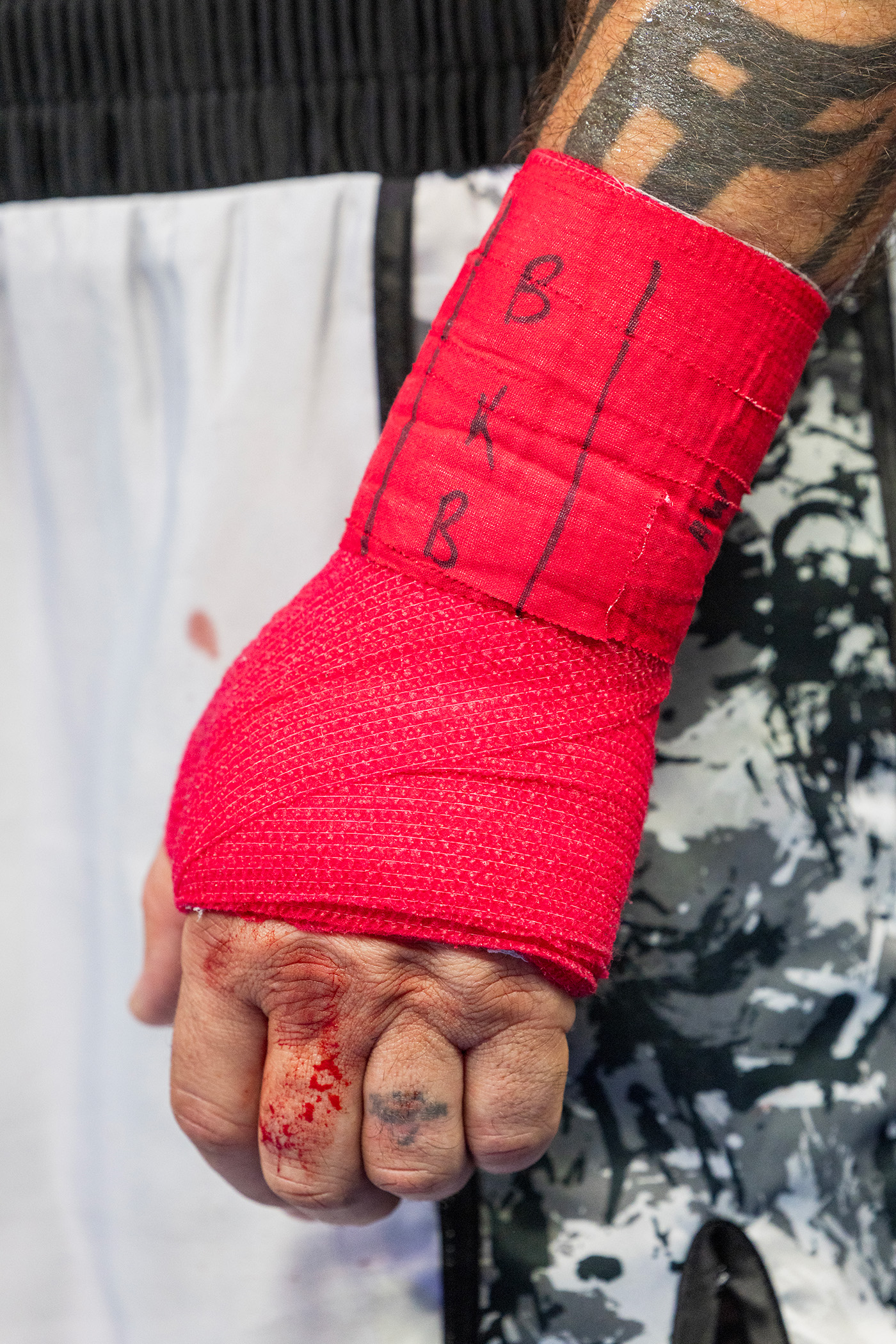
Terrill’s bloodied hand during the Anarchy In the UK event
“With a bare hand, you get more cuts, grazes, bumps, broken hands,” he said, explaining the difference between bareknuckle and gloved boxing, “but you get more brain trauma with a boxing glove on because you can take so many more shots.” Others in the sport say the same, but I never find sufficient evidence to feel completely assured.
The argument is there are fewer rounds – usually five – in bareknuckle, so fewer impacts because there’s less time (most bareknuckle fights I see finish in the first round), and the damage to hands in bareknuckle fights naturally limits the punching, unlike gloved boxing, which cushions hands and enables fighters to keep swinging hard for more rounds.
A figure from a 2021 study of 141 bareknuckle bouts suggested that the eight cases of “concussions with symptoms”, or 2.8%, might be rarer than in gloved boxing, but speaking to the BBC earlier this year, consultant neurosurgeon Peter Hamlyn said he couldn’t say what damage it’s doing, because the data won’t emerge until later in athletes’ lives.
Regardless, to the naked eye, bareknuckle boxing looks much more savage: every fighter is going for a quick knockout – faces smashed, lacerations leaking blood. Hence squeamishness from people such as me. “Does it paint it in a good light?” Davison asked me of what I’m writing. “Is it good or bad?” Neither, I told him. I honestly don’t know.
The first time I interview Terrill is in February at his gym. He’s sweeping the ring with a brush, getting ready to spar. He says there’s blood on the canvas.
“Which soft cunt’s bled all over the ring?” shouts Davison to the other fighters. He’s joking. Terrill says they’ll have to wash the canvas tonight. I ask if he’ll do it.
“Nah, me wife,” he says.
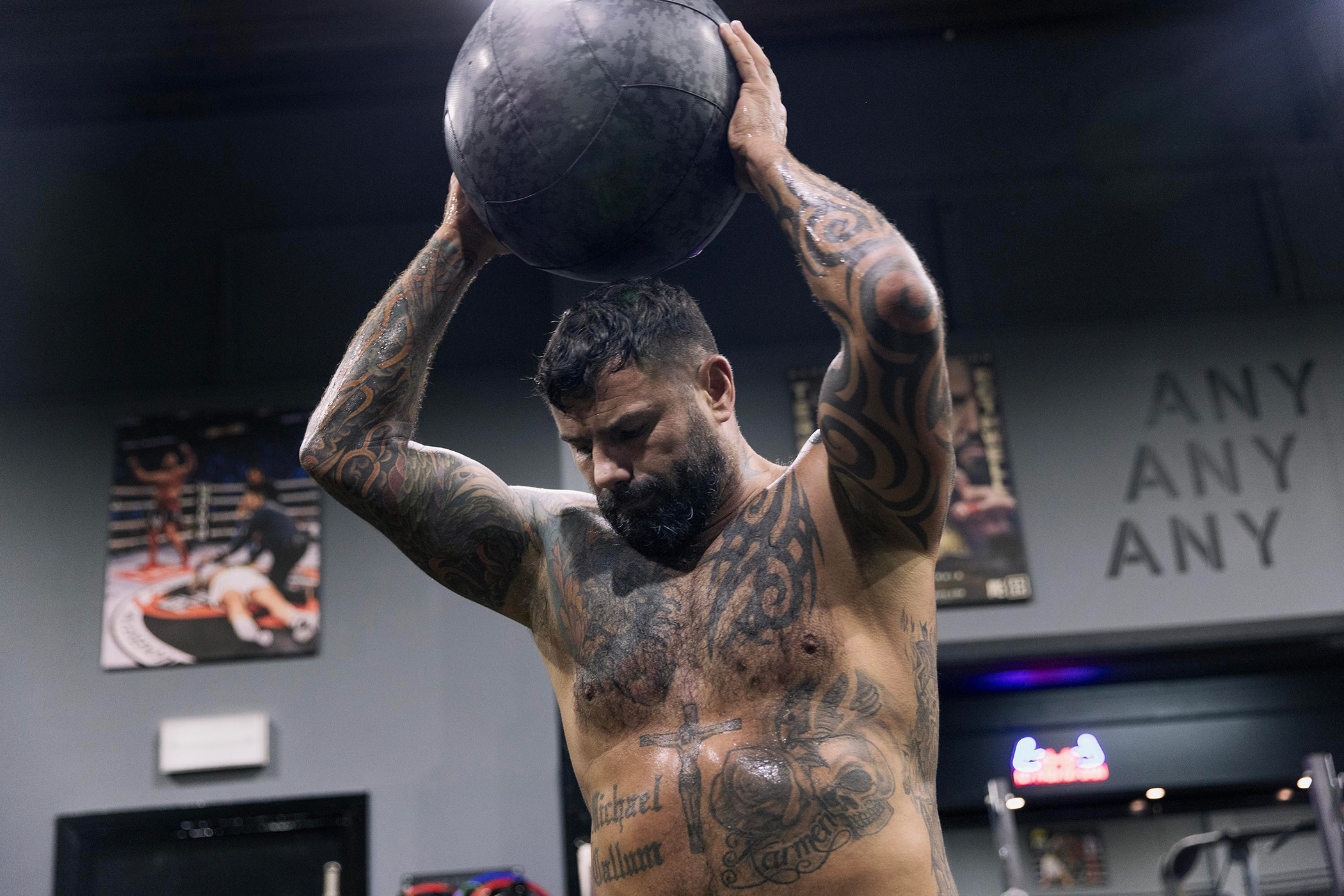
He wraps his hands, puts gloves on. They don’t train bareknuckle. For the next 10 minutes, with Davison looking on, he spars with a massive man with a shaved, tattooed head who’s come from Scotland. Terrill hits him in the face. The Scot has to step out the ring, steam rising from his body, blood dripping from his nose.
Afterwards, I sit with Terrill, 43, at a desk in his office at the back of the gym. There’s a print of Leonardo da Vinci’s The Last Supper on one wall, posters from his fights in the US on another. Behind him is a whiteboard of building sites he provides security for, one of several businesses he operates. He also runs fight nights in a nearby sports centre.
“Don’t make me look stupid,” he says a few times. He does say some things I could make sound stupid – including politically incorrect stuff – but I also get the impression he’s happy to be underestimated. He’s not stupid. He is massive.
He’s 6ft 3in and, though his weight fluctuates, his website says he’s 19st (120kg). It’s hard to imagine going through life having the upper hand on almost everyone you meet, whether through intellect or beauty or being hard. I ask if it feels like a superpower.
“It’s the worst thing in the world when people find out you can fight,” he says, “because it changes their perception of you. You can see them licking your arse.”
I ask about a photo on the gym wall of him lying flat on his back after being knocked out by American Ben Rothwell in Philadelphia in January 2025.
“It’s important when you train the youth” – his gym’s used by youngsters and adults for pad work, drills and fitness – “that they know you’re not always going to get your own way, and if you don’t get your own way, you’ve got to get back at it.
“I think there’s a little depression going around these days. I think people think life’s going to be a bed of roses, but it’s not. Every now and then, you get knocked down and you have to pick yourself up.”
I ask if he thinks people feeling depressed about life is partly a lack of resilience.
“In today’s society, people have got high expectations,” he says. “I grew up in the 80s and my expectation of life was: it’s going to be hard.”
The gym’s motto is in neon on the wall: “No soft cunts,” Terrill says. “It doesn’t matter what injury you’ve got in this gym, you’ll get no sympathy.” He came up with the motto. “That’s what your mam and dad used to say when you were kids: stop being soft. When you’re in a fight, you can’t just give up. I’ve seen fights where people just stop but get hit five more times. So you try to ingrain in them: keep going, keep going. That’s all it is. Just don’t be soft. When you get softness, you get anarchy.”
“Anarchy in the UK,” it says on the promo for his next fight. He’s switched to Bare Knuckle Boxing (BKB), another US bareknuckle promoter. He’s top of the card again, this time at the Indigo at the O2 in London in July. The main fights are streamed by Vice TV and TalkSport. BKB has also partnered with TikTok, which streams the preliminary fights. (BKB has said it is trying to develop an audience among Gen Z and Gen Alpha, and the tail end of millennials.)
At the Indigo, there’s a crowd of about 1,300, who sing along to Sex on Fire by Kings of Leon. Amir Khan, former world champion boxer, is ringside, commentating. The BKB ring is a small triangle – the “Trigon” – that gives fighters nowhere to hide. “The smallest fighting surface in combat sports,” says MC Kody Mommaerts, who also announced at last December’s fight between British former world heavyweight boxing champion Anthony Joshua and YouTuber Jake Paul – a sign of the money being put into bareknuckle.
I go backstage and speak to staff, including medical staff. I see fighters having checks before and after the bouts. (I emailed BKB to ask who regulates bareknuckle boxing in the UK but it declined to reply. I’m told by others that the US-based International Sport Karate and Kickboxing Association acts as regulator in the UK.)
I say hello to Terrill, who’s about to have a quick nap before his fight. In the arena, I watch Aaron Chalmers (formerly of Geordie Shore) beat Jack Fincham (formerly of Love Island), which sounds silly – like it’s a novelty fight – but they’re not silly: they’re serious fighters. Their bout is bloody and brutal. It’s stopped in the first round, blood all over Fincham’s face.
Another fighter on the card is Will Dermietzel. In September 2025, he fought Jordan Tompkins. Their fight was stopped when Dermietzel’s punch caused Tompkins’s nose to disappear into his head. His face caved in. Dermietzel said in November that he was in touch with Tompkins, who he thought had undergone “a few surgeries” at that point. “The pain, I can’t even begin to understand how that would feel,” said Dermietzel.
When I tell Terrill it’s the worst thing I’ve seen in bareknuckle, he says: “I mean, I’ve seen that in Thai boxing as well, someone getting elbowed in the face and their nose disappears.” He says Thai boxing’s the toughest sport he’s done.
Terrill’s fight is the last of the night. His opponent is Florian de la Motte, a fighter from Cologne in Germany, whose Instagram profile says: “The happiest German in bare knuckle.” He’s big and bald, and he smiles as he waits for Terrill to enter the ring to his usual song, In the Ghetto by Elvis Presley. When I first saw bareknuckle fighters smile like that, I thought it suggested they might win, but it means nothing.
A few seconds after the fight starts, he’s not smiling. After 90 seconds, his face is bloodied and reshaped. The referee stops the fight. Terrill takes his applause, then leans through the ropes as he leaves the ring and grins at me: “I chinned him,” he says, and I smile. He later tells me he doesn’t really like Germans, but De la Motte “was the nicest person you’ll ever meet. He actually changed my mind because he was so nice.”
After the fight, Terrill and his team celebrate across the Thames from the O2 in the bar at the Radisson Blu hotel, where they’re staying. De La Motte is there too, so Terrill invites him over to join them. “He was a really nice fella,” Terrill tells me. “I mean, I’ve snapped his nose, but that’s the game, innit. He had to get a few stitches. His nose was not straight any more. It was off on a 25 to 30 degree angle.”
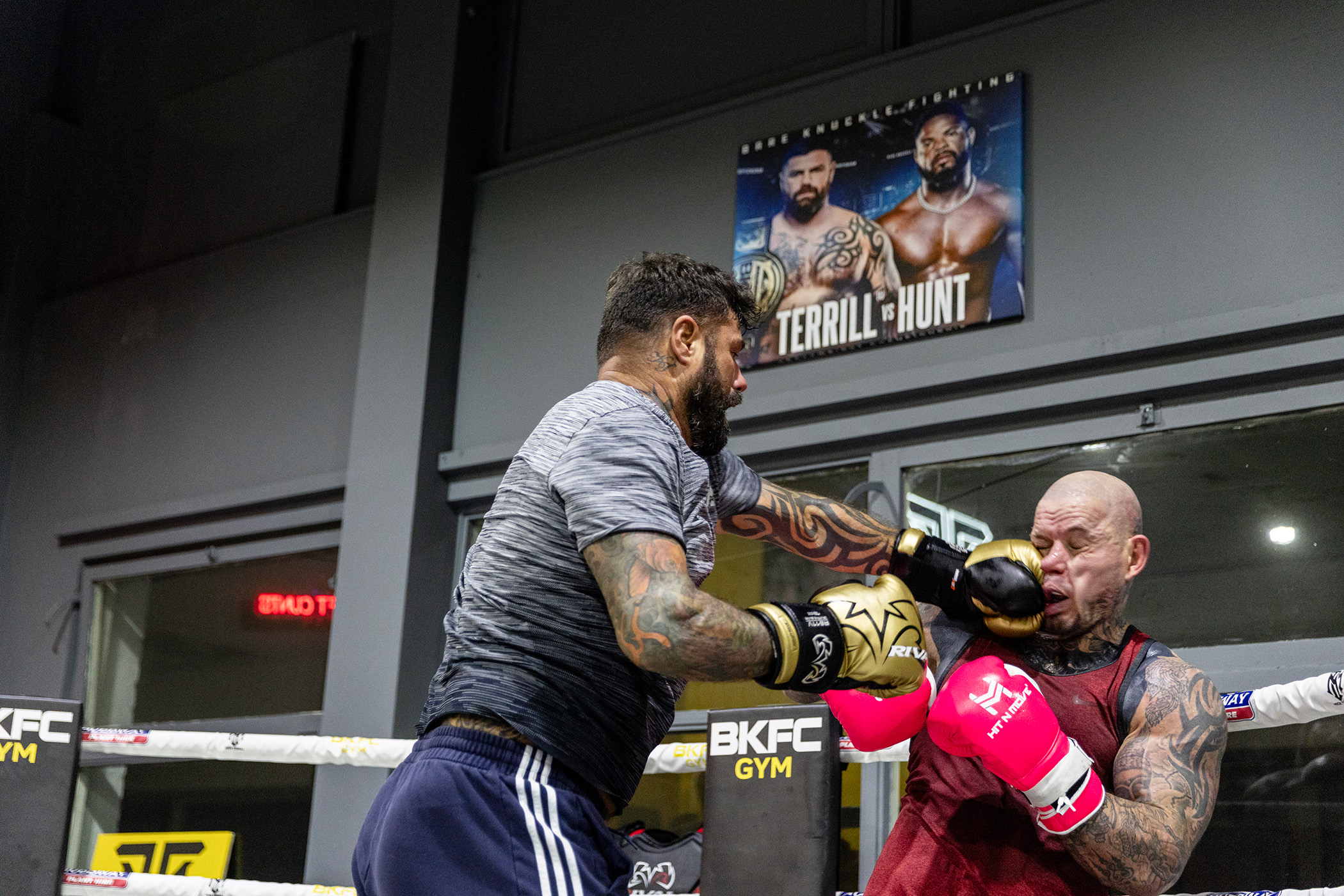
Sparring in North Shields
A few years ago, Terrill walked into the Lloyds Bank in North Shields wearing a ski mask. He had his phone in his top pocket, livestreaming on Facebook. He stood in the queue and paid money in, after which the manager told him he wasn’t allowed to wear a mask in the bank because it’s a security risk.
“She’s 100% correct,” he says. “I should not be allowed in that bank with my face covered. But if I’m not allowed in the bank with me face covered, nobody else should be.” He says he has no problem with a hijab, but does have a problem with the niqab or burqa if it means two-tier rules. The bank closed his account. Police took no action.
We pass the bank while walking his two massive dogs. We pass the butcher, which has an illustration of him in the window: “North Shields finest.” He’s well known here. People stop to chat. In 2019, Terrill ran to be a Ukip councillor, getting 33.7% of the vote but losing to the Labour candidate. After that, he became a Reform UK member and wanted former chair Zia Yusuf to be party leader. (When I ask in September if he’s still a member, he says he thinks his membership has lapsed now, though he still supports Reform. He adds that he likes Rupert Lowe, leader of Restore Britain.)
He thinks “politics is very soft at the minute”. “I love immigration,” he says, but he thinks too many people are arriving and benefits are being exploited. He says he has Muslim friends and has no problem with Muslims or “anyone with any ethnicity, colour, religion”, but he’s worried about “Islamists”.
We walk to his home; a pretty place, immaculate, with herringbone wood floors. He lives with his wife; their three children are grown up. He’s a grandad now too. Some of his title belts are in a display cabinet (he says the others are in a bin bag somewhere). There’s a framed stock certificate for Trump Hotels and Casino Resorts on the wall. In the front room, he has portraits of Wellington and Napoleon, as a reference to the era in which the house was built.
We drive to his first childhood home in Meadow Well – or “the Ridges”, as he and others from the area call it – that his family left before the riots of 1991. They moved to Shiremoor, a few miles north. He says his dad is “a proper lefty” and used to work as a plater at the local shipyard. His mum looked after the children and home, like his wife does. His uncle was a miner who still complains about Margaret Thatcher.
Terrill did an apprenticeship and became an electrician. (He did the electrics at his gym, which he opened last year at a cost of tens of thousands of pounds.) He used to work as an electrician for a local council and as a doorman at night. He started training in Thai boxing when he was about 23 after getting “filled in three times in one night” in Whitley Bay. He was good at fighting, won kickboxing competitions.
In 2015, he had his first bareknuckle fight in a function room in Newcastle, the year bareknuckle took off, encouraged by the success of mixed martial arts. He made £5,000 from that fight. (In April 2024, disclosed purses for an event in Los Angeles said Terrill earned $100,000 for that fight, which I was told sounded right. When I ask Terrill how much he gets, he would only say on WhatsApp: “It’s good mate, very good.”)
After more fights in the UK, he was invited in 2021 to fight in the US, where he became heavyweight world champion, fighting in Florida, Utah and California, before losing to the enormous Rothwell, who poked Terrill in the eye during their fight at KnuckleMania V in Philadelphia last year. The fight lasted 36 seconds. “I got chinned,” says Terrill.
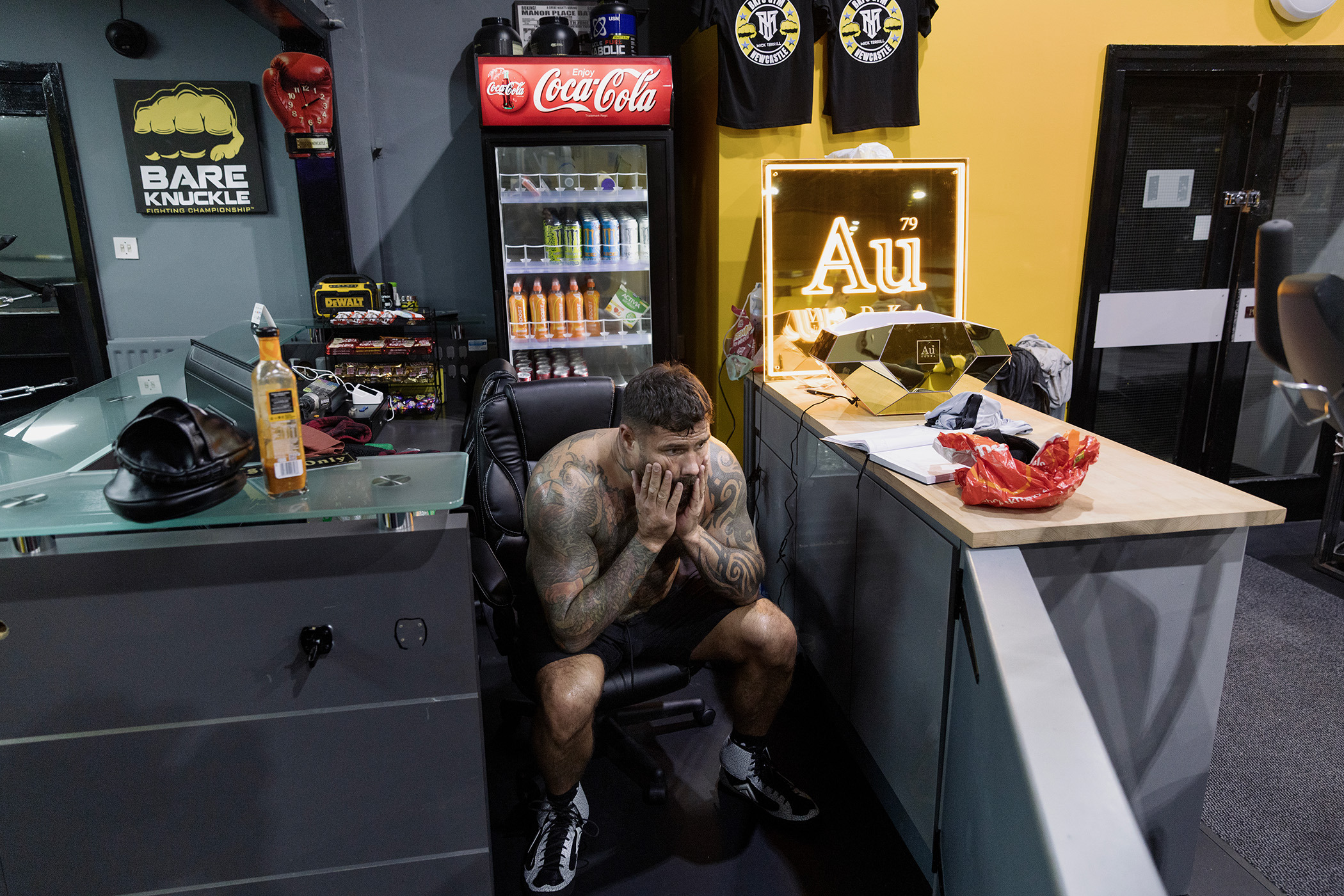
On Wednesday 26 August, Terrill got another shot at the title. Middlesbrough’s Mark O’Neil was supposed to fight the BKB world heavyweight champion, Cuba-born Gustavo Trujillo, in Miami that Saturday. But O’Neil had a visa issue; he wasn’t going to make it. Terrill, who was already flying to the fight for promo work, offered to step in. “I was texting the Americans: ‘I’ll fight, I’ll fight,’” he says, despite no fight camp and no preparation.
Terrill didn’t hear back from the Americans before setting off from Newcastle, so packed his kit just in case. While changing flights at Heathrow, he heard back. It was on. He flew to Miami, accompanied by his wife, who then joined him as he spent all Thursday driving around clinics and offices hurriedly getting blood tests, an eye exam, an electrocardiogram, a brain scan. “Everywhere we went, she was trying to get a little bit of a suntan,” he says.
BKB put them up in a suite at the Hyatt Regency on the riverfront in Miami and flew over his coach, Davison, who stayed in a suite too. That Saturday night, Terrill fought in what was billed by BKB as “the biggest fight in bareknuckle history”, but quickly got a bad cut to his eye, and it ended in the second round, Terrill on his haunches, after he was hit in his solar plexus. “I couldn’t catch me breath,” he says. “I thought I was gonna be sick.”
After the fight, he had 22 stitches around his eye. Halfway through, a medic said she needed to make up more anaesthetic before finishing the stitches, but Terrill wanted to go and get showered. He said to do it without anaesthetic, but it was more painful than expected. “Me mate’s holding me feet and I’m going: ‘It’s in me eyeball, it’s in me eyeball.’ But you’ve seen the sign in the gym: ‘No soft cunts.’”
It doesn’t matter what injury you’ve got, you’ll get no sympathy. Mam and dad used to say when you were kids: stop being softIt doesn’t matter what injury you’ve got, you’ll get no sympathy. Mam and dad used to say when you were kids: stop being soft
He’s telling me this in the office at his gym, two weeks after the fight. He still has bruising around his eye. The cut is still healing. He shows me a scar above his other eye from a previous fight. The new injury means he’s been removed from the card for a bareknuckle night at the arena in Newcastle on 10 October, though, as we speak he’s trying – unsuccessfully – to persuade the commissioner to let him fight.
“I’ve literally got a year left,” he says. “I want to fight as many people as I can.” When he arrived in Miami, before the fight with Trujillo, he was promised a rematch. He expects another fight with him to happen in December or January, somewhere in the US. With a full camp, Davison thinks Terrill will win. “I think, if we’re both fit,” says Terrill, “it’ll be good craic.”
We talk about the London fight. I say it’s strange that the former Millennium Dome now hosts bareknuckle boxing. Nobody would have predicted that in 1999. “That’s the problem people have with bareknuckle,” he says, making a different point. “They think it’s going to be in a car park or someone’s pub, but it’s mainstream now. It’s in arenas. Eventually, it’ll just be normal.
“It’s like if you listen to serial killers when they’re interviewed after they’ve been caught,” he says. “They say they were nervous for the first one, but by the second, third and fourth, it becomes normal. It’s the same with bareknuckle. At first, it’s a shock, like it shouldn’t be happening, but people see it more and more, then it’s normal. I think that’s basically how violence works.”
Photographs by Gary Calton for The Observer