
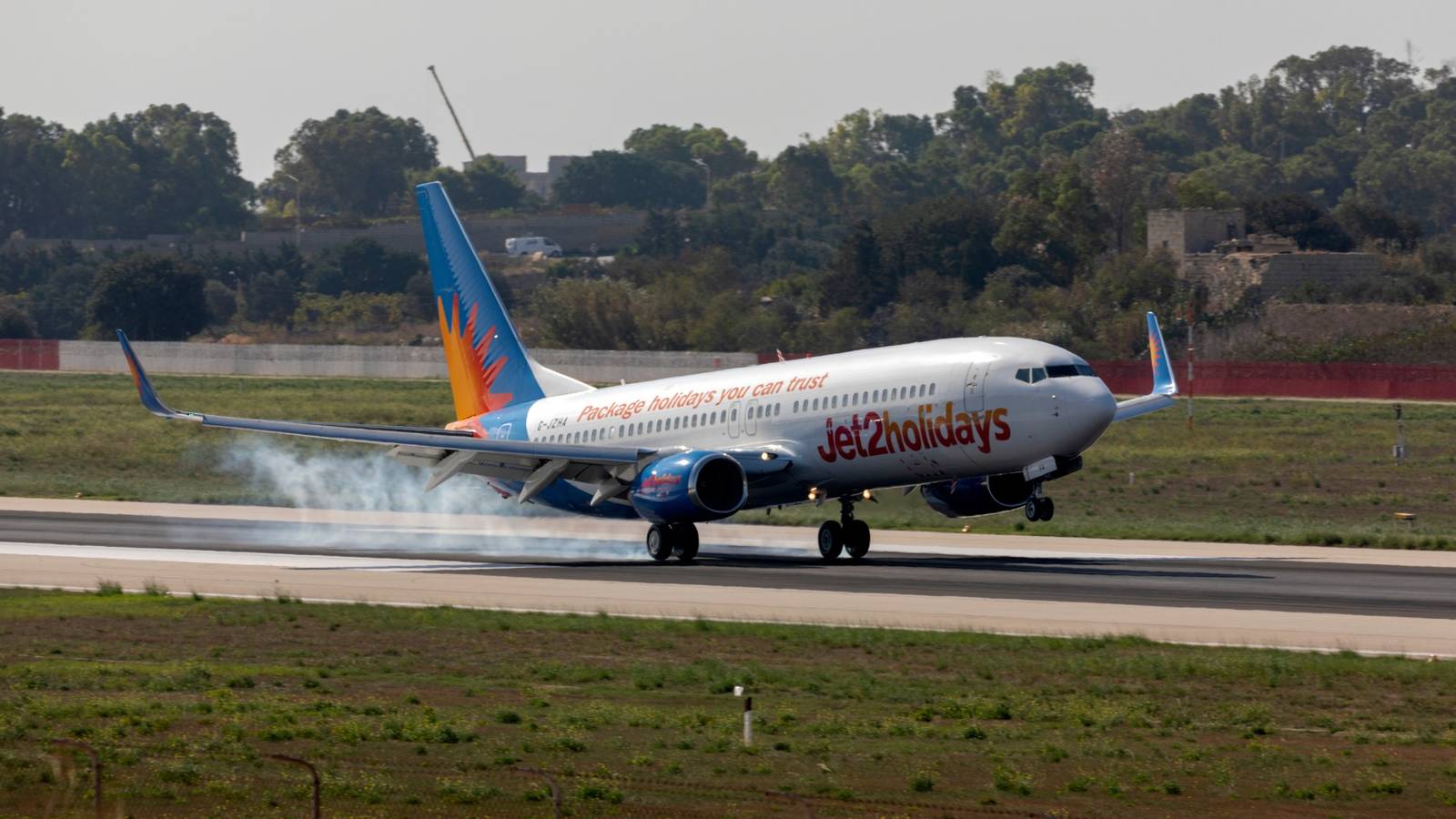
A Boeing 737-800 operated by Jet2 veered off the runway at Birmingham International Airport (BHX) on Sunday. The hard landing, now circulating on social media, occurred as unsettled weather associated with Storm Boelo brought strong winds across parts of the country, raising questions about the conditions pilots faced during landing. According to the BBC, the aircraft, from Venice Marco Polo International Airport (VCE), exited the runway after landing on Sunday afternoon due to “exceptional weather conditions” caused by the storm.
BHX is one of the UK’s major international gateways, handling domestic services and flights to destinations across Europe. Jet2 operates a substantial 737 fleet, using the narrowbody aircraft on its leisure-focused network. Although modern commercial aircraft are designed to operate in challenging weather, strong, variable winds can complicate approaches and landings, especially when crosswinds affect an aircraft’s alignment with the runway.
Jet2 Boeing 737-800 Runway Excursion: Strong Winds Hit Birmingham Airport
Credit: InsectWorld | Shutterstock
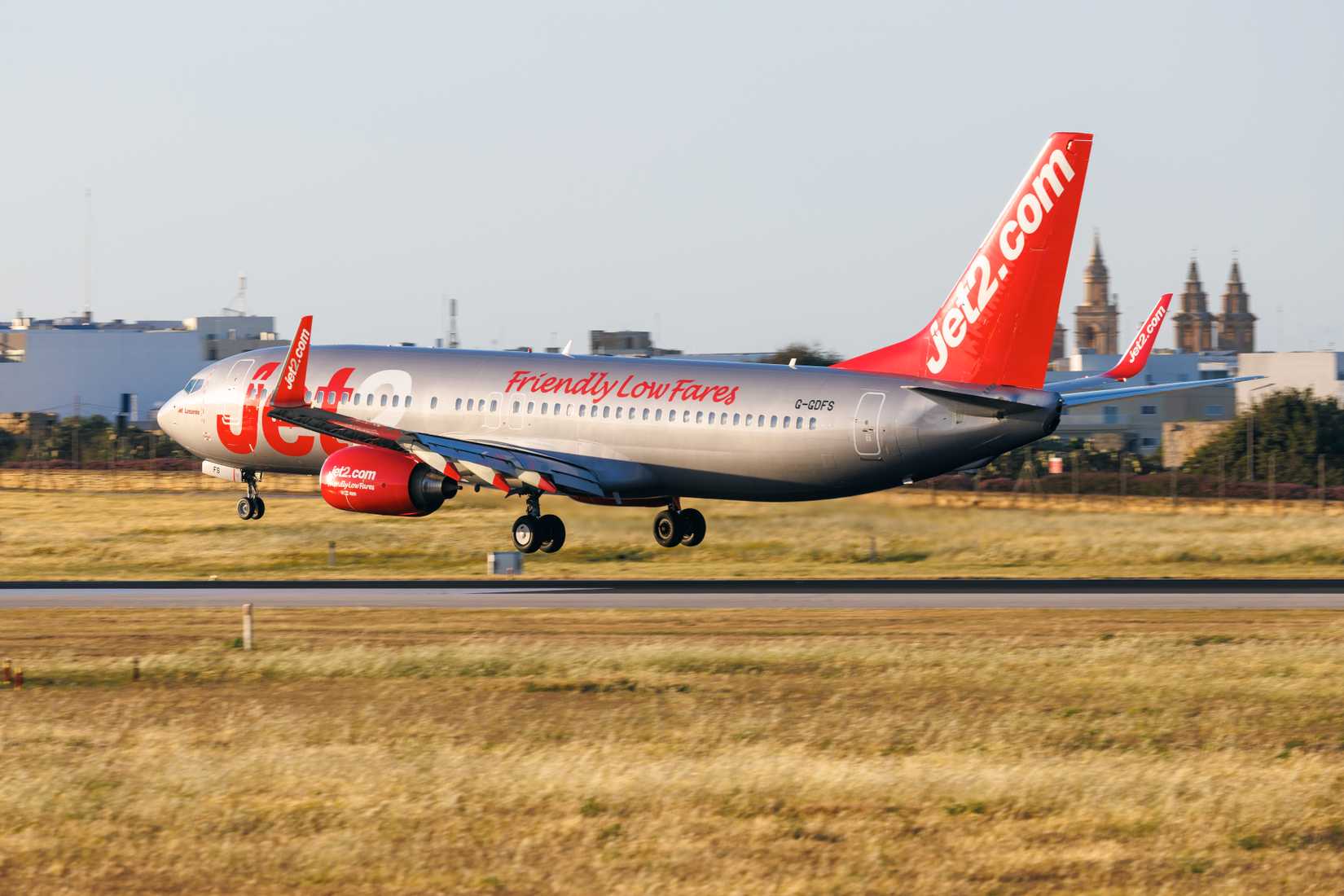
The plane veered onto the grass amid strong winds associated with Storm Boelo. It was operating LS1310, with the landing reported at approximately 14:19 local time on Runway 33. Turbine Traveller shared footage of the landing.
Weather observations from BHX indicate strong westerly winds earlier today. The 10:50 UTC METAR recorded winds from 270° at 18 knots, gusting to 29 knots, with the direction varying between 240° and 320°. The accompanying TAF, issued at 11:19 AM UTC, forecast winds from 270° at 18 knots, gusting to 35 knots, with temporary gusts potentially reaching 45 knots between 12:00 PM and 3:00 PM UTC. These conditions matter because Runway 33 is oriented approximately northwest, so west winds can create a crosswind component during landing. Winds gusting over 32 knots (37 mph / 59 km/h) can complicate aircraft alignment during touchdown.
Storm Boelo brought particularly strong winds to northern parts of the UK, while the Met Office forecast that windy conditions would persist across the West Midlands. BHX’s forecast indicated gusts reaching around 42 mph (68 km/h) during the afternoon.
The Jet2 spokesperson confirmed the complex landing conditions at BHX to BBC News.
“Flight LS1310 from Venice to Birmingham temporarily moved off the runway after landing at Birmingham Airport earlier this afternoon, due to exceptional weather conditions caused by Storm Boelo.”
How Storm Boelo Affected the Area
Credit: Goodwin Mallorca | Shutterstock
Storm Boelo brought unsettled weather to the UK over the weekend. According to the Met Office, the strongest winds were expected across Scotland, Northern Ireland and northern England, with gusts of 60-70 mph (97–113 km/h) and potentially 80 mph (129 km/h) in exposed locations. Birmingham, in the West Midlands, also experienced windy conditions, although the storm’s strongest impacts were forecast farther north.
The storm’s passage across the country created the potential for disruption to several forms of transport, including aviation. Strong winds can affect aircraft approaches, increase turbulence, and make ground handling more challenging, while heavy rain can reduce visibility and complicate airport operations.

Related
How Do Pilots Master Takeoffs & Landings During Crosswinds?
Pilots sometimes need to land and take off during crosswinds, and there are a few maneuvers they can use to safely land the aircraft.
How Winds Affect Airport Operations and Flights
Credit:
Andrey Zhorov | Shutterstock
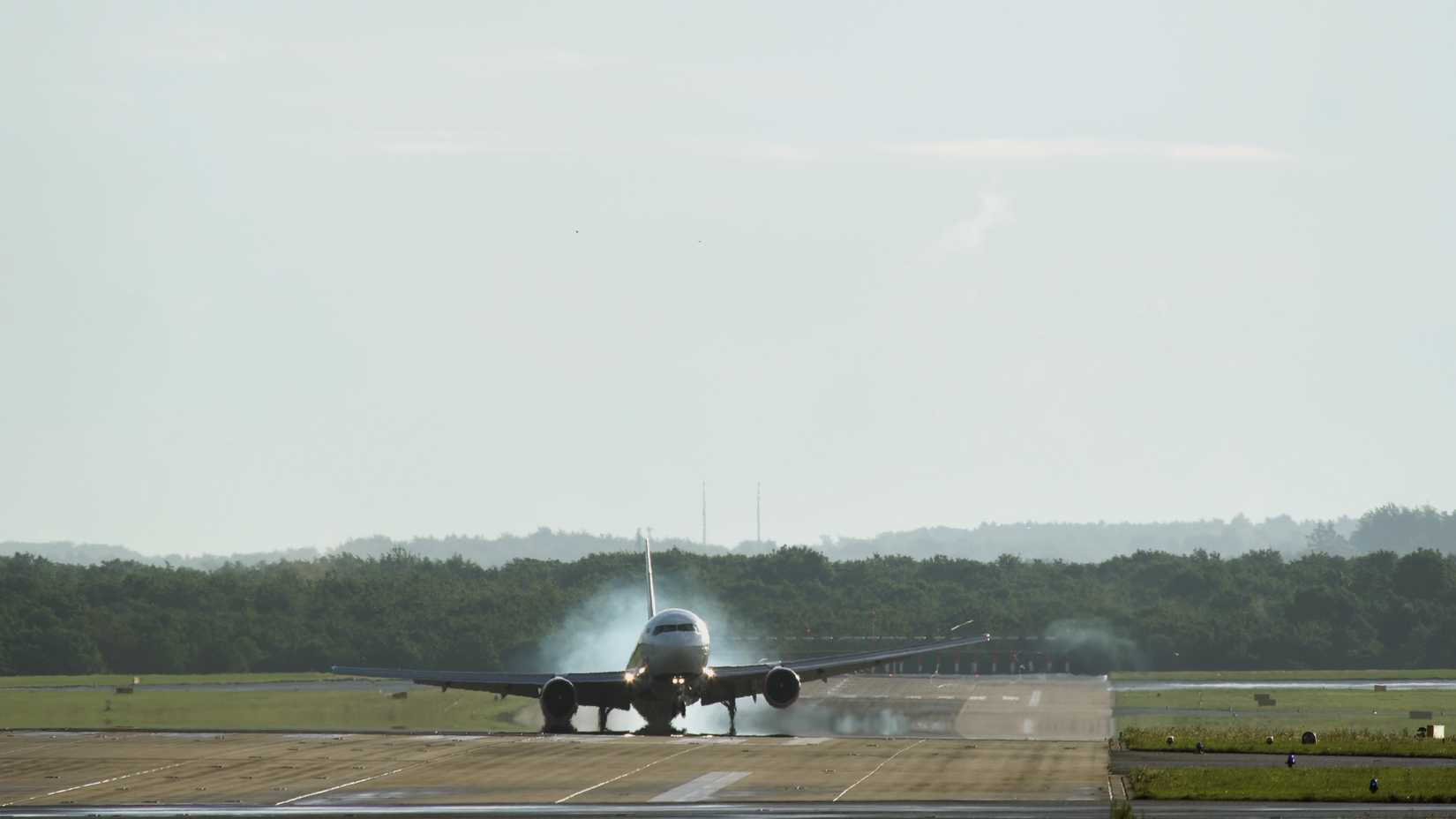
Wind is a key consideration during every aircraft landing. Crosswinds can push an aircraft sideways relative to the runway, requiring pilots to make corrections to maintain the appropriate alignment. Gusts and sudden changes in wind speed can make those corrections more demanding, particularly during the final approach and touchdown. Pilots must operate within aircraft-specific crosswind limitations and consider the prevailing runway conditions.
Airports can respond to adverse weather by changing runway configurations, adjusting arrival rates, delaying departures, or diverting flights when conditions warrant it. Ground crews may also need to take extra precautions during strong winds. Simple Flying previously explored how weather affects aviation through several interconnected factors, including wind, visibility, precipitation, and runway conditions.
The video provides a visual record, but determining the cause requires evidence from operational records and weather observations. Until more details emerge, the incident reminds us of the challenges unsettled autumn weather can pose to commercial aviation.
NEW
Catch what other flight trackers miss
Emergency squawks, holds, NOTAMs — live signals, no signup.
Open tracker
→
NEW
Catch what other flight trackers miss
Emergency squawks, holds, NOTAMs — live signals, no signup.
Open tracker →