
‘In an ideal world you’d have embedded sensors tracking processes in your blood. To really understand a cyclist, a human, to see how they are responding to training, feeding and recovery, you need continuous markers. We’re not there yet, but the technology is emerging.’
That’s Scott Drawer, performance director of Netcompany Ineos. He’s talking about digital twins, which could be the future of cycling. As you’ll discover in this article, the advent of artificial intelligence and omics could transform what it means to be a world-class rider…
What is a digital twin?
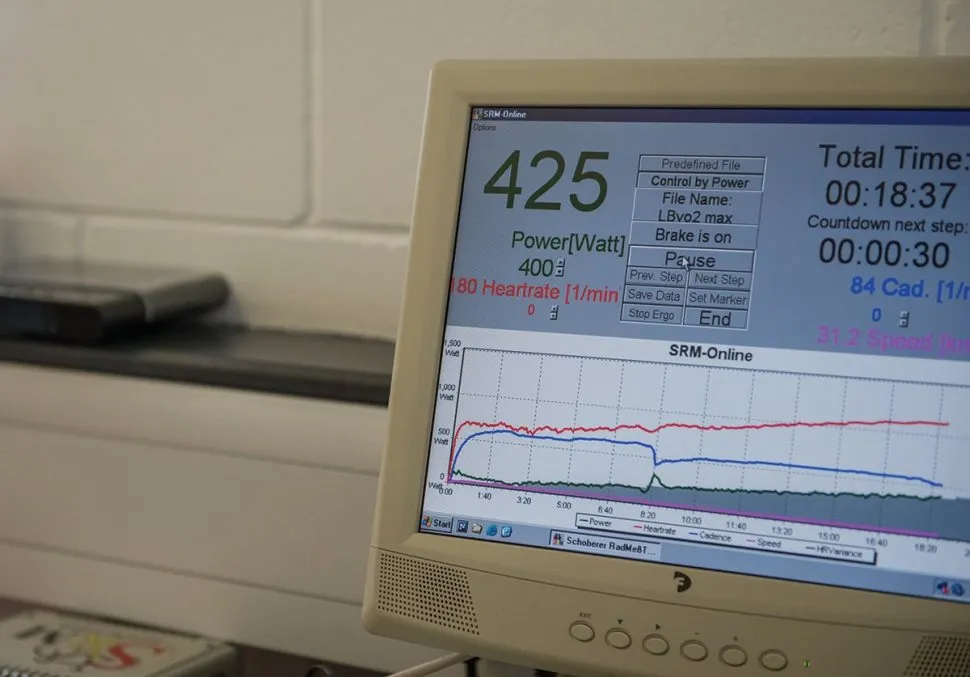
IBM describes a ‘digital twin’ as a ‘dynamic, virtual replica of a physical object, system or process that stays connected to its real-world counterpart through two-way data flows’. The idea is that you use real-world data to simulate, monitor and predict how the real-world counterpart behaves via a virtual twin clone.
For instance, in healthcare, there’s ‘surgical rehearsal’ where a surgeon can virtually ‘cut’ a piece of heart tissue or place a catheter to treat an irregular heartbeat. The digital twin instantly simulates how the heart’s electrical paths will reroute, showing whether the procedure will cure the arrhythmia or cause a new problem.
Then there’s ‘drug response testing’. If a patient needs a medication that carries a minor risk of a cardiac side-effect, the clinician can apply the drug’s chemical profile to the patient’s digital twin. The twin simulates how the patient’s specific ion channels will react, flagging whether the drug is safe or likely to trigger a heart attack.
Healthcare is driving this to keep people out of hospital, but what has this to do with cycling? Well, sceptics might suggest that history shows therapeutic advancements (eg, the blood booster erythropoietin to treat anaemia) are inevitably rebooted as performance-boosters. But no, this is a legitimate transfer of technology that could cover all areas of performance cycling.
Identifying the next Froome
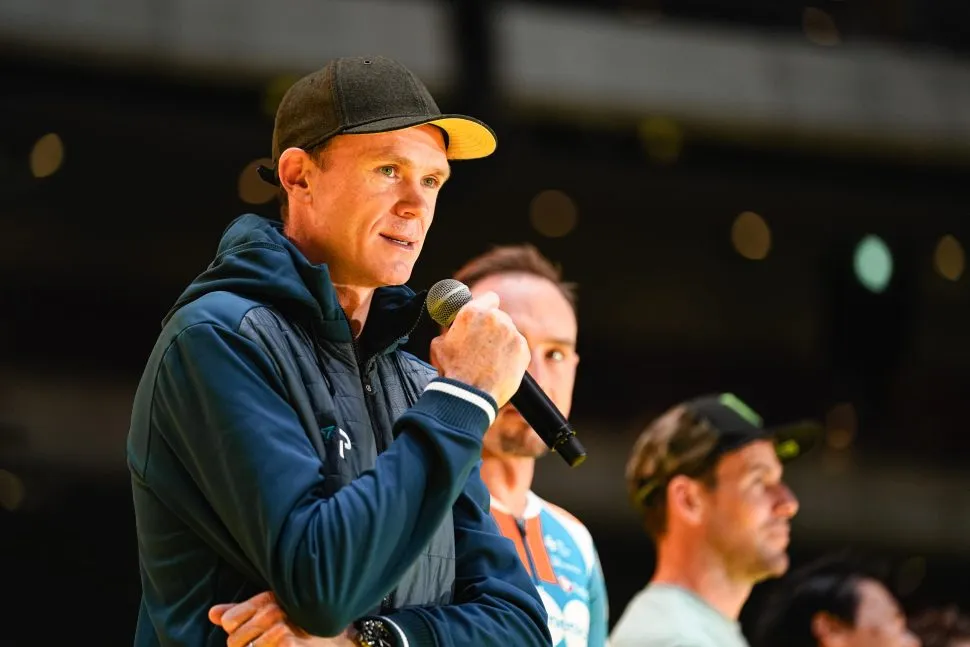 A.S.O/Thomas Maheux
I dropped Drawer a line off the back of a press release from Swansea University earlier this year that announced a collaboration with the Ineos team ‘towards the development of digital twins for efficient talent identification in professional cycling’.
‘It’s a small project involving one PhD student who’s great with data and loves cycling,’ Drawer says. ‘There’s so much information available publicly these days. People post rides on Strava and results are easier to find. Even at a basic level useful signals are available online. The Swansea project is about developing tools that can gather and analyse that public information to help identify outliers and promising opportunities, although I’d call it a “lite digital twin”.’
Drawer says that young talent has become increasingly important in professional cycling and, though they were late to the development programme, a team won’t survive without that clear pathway from juniors to seniors.
‘There’s huge competition to identify riders with the greatest potential,’ he says. ‘Of course, scouts and agents have their place and will continue to do so – it’s through them that we discovered Benjamín Noval three years ago. But refining that process is key to progress.’
In 2025, the team signed Noval Junior at just 16 with the now 18-year-old set to race for the senior team in 2027. In September, Noval won both the junior road race and time-trial at the UCI World Championships in Montreal.
The signs are promising that Noval will have an impact at WorldTour level, although Drawer caveats that the relationship between junior joy and senior success is low. A digital twin might reduce the guesswork. As will the team’s headline sponsors.
The truth-seekers
 Netcompany Ineos
‘By far the biggest impact for us in this space is our partnership with Netcompany,’ says Drawer. ‘The technological scale and capability that we can access is unique in this sport and other sports. Netcompany describes itself as the “orchestrator”, and I’d say that’s right.’
Core to the Danish’s company’s success is Pulse. This is its real-time, AI-driven platform that consolidates massive streams of data from ‘fragmented ecosystems’ into a single, operational interface.
Netcompany made its name in the aviation industry, where the Pulse platform is branded ‘Airhart’. It serves as the digital backbone for Heathrow, Munich and Copenhagen airports to orchestrate flights, baggage and passenger tracking.
‘Imagine a flight is delayed by a headwind,’ says Drawer. ‘The gate it was due to use is occupied, and a large group of passengers is building up in one part of the terminal. That chain of events affects ground staff, catering and passenger communications. Netcompany’s software helps coordinate all those moving parts so the airport can operate efficiently.’
Cycling is drowning in data. You have instrumented cranks, heart rate monitors, head units… But in the technological revolution, collecting data is the easy bit. It’s making sense of it for positive interventions that’s the tricky part. And that covers all areas of a professional team.
‘Look at how much software has evolved and is impacting cycling,’ says Drawer. ‘A sports director uses VeloViewer, while being fed video images of the race and a live feed from ProCyclingStats. It’s a blizzard of information, a blizzard of data, and you’re trying to make sense of it all for practical decisions. It’s the same with coaches, nutritionists, doctors, aerodynamicists… But just because you can measure something doesn’t mean it has value. You must organise your data and information for points of truth. That’s what Netcompany is brilliant at and I think we’ll start to see the benefits of our collaboration next season. Ultimately, before you even think about a digital twin, you must have quality data and deep insights.’
Painting a complete picture
That’s also where the likes of Irish outfit Orreco come in. Founded by Dr Brian Moore in 2010, the company uses their proprietary AI and years of sport-science knowledge to accelerate recovery, optimise performance and prolong an athlete’s career.
‘In the 90s, before launching Orreco, we started with a stopwatch, a lactate sensor, a Polar chest strap and a pencil,’ says Moore. ‘Now, we’re using Bayesian inference models, agentic AI, biomarkers and computer vision to track athlete readiness, recovery and injury prevention.’
Orreco worked with Drawer and the Netcompany Ineos team at altitude camps, and monitored rider response at Grand Tours. It has also collaborated with Newcastle United football team for years, plus the NBA’s Dallas Mavericks and the NFL’s Tampa Bay Buccaneers.
‘We also worked with Dr Pete Cunningham and the cyclors onboard Team Ineos Brittania in the America’s Cup,’ says Moore. ‘Those boys were pushing some monstrous numbers as they were providing all the power for the manoeuvres and rigging. They were effectively cycling in a carbon-fibre furnace with tremendous thermal stress given the position in the boat. It was impressive.’
Orreco’s five modules provide a view of athlete health. ‘Biomarkers’ uses bloodwork to assess stress, inflammation, recovery and readiness, helping staff decide when training changes or assessment may be needed. ‘Medical Notes’ centralises medical and physiotherapy records, case notes and athlete status, supporting rehabilitation tracking and return-to-play decisions.
Then you have ‘Recovery Lab’, which combines GPS workload, wellness, sleep, wearable data, biomarkers and testing to personalise recovery. ‘Motion Signal’ uses computer vision to detect movement changes that may indicate overload and inform conditioning or rehabilitation. Finally, there’s ‘Analytics and Reporting’, which brings performance data into dashboards to monitor trends, compare athletes and guide coaching and medical decisions.
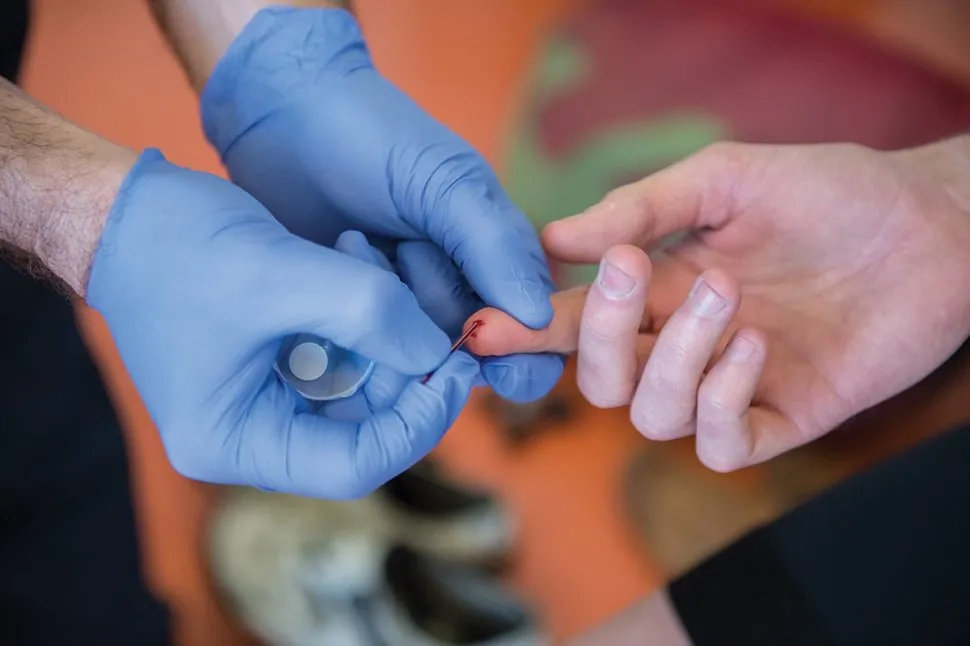
When it comes to the bloodwork, all of this starts with a sample via the vein or a finger-prick. ‘We can then, for instance, track each rider against their own baseline over time,’ says Moore. ‘If a rider’s oxidative stress is climbing while their antioxidant levels are dropping, they flag it to the coach. The insights from the biomarkers might mean swapping a planned interval session for an easy spin and focusing on sleep and nutrition for 48 hours.’
Moore says they worked with one cyclist whose power files looked strong, but their blood showed sharp cellular stress and rising inflammation. They advised the coach to drop a planned three-day hard block and focus on recovery. A few days later, other riders in the training group on that same hard block came down with upper respiratory tract infections, while this athlete stayed healthy and was back hitting peak numbers the following week.
As for digital twins, the thought excites Moore, who highlights that there’s already some advanced work on digital twins around aerodynamics and bike fit. ‘But our focus is about the biological digital twin, which is about modelling how the rider’s body will virtually respond to an intervention’, he says. ‘We already work with omics data, like metabolomics, and we’re using frontier models to help simulate state changes. That level of detail all makes the digital twin more realistic. The goal is simple: if a rider does ‘X’ on stage 14, what will their recovery state look like the next morning? That allows teams to plan tactics around real physiology rather than guessing.’
You might have heard of metabolomics. This branch of omics was thrust into the cycling media’s consciousness when then UAE Team Emirates’ head of performance Iñigo San Millán (now at Athletic Bilbao FC) revealed he’d measured hundreds of thousands of metabolites in Tadej Pogačar’s blood. The results led to San Millan concluding that elite riders like the Slovenian possess a metabolic signature, a unique phenotype, that means they can absorb huge volumes of training.
In the case of Pogačar, specific biomarkers revealed how he not only recovered rapidly between stages but also between surges, explaining his ability to go and go again when climbing. ‘With this metabolomic work, we can see how interventions and personalised intensities of exercise and durations can help a rider,’ San Millán said.
 A.S.O./Charly Lopez
Ruben Robberechts is a researcher in exercise physiology at Hasselt University in Limburg. He has led his own metabolomic research that revealed the metabolic response to ‘excessive endurance exercise’ by studying seven riders at the 2023 Tour de France. That excessiveness comprised 3,404km and 56,482m of climbing, resulting in a total work output of around 75,500kJ.
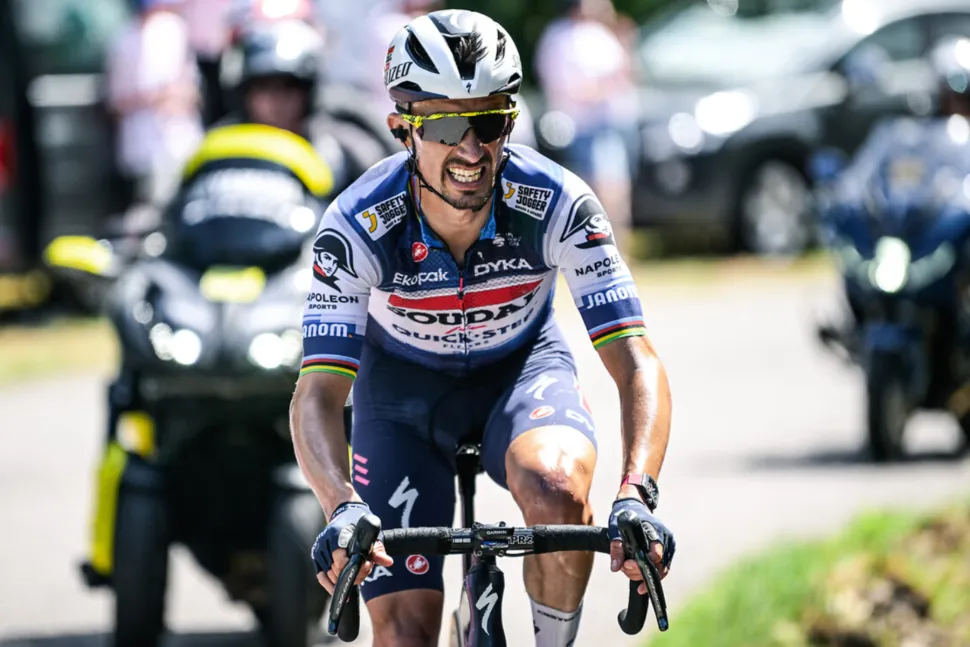
(Note: Robberechts doesn’t reveal which team he shadowed but one of the co-authors, Koen Pelgrim, is a trainer at Soudal Quick-Step, so we speculate that the septet profiled included two-time world champion Julian Alaphilippe, while the eighth starter, Fabio Jakobsen, withdrew on Stage 12 due to a lingering shoulder injury from Stage 4.)
‘One of the major findings of the study explicitly linked serum L-carnitine status and fatigue,’ Robberechts says. L-carnitine is a naturally occurring substance made mainly by your liver and kidneys. It helps the body transport fat into cells’ mitochondria, where it can be used to produce energy. ‘Given our observation, L-carnitine supplementation may be a potent strategy to attenuate fatigue during the Tour de France.’
Robberechts also revealed significant depletion of numerous amino acids, including cysteine. Cysteine helps to ‘buffer’ or neutralise excess reactive oxygen species, which you produce in spades when exercising hard. ‘It’s why recovery shakes could include elevated levels of cysteine for multi-stage races,’ he says.
Robberechts’ findings also bridged two spheres: the clinical and the sporting. During the pandemic, it became clear that when a person contracted Covid, levels of the peptide GDF-15 (Growth Differentiation Factor-15) spiked, making it one of the most reliable laboratory indicators for how severe the disease would become.
GDF-15 release is a stress reaction, which is why Robberechts monitored its levels during the 2023 study as well as an earlier one in 2019: ‘We noted its rise is a useful biomarker to gauge when overreaching might tip over into overtraining.’
Interestingly his earlier research also revealed that ketone supplementation blunted the GDF-15 response in the third week of the Tour. As high levels suppress appetite, the riders consumed more calories, which historically drop during the latter stages due to the intense training and fuelling regime. That doesn’t signal the green light for recreational riders to whip out their credit cards for a ketone bump, of course, as these GDF-15 levels only remain significantly high after days and days and etc, of hard riding.
It does, however, highlight that such detailed biological insight can actually lead to practical interventions: ‘And I feel this is just the start,’ Robberechts says. ‘We used the dried spot technique for blood collection, which is almost imperceptible, requires just a droplet or two of blood, and doesn’t require fridge storage.’ All reasons why it’s now used in anti-doping circles.
Rise of the biotech bikers
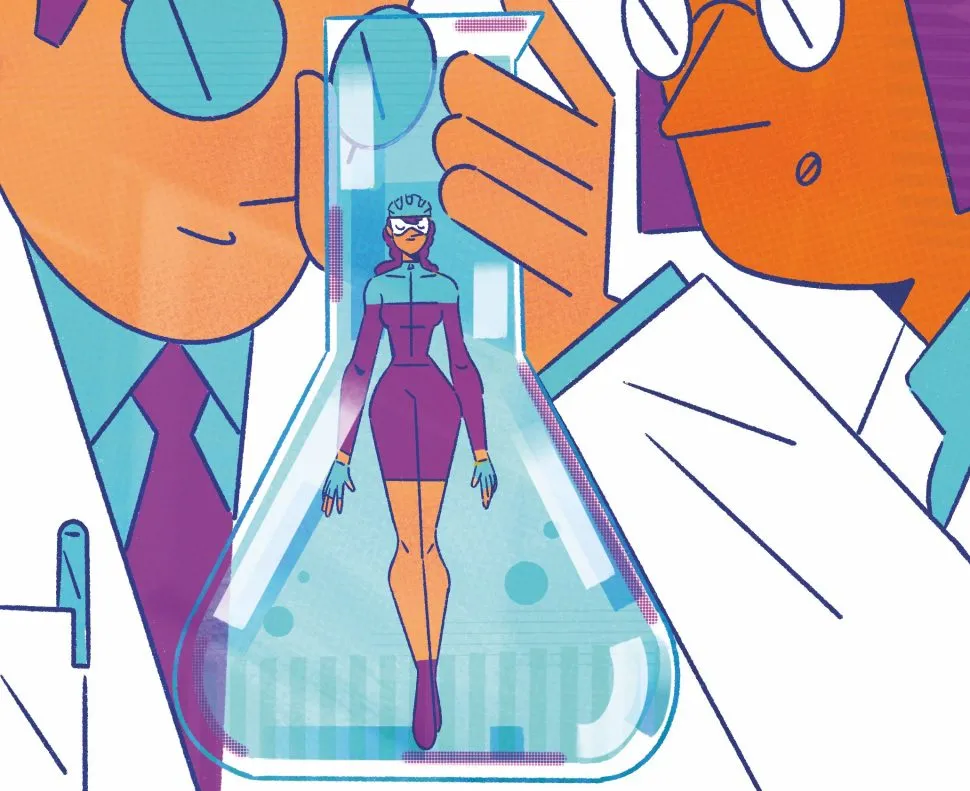
Made of Genes is another AI-powered biomedical intelligence company from Spain, who either take a swab or blood sample that contributes to a ‘digital twin that combines what never changes, such as genetics, with what shifts every day: internal biology, training and racing load, heart-rate variability, sleep, nutrition, travel and schedule,’ says the company’s founder Laura Isus.
Made of Genes has worked with Spanish UCI ProTeam Equipo Kern Pharma and extensively with Barcelona’s women’s football team. Earlier this year, both outfits, plus the University of Bonn, announced they’d developed an AI framework to anticipate injuries in elite women’s football. Analysing four seasons of data from 34 players, it identifies cumulative fatigue and workload as key risk factors, helping medical and coaching staff personalise rest and improve player availability.
‘Our models are tested retrospectively and then prospectively by making predictions before they happen and checking them against real outcomes and against decisions the staff would have made without the model,’ Isus explains. ‘In elite football, our injury watchlist flagged more than 70% of non-contact injuries ahead of time, giving medical staff a window to act before injury happened.’
According to their statistics, they prevented 22.7% of injuries, meaning 20 days greater availability per player per season, which in economic terms saved the club €1.2 million per season.
Revived DNA offers a similar service to Made of Genes, which works across most sports and many teams but, in the interests of NDAs, can’t say who. Its metric dashboard sucks in genetic, blood and wearables data to generate a dashboard that channels the results into ‘performance’, ‘recovery’ and ‘career longevity’.
Key to the company’s progress is, says founder Mark Notton, understanding the biological pathway: ‘For instance, if you have a blood test and it shows that you’re deficient in vitamin C, you might be prescribed more vitamin C. But the body’s not that simple and it could be a different pathway that’s causing the problem, which might require a different solution. The body isn’t a single root, it’s a massive tree with multiple different pathways.
‘Another example is an athlete who enjoyed an ice bath after exercise, but when we sequenced his genetics we noticed that he naturally had a hard time dilating his blood vessels. That meant by hitting an ice bath, which constricted his vessels further, it impaired recovery and adaptation. He wanted to bulk up, so the team changed the ice bath to hot-water immersion. That helped with the dilation, he adapted better and piled on four pounds of muscle.
‘Then there was the rugby player with 80 caps to his name who, genetically, was the fastest recoverer we’d ever mapped. He said the results matched his experience, as he’d hit training the day after a match and could be ready to play full-on again. He recovered so swiftly his teammates said he had “Wolverine blood”. It’s results like this that make the thought of a digital twin exciting.’
Monitored 24/7
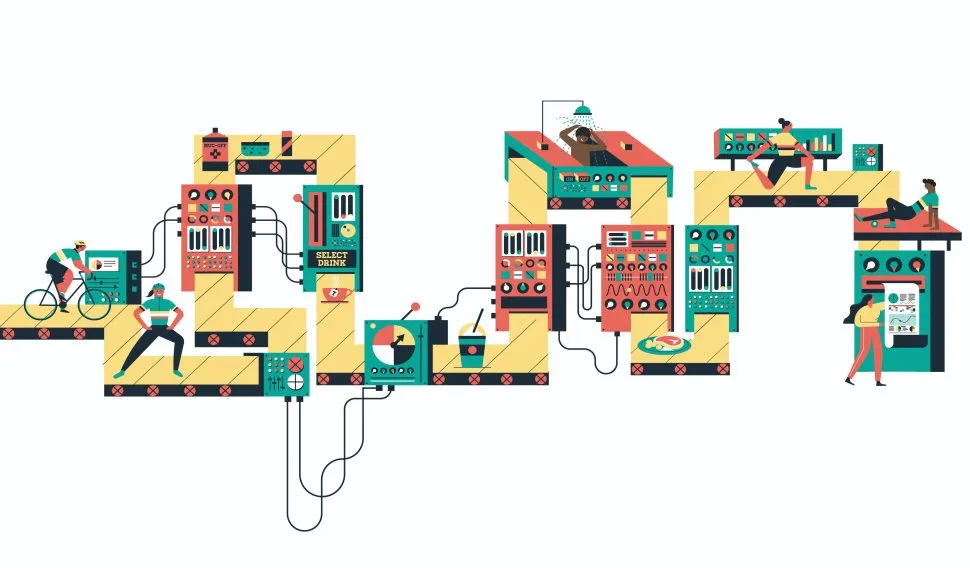
But, in Drawer’s eyes, we’re not there yet: ‘In an ideal world, you’d have embedded sensors tracking the immune system, cardiovascular system, metabolic system… Riders have blood taken every quarter or maybe every eight weeks, but these are just snapshots and you don’t really know what’s happened in between. Constant signals would mean the digital twin would be incredibly accurate and useful.’
Drawer concedes it sounds a little Big Brother, but is it far-fetched? Maybe ten years ago, but riders already use continuous glucose monitors so that Rubicon has already been crossed. ‘Signals from your body would go up to the cloud where your digital twin is sucking in all those signals to tell you to put in a big effort or ease off,’ he says.
Drawer also says the field of digital twins has potential to sprout from the individual to teams. He directs me to Alex Pentland’s book Social Physics, where office workers wore proximity sensors. The field is called ‘sociometry’. The sensors monitored how many times and for how long individuals interacted, be it a chat over the printer or while sipping coffee. ‘They showed the quality of connections among a group was a powerful predictor of a team’s performance, not necessarily in sport but in other domains, but it reflects that we’re social creatures.
‘When you’re racing, you ride as a team, so cohesion and connection is vital. It’s human evolution. It’s how we survived as clans and tribes. That psychosocial connection plays out in physiology. If you bond with someone, believe in someone, you’ll really want to fight for them. That rider would then give that little bit more because they’re more connected to the group. What happens above the neck is untapped. Achieve that with a digital twin and who knows how fast the peloton will ride.’
Ultimately, the future of pro cycling is less about collecting more data and more about understanding what it all means. From Orreco’s AI-powered biomarker analysis to the emerging concept of biological digital twins, technology is bringing teams closer to understanding how riders respond to training, racing and recovery. The goal is not simply to predict when a rider will perform, tire or get injured, but to understand why and what can be done about it. Yet the perfect digital replica remains some way off.
Until continuous biological monitoring becomes a reality, snapshots of bloodwork, wearable data and performance metrics can only tell part of the story. The challenge is turning those fragments into meaningful decisions without losing sight of the human being behind the numbers.
Get that balance right and digital twins could transform talent identification, recovery and race strategy, potentially changing not just how fast cyclists ride, but how long they can sustain their careers. As Drawer suggests, the next frontier may be understanding not only the individual rider, but also the connections that make a team greater than the sum of its parts.