
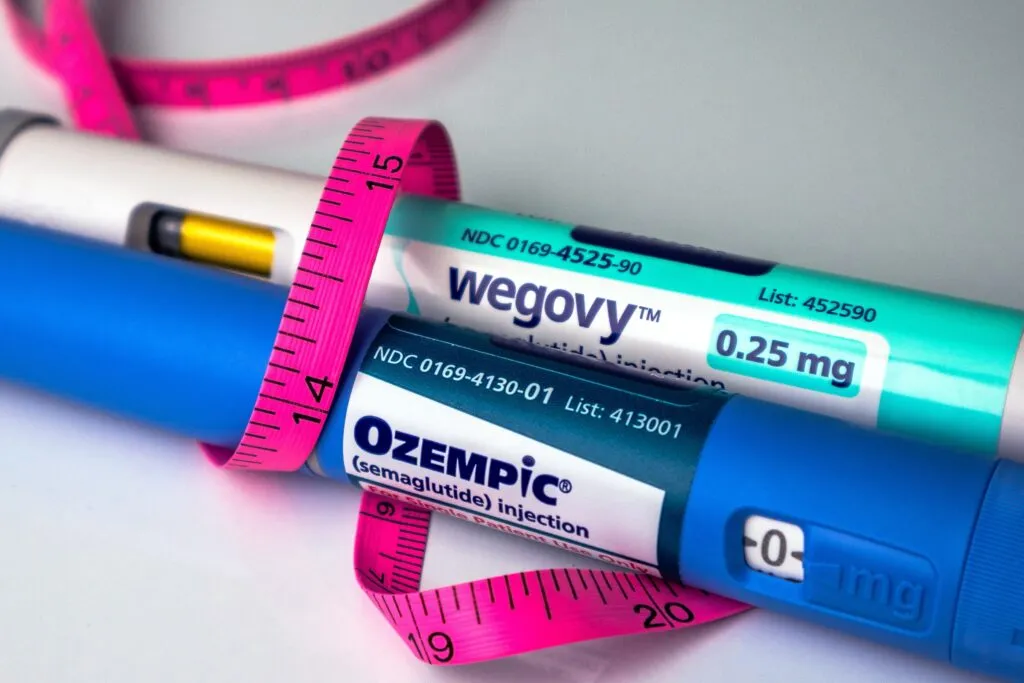
Influential MPs have called on NHS England to “urgently reassess” what they called its current “unambitious” plan for rolling out weight-loss injections, which relies heavily on nursing staff.
In a new report, MPs from the Commons’ health and social care committee said the government’s “clinically intensive” plan for the prescription of the drugs was “insufficient” amid high demand.
“Plans to rollout Mounjaro are unambitious given the scale of the challenge”
Health and social care committee
The report, published last week, centres on the increasing popularity of glucagon-like peptide-1 receptor agonists (GLP-1s), which are licensed for weight loss in some patients with diabetes and obesity.
The MPs said a new plan with wider scope was needed to distribute the drugs, which include semaglutide (Wegovy), semaglutide (Ozempic and Rybelsus) tirzepatide (Mounjaro) and liraglutide.
They said the present system, involving appointments from GP services, practice nurses and healthcare assistants (HCA)s, could cost the NHS billions while only helping a “woefully small number of people”.
The MPs also heard evidence that frustrated patients were increasingly turning to private sources for the drugs, creating a “two-tier system” of access.
In addition, they flagged concerns about an emerging “black-market” for GLP-1s available from unregulated providers, driven in part by a lack of NHS availability.
These was among multiple warnings made in the committee’s report, Food and Weight Management: Modernising obesity treatment, which forms the second part of an ongoing inquiry on the topic by MPs.
As part of its brief, the report set out to analyse the way GLP-1s can become a more nationally accessible weight loss management option.
For example, tirzepatide, better known as Mounjaro, is prescribed in certain regions only and managed by individual integrated care boards (ICBs), the report said.
It also assessed the efficacy of NHS England’s plan for a phased rollout, which aims to get tirzepatide to 220,000 people over three years in three different cohorts and prioritise prescriptions by need.
Another aspect under scrutiny was the current array of appointments that coincided with prescription of GLP-1s.
As of now, in any given year, the report said a tirzepatide patient would need around 21 appointments with a GP, four with practice nurses and one HCA consultation.
MPs described this model as “clinically intensive”, small in scope, and slow in pace. They estimated that the target of treating 220,000 patients would mean only 6% of the 2.8 million eligible would access the drugs.
They added that this was “not sufficient” given the scale of the challenge of obesity, and that the government should “urgently reassess” its approach.
The report acknowledged that “challenges relating to capacity and funding” made increasing patient intake a poor care model, citing a data analysis of the current care model by the King’s Fund in 2025.
This analysis estimated that the current system requires 700 million additional appointments each year across GPs, nurses, HCAs, pharmacists and other staff, including 72.8 million more nurse consultations.
The King’s Fund said increasing these appointments could put “immense pressure on NHS services that are already stretched to their limits” while adding to the current servicing cost of around £3.1bn.
The committee of MPs recommended that, instead, the government could make better use of digital providers as a more “cost-effective” and efficient alternative.
One consultant told the committee that prescribing the medication through trusted online pharmacies, for example, could reduce the load on staff while boosting the number of injection users.
Among its recommendations to the Department of Health and Social Care, the committee called on ministers to “hold a summit on GLP-1 access with a range of providers and healthcare professionals to open a dialogue on how best to improve the rollout”.
The report stated: “Access to GLP-1 medication appears increasingly to be determined by ability to pay rather than clinical need.
“Given that obesity already follows stark lines of deprivation and inequality, failing to provide equitable access will entrench and widen those disparities, letting down the patients who need support most.”
Commenting further on the report findings, the committee’s chair Layla Moran said: “People can spend their entire lives battling with their weight.
“We say the NHS should provide effective, structured support to beat obesity for all those who seek it,” said Ms Moran, who is Liberal Democrat MP for Oxford West and Abingdon. “Instead, those people are repeatedly failed.
“Our report urges the government to make improvements to obesity care a priority, both to improve public health and quality of life, and to save the NHS billions in the long-term.”
“This should be done through a new, nationally available care pathway modelled on how diabetes is tracked and managed,” she said.
“This must also be coupled with a change in attitudes, and in language used in policy-making, to properly recognise obesity as the serious health condition that it is.”
She added: “A two-tier system has emerged because of limited supply via the NHS, inadvertently deepening health inequalities. This needs to be reviewed and streamlined with input from digital providers.
“Limited supply via the NHS has formed a two-tier system, deepening health inequalities that can be addressed with a new streamlined system using digital providers.”
An NHS England spokesperson said: “The health service is currently testing new ways to accelerate access, including new routes for starting these medicines, to ensure millions more people can benefit – while also offering a wide range of other support, which has already helped tens of thousands of people achieve a healthier weight.”
A DHSC spokesperson said: “We will carefully consider the committee’s recommendations and respond in due course.”
“Obesity is one of the biggest challenges facing our health service, and this government is determined to end the obesity epidemic to help drive the shift from sickness to prevention,” they said.
“We expect NHS integrated care boards to be making these drugs available as part of a phased rollout, starting with people in the greatest clinical need, while building the workforce and capacity needed to expand access safely and sustainably.”
GLP-1 drugs research timeline