
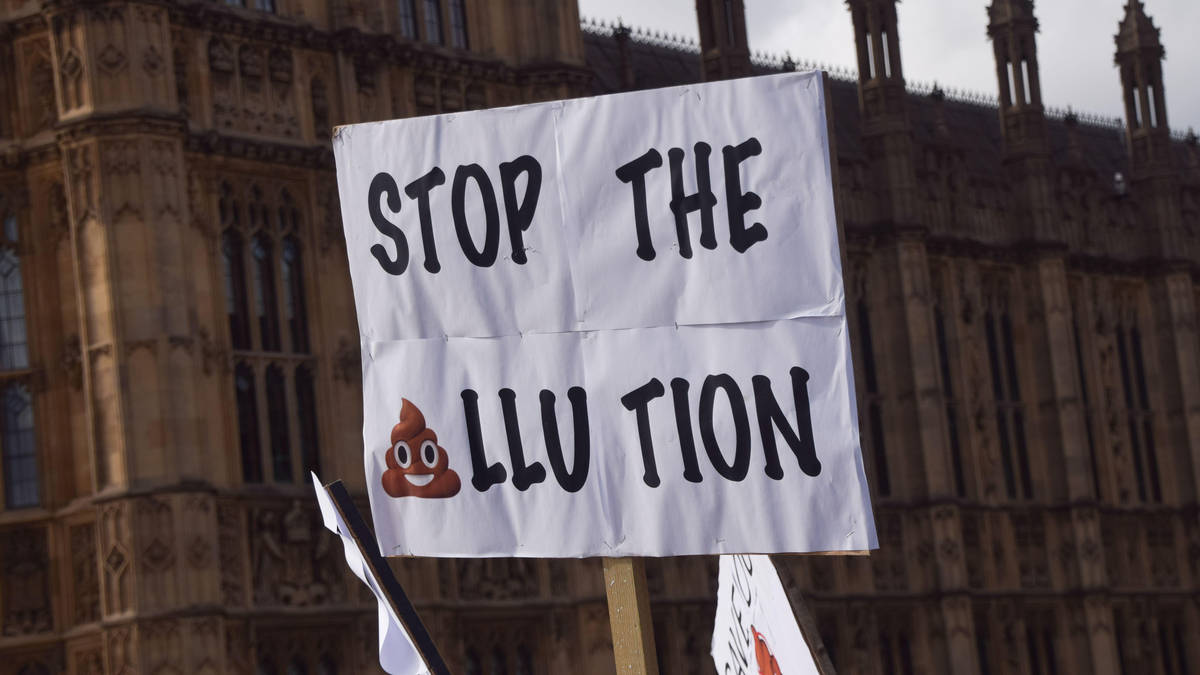
Andy Burnham has previously promised to bring the “essentials of life”, including utilities such as the water sector, under greater public control.
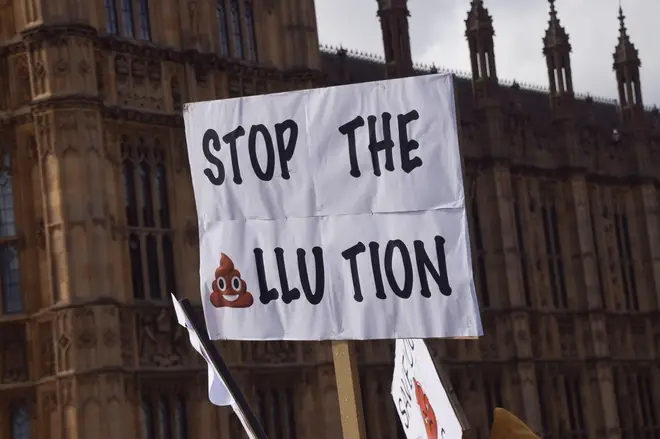
Campaigners gather outside the Parliament, calling on the UK government to act on sewage pollution.
Picture:
Vuk Valcic/Alamy
Thames Water has been accused of allowing a “horrendous” increase in pollution incidents in 2026 ahead of a crucial credit decision for the bankruptcy-threatened firm later this week.
New data shared exclusively with LBC found that monthly cases of pollution events resulting in damage to the capital’s waters increased by over 40% in the first nine months of 2026.
It means 55 such cases have occurred each month since the start of the year – up from 38 last year.
Thames Water argues that a change in methodology explained the increase.
Under new guidance from the Environment Agency (EA), firms have been obliged to provide a more accurate picture of the number of Category 1-3 pollution incidents taking place in their patch.
Read more: Thames Water lenders to appoint Lord Hutton as independent chair in takeover bid
Read more: Octopus numbers soar 1,500% in UK waters as fishermen warn of threat to industry
Thames Water argues that a change in methodology explained the increase.
Picture:
Bennett Dean/Alamy
Robert Forrester, who worked at the EA for over 20 years, argues that the figures indicate a “complete failure” by Thames Water to address concerns over its environmental performance.
“The statistics show that the failures aren’t being tempered, they’re actually increasing, and there’s no sign of that stopping,” Forrester, who obtained the data, told LBC.
Earlier this year, LBC found that E. coli levels in sections of the Thames were 58 times higher than the point at which the river is designated as poor quality bathing water.
“The government hasn’t put any deterrent in place to stop that [and] Thames Water has taken advantage of that. I can’t see that changing unless it enters into special administration.”
The future of Thames Water has proved a headache for successive governments since the scale of its financial woes was revealed three years ago.
The company is almost £20bn in debt, and fears of its collapse have led the government to contemplate taking the unprecedented step of bringing the firm into a Special Administration Regime (SAR).
A form of temporary nationalisation, this would make the government responsible for providing services to its 16 million customers, and could cost the taxpayer between £2-4bn if it is kept under public control for 18 months.
Thames Water has asked creditors to provide an additional £2.4bn in liquidity to Autumn 2027, with the deadline for approval being on Thursday.
London & Valley Water (LVW), the consortium of over 100 creditors that collectively holds over 90% of Thames Water’s debt, has previously proposed a £10bn injection of capital to take over the firm, but this was rejected by then environment secretary, Emma Reynolds, who said the plan had insufficient protections for the environment and consumers.
In a bid to stave off the prospect of the company entering special administration, LVW last week appointed the former Labour cabinet member Lord Hutton as independent chair-designate of Thames Water’s board.
Last week, it emerged that the prime minister has instructed officials to explore more radical approaches to tackle the problems facing Thames Water.
A source told the Guardian that measures that have never been “properly considered” could be adopted, potentially including converting the £100m of fines Thames Water is due to pay for environmental failures into a government stake in the company. This would therefore give MPs a say in how it is run.
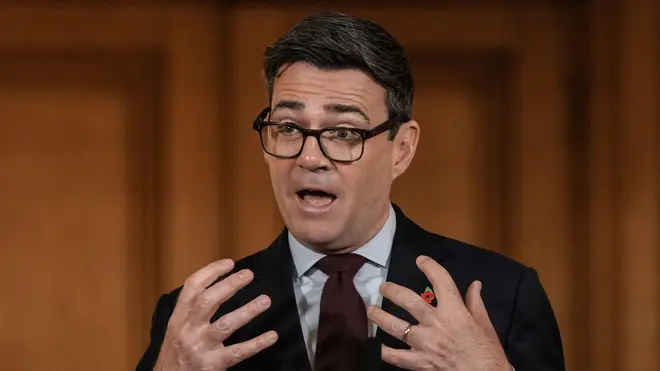
Andy Burnham has previously promised to bring the “essentials of life”, including utilities such as the water sector, under greater public control.
Picture:
PA Images/Alamy
Andy Burnham has previously promised to bring the “essentials of life”, including utilities such as the water sector, under greater public control.
During his keynote speech at the Labour Party Conference last month, the prime minister added that he would bring a strengthened Water Bill to Parliament, setting out a 10-year plan to reform the sector, including a repeal of a Thatcher-era “ideological ban on public ownership of water companies.”
In response, a Thames Water spokesperson told LBC it was undertaking its biggest ever infrastructure project and added: “We take our responsibilities to the environment seriously and as recorded in our 2025/26 Annual Report, pollution fell by 18 per cent and serious pollution fell by 27 per cent in 2025.
“Ofwat highlighted that changes to the Water Industry Regulation Incidents (WIRI) guidance were expected to increase the number of recorded pollution incidents in 2026, not because performance had worsened, but because monitoring had become more comprehensive.”
“We recognise public concern about pollution and remain focused on reducing it further [and] are delivering our largest-ever investment programme, with £20 billion being invested between 2025 and 2030 to improve wastewater infrastructure, enhance environmental performance and build a more resilient network.”
A spokesperson for the Department for Environment, Food and Rural Affairs added: “Thames has been failing the public for a long time, and the Environment Secretary has been clear that nothing’s off the table when it comes to a solution that delivers for customers and the environment.
“We will also deliver a strengthened Water Bill to increase public control, deliver cleaner waters, fairer bills and stronger accountability.”