
For wealth managers seeking to shift their advisory model from transaction-led engagement to a structured portfolio approach, the practical challenge lies in building the systems and processes that make that shift repeatable across a large client base. The ambition is widely shared across the industry, but the execution depends on the specific tools, mandates and internal capabilities a firm is prepared to commit to the transition.
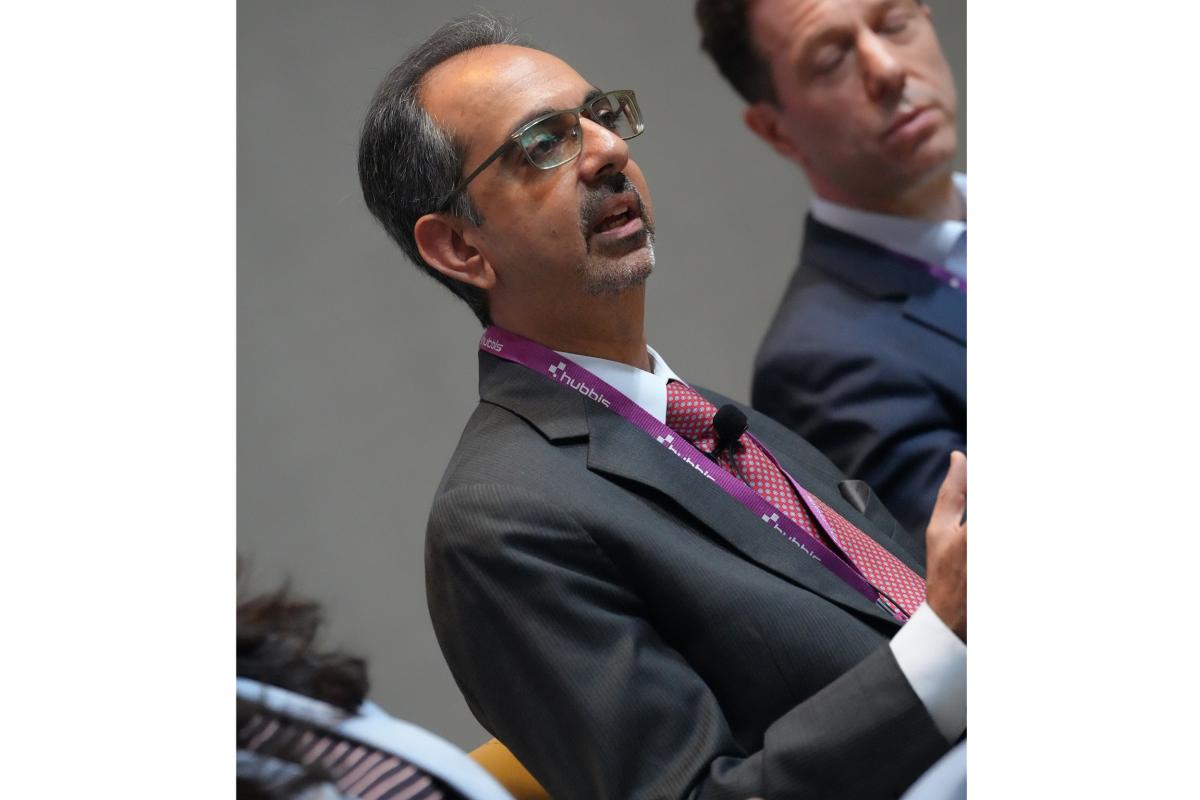
At the Hubbis Investment Forum Singapore 2026, a panel titled Inside the Engine Room examined how leading institutions are investing in their platforms to deliver better advice at scale. The discussion, chaired by Brett Kennedy, Managing Director for Investments at Hubbis, brought together investment leaders from across the private banking and independent wealth management sectors. Rajesh Hathiramani, Managing Director and Head of Active Advisory, Investment Services at BNP Paribas Wealth Management, described how the firm is working to move clients towards a portfolio-based advisory model, the role of an internal screening engine in delivering personalised ideas at scale, and how generative AI is beginning to change the nature of client interactions.
Key Takeaways
BNP Paribas Wealth Management is working to move clients from transactional investing towards a portfolio-based approach, using both discretionary mandates and fee-based advisory as complementary paths, according to Hathiramani.
The firm’s MyAdvisory Program combines top-down CIO asset allocation with bottom-up product specialist ideas, supported by risk and portfolio metrics.
A proprietary engine called Active Portfolio Suggestions screens multi-factor market signals across the client base, which Hathiramani said enables the firm to deliver personalised investment ideas at scale.
A CIO Strategy Fund offers clients a disciplined asset allocation vehicle, which Hathiramani said includes access to private assets, alternatives and commodities alongside traditional holdings.
Clients are already using generative AI tools to prepare for meetings and document outcomes, which Hathiramani said is raising the standard of engagement the firm needs to deliver.
Moving Away from the Transactional Model
Hathiramani opened by acknowledging a reality of the Asian wealth management market as he sees it. “We know clients love to trade,” he said, noting that the positive market returns available over recent years from relatively casual investing had reinforced transactional behaviour. The firm’s objective, however, is to improve the way clients invest by shifting towards a portfolio-based approach.
He described two routes for achieving this. The first is discretionary mandates, which he said have been part of BNP Paribas Wealth Management’s offering for more than 20 years and continue to see steady growth. He noted that more than 70 per cent of portfolio returns come from asset allocation, but that most clients do not pay enough attention to it. The goal, as he described it, is to use discretionary mandates to build a core portfolio position, with satellite and trading activity sitting around that core to provide additional portfolio returns and what some may refer to as “financial entertainment.”
The second route is the firm’s MyAdvisory service, a fee-based advisory mandate. Hathiramani said this brings together top-down CIO asset allocation views, risk and portfolio metrics, and bottom-up ideas generated by individual asset class and product specialists. “We’re really bringing a whole portfolio approach to clients,” he said.
Personalisation at Scale Through Active Portfolio Suggestions
One of the more specific capabilities Hathiramani described was the firm’s Active Portfolio Suggestions engine, referred to as APS. He said the system monitors multiple factors in the market, including company earnings, large price movements and rating changes. Based on these signals, it screens across the firm’s client base to identify portfolios for which a particular investment idea may be relevant.
The output is then worked through with the equities, fixed income and funds teams before being delivered as a specific recommendation, according to Hathiramani. He gave a simplified example: the engine might identify that a client should consider switching from one large technology holding into another based on the factors it has detected.
He described this as a means of delivering personalisation at scale. “We’re able to identify such switch ideas in a more scalable manner,” he said, referring to the capacity to generate and distribute tailored suggestions across hundreds of clients through a systematic process rather than relying on individual relationship managers to originate each idea.
A Disciplined Multi-Asset Vehicle
Hathiramani also highlighted the firm’s CIO Strategy Fund as a more recent addition to its investment platform and has become the flagship asset allocation fund. He said the fund is co-managed by the CIO and the discretionary portfolio management team and is designed to offer clients a disciplined approach to asset allocation investing.
He acknowledged that BNP Paribas may not have been the first to market with such a product, but said the firm’s version includes private assets, alternatives and commodities alongside traditional asset classes. “Not necessarily all CIO funds in the marketplace have available” that breadth of exposure, Hathiramani said. He positioned the fund as an accessible entry point for clients who want a structured, multi-asset portfolio without needing to build one themselves.
Generative AI and the Changing Client Dynamic
On the topic of AI, Hathiramani described a shift that he said is already visible in client behaviour. He recounted recent meetings in which clients had uploaded their portfolios into generative AI tools ahead of the conversation and arrived with a full set of ideas they wanted to discuss. “We now expect more clients to follow this AI-led approach,” he said.
In another instance, he said a client sent the firm a set of meeting notes generated by an AI tool after the conversation had concluded. The notes captured what both sides had said and listed the action items. “It was amazing,” Hathiramani said, but added that it also meant the firm had to respond considerably more quickly. “It has sped up the turnaround time and how quickly we need to react to client requests.”
He framed this not as a threat but as something that makes the work more engaging. “It’s upping the game, and we need to up our game at the same time.”
Hathiramani also referred to BNP Paribas Wealth Management’s AI initiatives in Asia, including AI Village and the broader adoption of generative AI tool, Within the investment team, the firm ran what he called the “Promptastic Challenge”, asking each product and investment team to develop the most effective prompt to improve investment and advisory workflows He said the challenge generated a range of ideas the firm is now working to move from concept to implementation.
Looking ahead, Hathiramani said generative AI is being applied to strengthen the rationale around investment ideas and, increasingly, to identify portfolio risks and opportunities that may not be immediately apparent through conventional review processes. He also pointed to APS as part of the broader technology-enabled effort to deliver relevant ideas more systematically across the client base. “What can AI tell us that we don’t already know?” he said.