
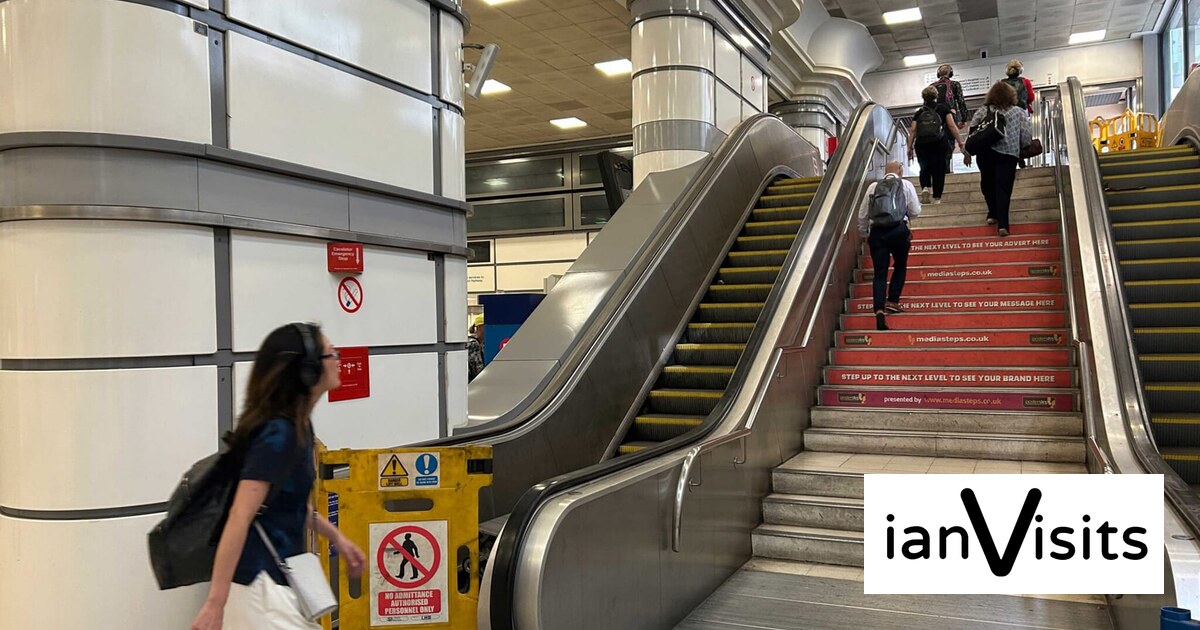
City Thameslink station in central London will close for eight months next year to replace all ten of its ageing escalators.
 (c) Network Rail
Escalator problems at City Thameslink station have plagued the station for some time, worsened by flooding damage, so Network Rail has decided the best option is to replace them all.
However, that means closing the station at the same time.
Network Rail says that while disruptive, a full closure is the safest, quickest, and most efficient way to complete the work. It will significantly reduce the overall project duration compared with carrying out the work while the station remains open, and it meets safety requirements that would not be possible under a partial closure.
City Thameslink station will close from Monday 17th May 2027 until late-December 2027.
During the closure, Thameslink trains will continue to run as normal but will not call at the station.
City Thameslink has two entrances at either end of the platforms, and Network Rail recommends that all City Thameslink passengers use Blackfriars as an alternative. They’re explicitly advising people who use the northern entrance not to walk to Farringdon station as it’s already a busy station.
Network Rail says additional staff will be on hand to help customers complete their journeys and manage increased passenger flows.
Lucy McAuliffe, Sussex Route Director for Network Rail, said: “We know closing City Thameslink is a significant change and we’re sorry for the disruption it will cause. This is not a decision we have taken lightly. We have looked long and hard at every possible option and, although none of them are without impact, a single closure is the least disruptive and most efficient way to carry out this vital work.
“City Thameslink’s escalators are at the end of their operational life. By replacing them now we’re tackling the root causes of access disruption for passengers in one go. This means that when City Thameslink reopens in December 2027, customers will benefit from completely renewed escalators, designed to provide safer, more dependable and accessible journeys through this important station on our network.”