
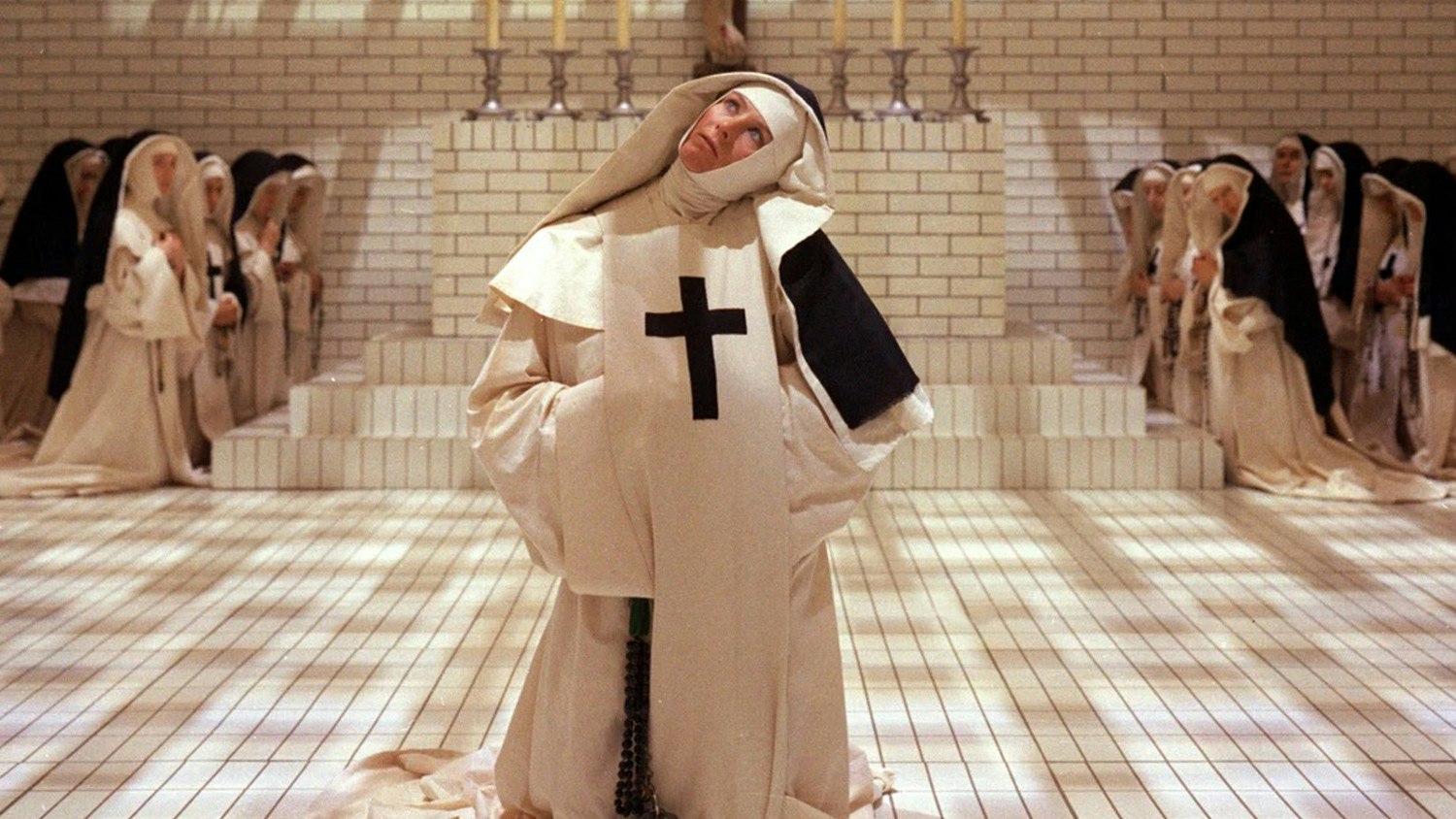
“No, I didn’t think I’d ever see Sister Jeanne on a t-shirt,” Mark Kermode admits. Vanessa Redgrave’s sacrilegiously horny nun in Ken Russell’s 1971 film The Devils – whose cloistered lust brings hell to a 17th Century French town – is not obvious t-shirt material. In part because The Devils has never been widely available, banned in several UK cities, hacked at by censors and studios. Until now. In 2026, The Devils is finally among us once more, in its full uncut glory – and with t-shirts to boot. “I’ve seen one which just says, ‘Fuck it, let’s release The Devils’,” Kermode chuckles. Fuck it, indeed.

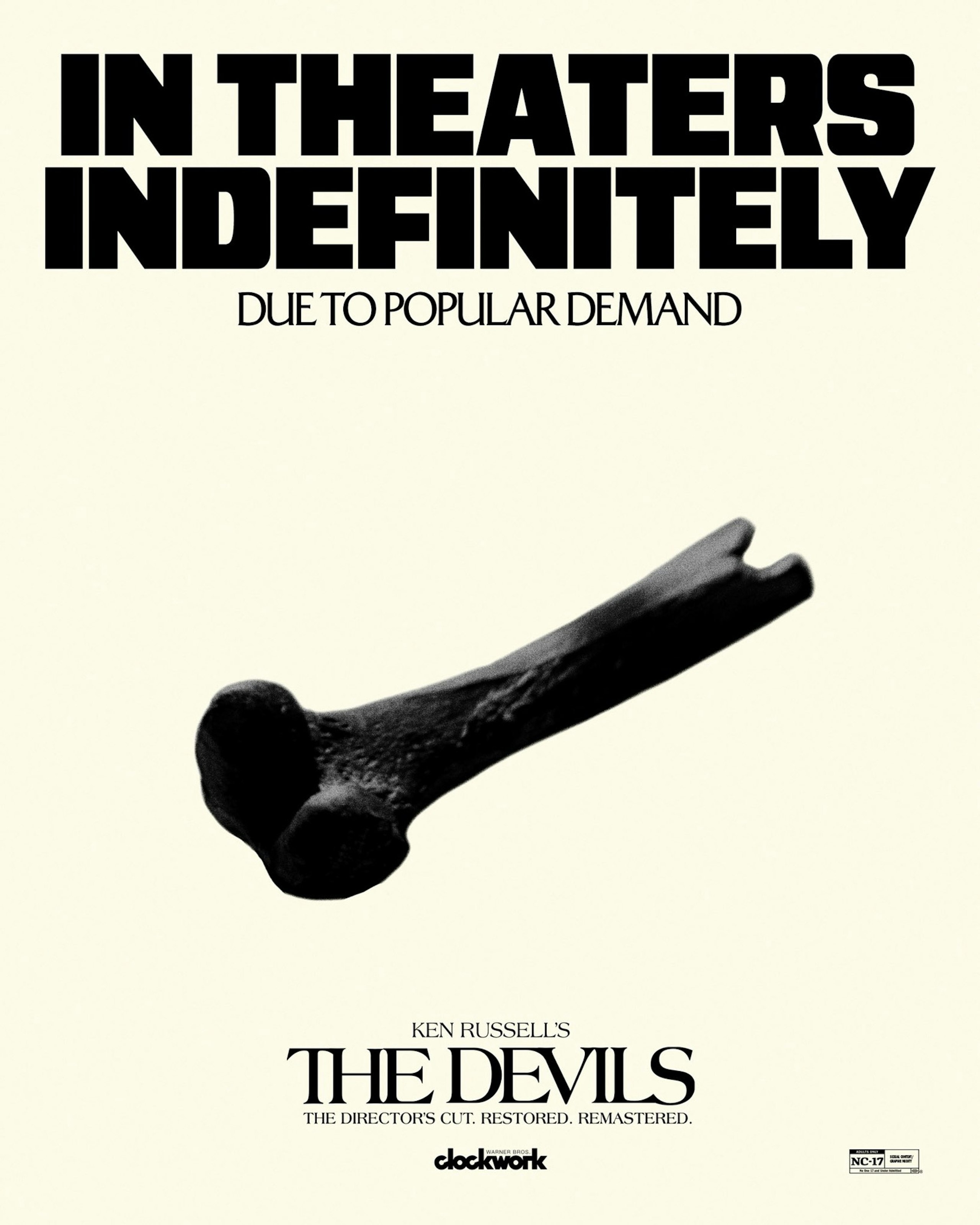
Against all odds, the must-see movie this Halloween season isn’t a new Conjuring, nor a new A24 film from a Curry Barker wunderkind. It’s The Devils – made over half a century ago by a Brit director better known for The Who rock opera Tommy, and the Oscar-winning Women In Love. Now fully restored – not just uncut, but remastered frame-by-frame – The Devils returns as event cinema, following a rapturous festival run.
It even boasts a bass-rumbling, eye-sizzling new trailer, pulsing with images of debauchery and blasphemy, more akin to the marketing for Robert Eggers’ Nosferatu than a typical re-release. There is nothing retro about The Devils’ resurrection. “My instinct was, Ken would have loved [the trailer],” reckons Kermode, who has long campaigned for the film’s restoration. “They don’t want you to look at this as a 55-year-old film, a relic that we’ve dusted off. They want you to look at it as a contemporary film.”
Months before its Halloween-ready wide release (via Warner Bros’ new indie-leaning ‘Clockwork’ label in the US, and the BFI in the UK), The Devils was the film on everyone’s lips upon its Cannes premiere this summer. “All the headlines were, it was both the hottest ticket in town, and the coolest screening in town,” says Kermode, who was in the middle of the fray. “We were outside before the screening, and people [were] touting: ‘Have you got a ticket? Have you got a spare ticket?’ There was this palpable feeling that something really exciting was happening.”
Russell’s film looks modern. Feels modern. And modern audiences are responding in a modern way.
It’s been a long time coming. Russell adapted his film from John Whiting’s play, and Aldous Huxley’s account of the real historic events, titled The Devils Of Loudun. In 1971, the film was heavily censored – the biggest loss being a pivotal central sequence in which a group of corrupted nuns enact a scene of mass ecstasy, writhing around a crucifix in an eye-popping display of sexual reverie. The footage was long lost, and Kermode – a longtime Russell devotee – often enquired of its whereabouts. In the early 2000s, Warner archivist Tim Everett rediscovered the reels in a mislabelled tin, reinstated by the film’s original editor, Mike Bradsall, for a 2004 screening. But a wider release never came – until Clockwork called over 20 years later.
“There were times when I was absolutely certain that it wasn’t going to happen,” Kermode admits. “When we were in Cannes, I was sitting with [Russell’s wife] Lisi and we kept turning to each other going, ‘Is this actually happening?’” Now it’s happening on a worldwide stage. The Devils isn’t just being pitched to horror-heads as a new movie-going experience – it’s being received as one too, given its formerly unattainable status. The film doesn’t play like something made over half a century ago, either – strikingly contemporary in its crisp, stylistic visuals, from the minimalist white walls of Loudun, to the maximalist pageantry of King Louis XIII’s court. Russell’s approach was to “not look like a historical work,” notes Kermode. “If you’re living in Loudun in the 17th century, it doesn’t look old and mossy. The people who lived in Loudun were modern people, and they thought their city was a modern city.”
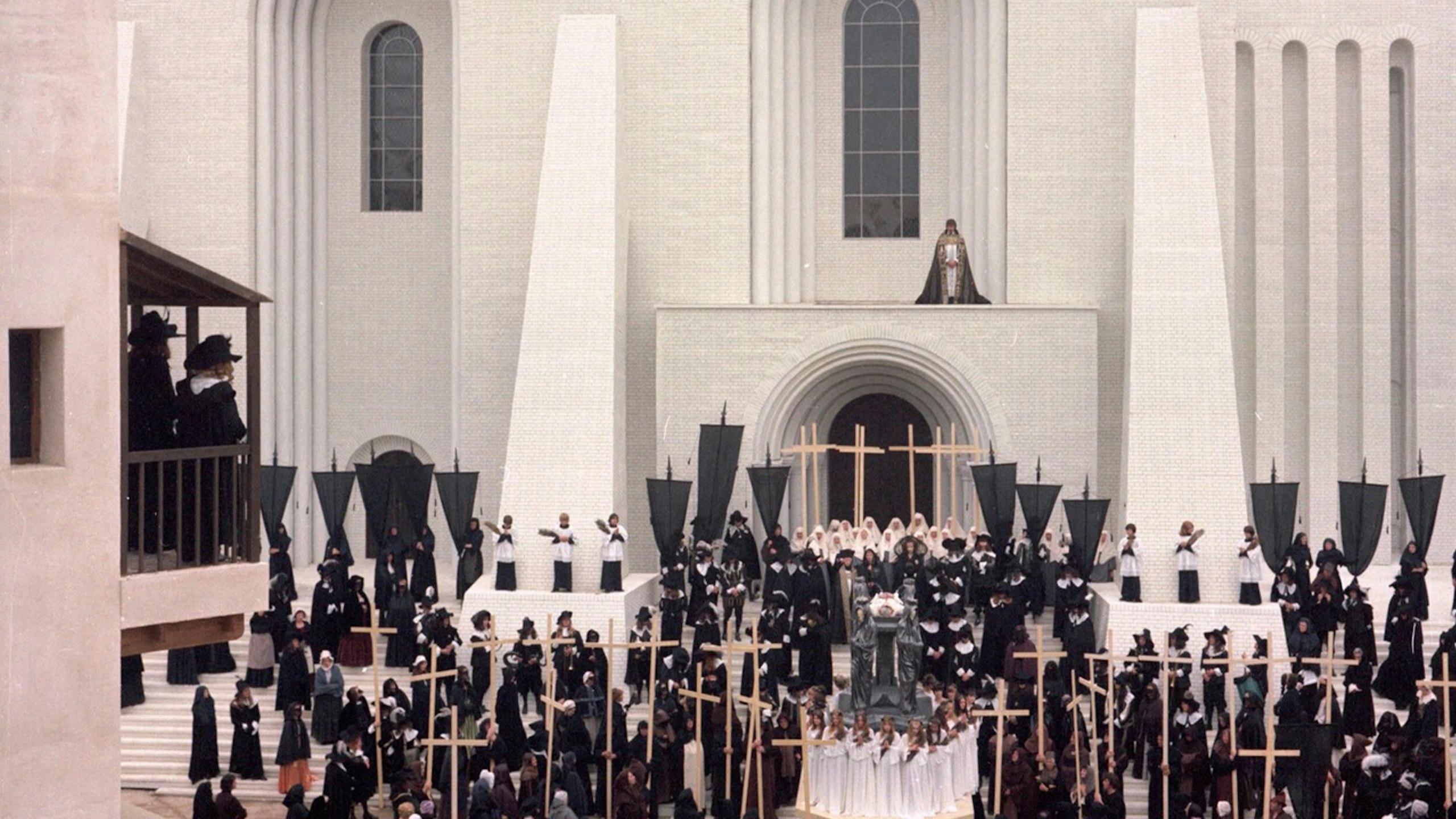
It is uncannily prescient thematically, too. In our supposed ‘post-truth’ era, The Devils plays as a parable of the death of objective reality, where moral bastardisation is justified by religious fervour. Like The Odyssey – or even Digger – it depicts a world in which society’s codes have been irrevocably broken, with cataclysmic consequences. Such contemporary parallels have shape-shifted over The Devils’ lifetime, very much by Russell’s design. “The events are in the past, but they are referring to the present and to the future,” surmises Kermode. “In 10 years’ time, it’ll be a parable of another modern age, and people will read different things into it.”
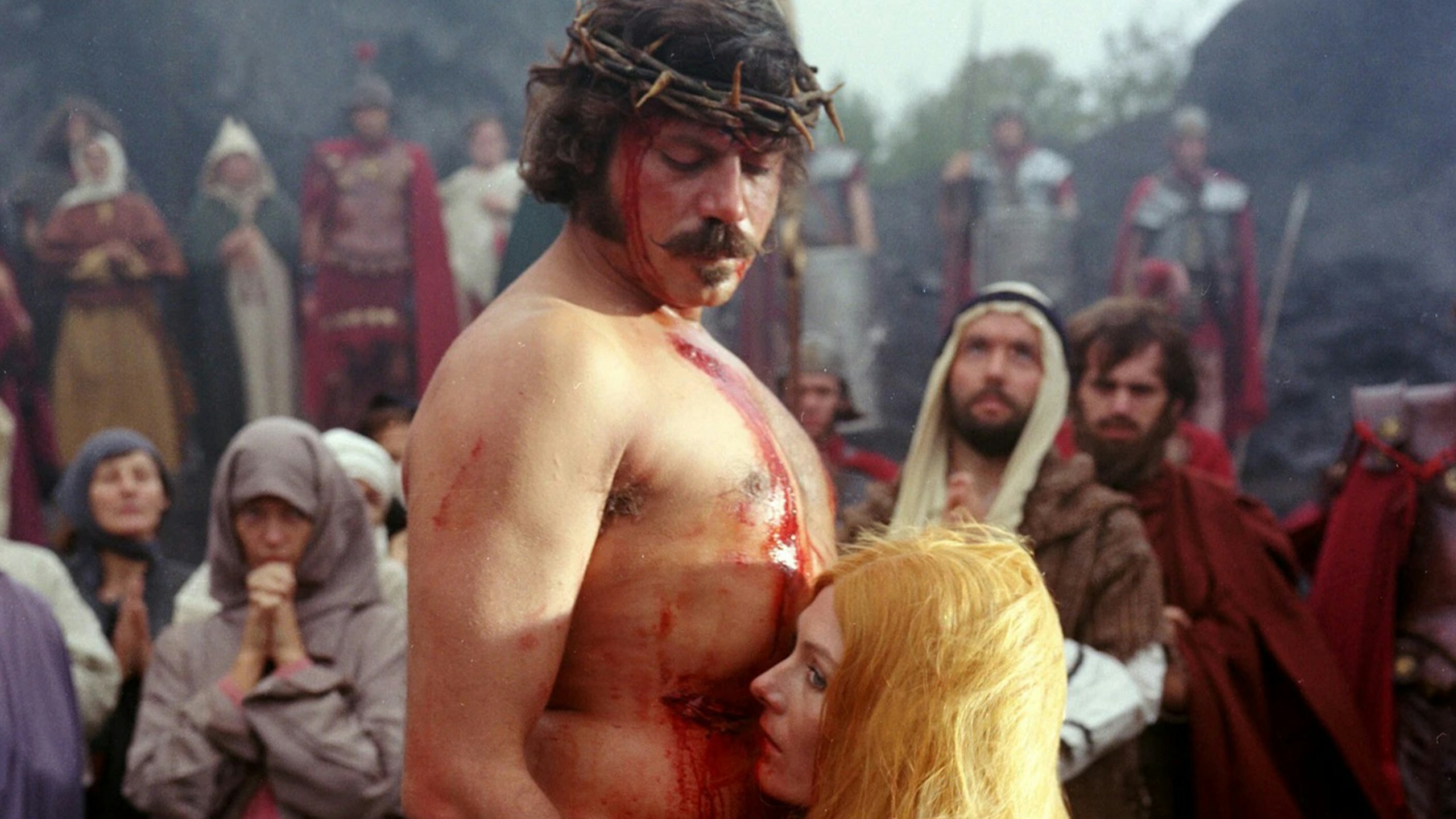
Shocking, too, is just how… well, shocking The Devils remains. As Halloween viewing, the film might not be the outright fright-fest people have imagined over the decades (“There aren’t any devils in it that aren’t human,” Kermode puts it). But it is a cinematic assault on the senses – a film about extremity, told in an extreme mode. Russell dubbed it the “cinema of experience”; here, that experience includes wince-worthy physical cruelty, profane sexual exploits, immolation, and stomach-churning power-hungry villainy. “It hurts,” says Kermode. “Why does it hurt? Because you believe that that guy is actually being tortured. If you’re emotionally engaged, things hurt a lot more. And I mean hurt in a good way. They bite.”
The sensibilities of the film are strikingly similar to where the horror genre has returned in recent years: auteur-driven (see the official title: Ken Russell’s The Devils), formally experimental, blending arthouse sensibilities with did-they-just…? shocks. It’s all come full-circle; over 50 years later, The Devils re-enters a lineage of films inspired by the likes of The Devils.
Russell’s film looks modern. Feels modern. And modern audiences are responding in a modern way. It’s recently entered the Letterboxd Top 250 after a flurry of fresh views and rave reviews. There are those streetwear-inspired Sister Jeanne shirts for purchase. Social media is awash with people thirsting over Oliver Reed’s rugged priest, Father Grandier – whose sheer sexual magnetism is central to the plot. (“Tell me, as an old man, what is a thirst trap?” Kermode enquires when presented with this notion.)
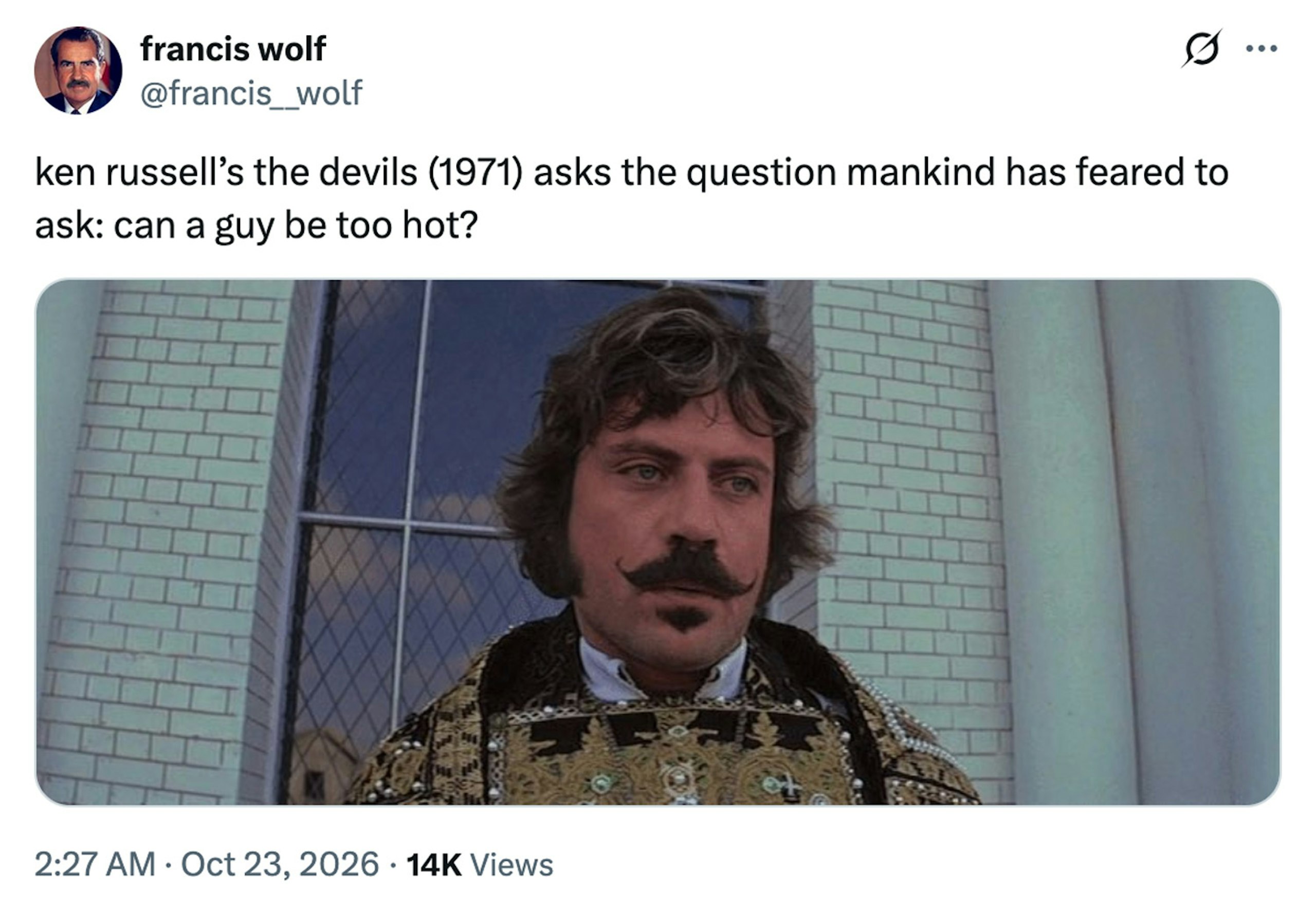
Such visceral audience responses – particularly to the film’s sensuality, its extremity – are proof that The Devils is truly alive again. “The camera is looking at Grandier as everyone in that film looks at him,” says Kermode. “It’s Ken, looking at Oliver Reed through the lens, and Oliver Reed transforming into Grandier, making you see what Sister Jeanne and everyone else was seeing. Which was: there’s a man worth going to hell for.” Amen. Fuck it, let’s go and see The Devils.
Ken Russell’s The Devils is out now in US cinemas, and in UK cinemas from October 30