
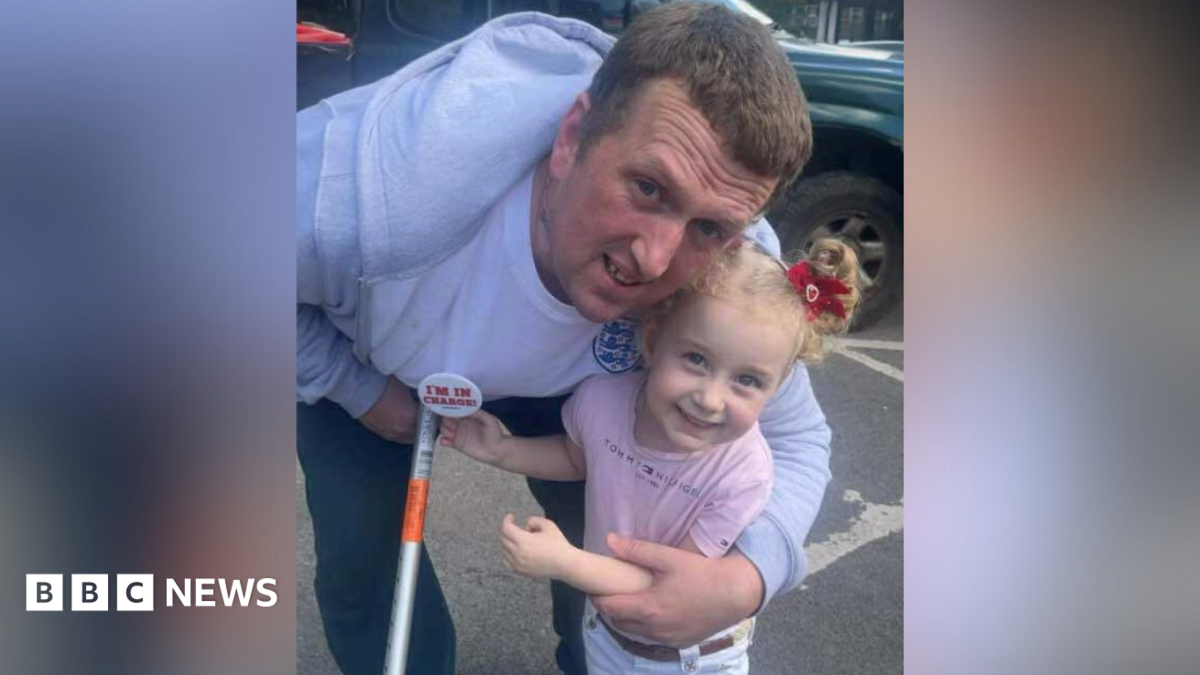
Darren spent nine weeks in hospital recovering from the stroke and its complications, which at times left his life hanging in the balance.
He returned home to be cared for after declining a place in a long-term rehabilitation centre because “he just wanted to get home to his young family”.
But him being back at home was not easy, Sophie said, with her husband unable to walk unaided or verbally communicate.
“We were speaking through the Jabber, which is a text-type computer to enable communications,” she said.
“He learnt how to talk with the children and how to be at home again.”
Just over two years on from his stroke, Darren now lives with attention, memory and cognitive difficulties, can only walk short distances and still struggles to speak.
He is now looking to set up a stroke survivors group for people around his age, after he found that meeting others with similar experiences had been “the first time I felt truly understood” during his recovery.
“When you see what you need to pull through for, then you pull through, and he’s found his inner strength from the children,” Sophie said.
“It’s a big change for the whole family, and the person from going from the breadwinner to the person that then needs help is a huge emotional rollercoaster.
“But there is hope and light at the end of the tunnel.”