
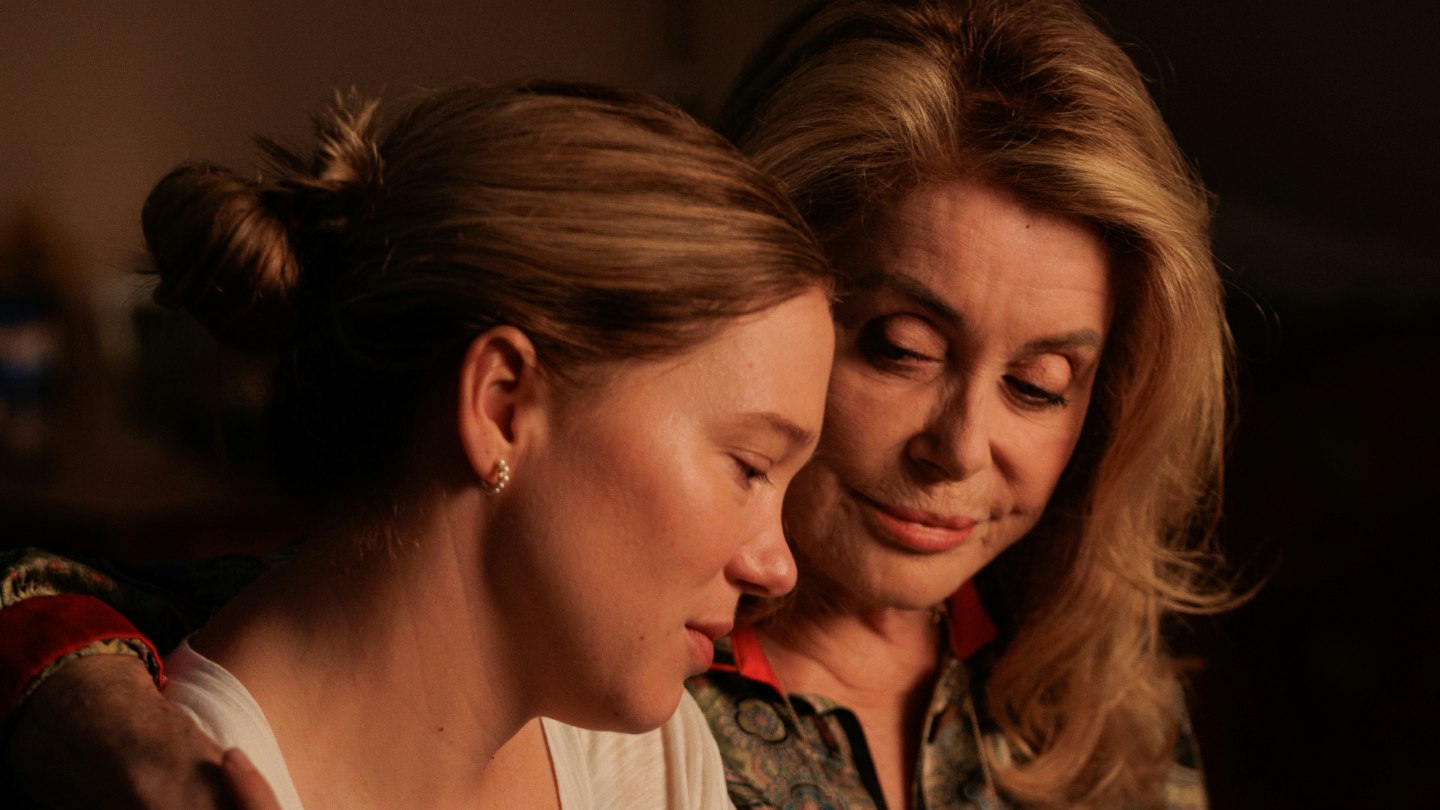
After her husband’s devices are seized on charges related to child exploitation, successful musician Lucy (Léa Seydoux) must reckon with his reported crimes while protecting their young son.
In a cavernous countryside home near Munich, which at first holds promise for their young family, Léa Seydoux’s soulful pianist Lucy practises a stripped-back reworking of Charles & Eddie’s ‘Would I Lie To You?’. It’s part of her repertoire of male-written pop songs (The Cure’s ‘Boys Don’t Cry’ features later on) which she covers at sold-out concerts, but it’s also an omen of brittle betrayal around the corner. When special investigator Elsa (Jella Haase) arrives shortly afterwards, with a dedicated team investigating her husband Philip’s (Laurence Rupp) potential possession of child sexual-exploitation material, Lucy’s seemingly idyllic world, which revolves around their son, shatters, leaving her to tread over the pieces alone.
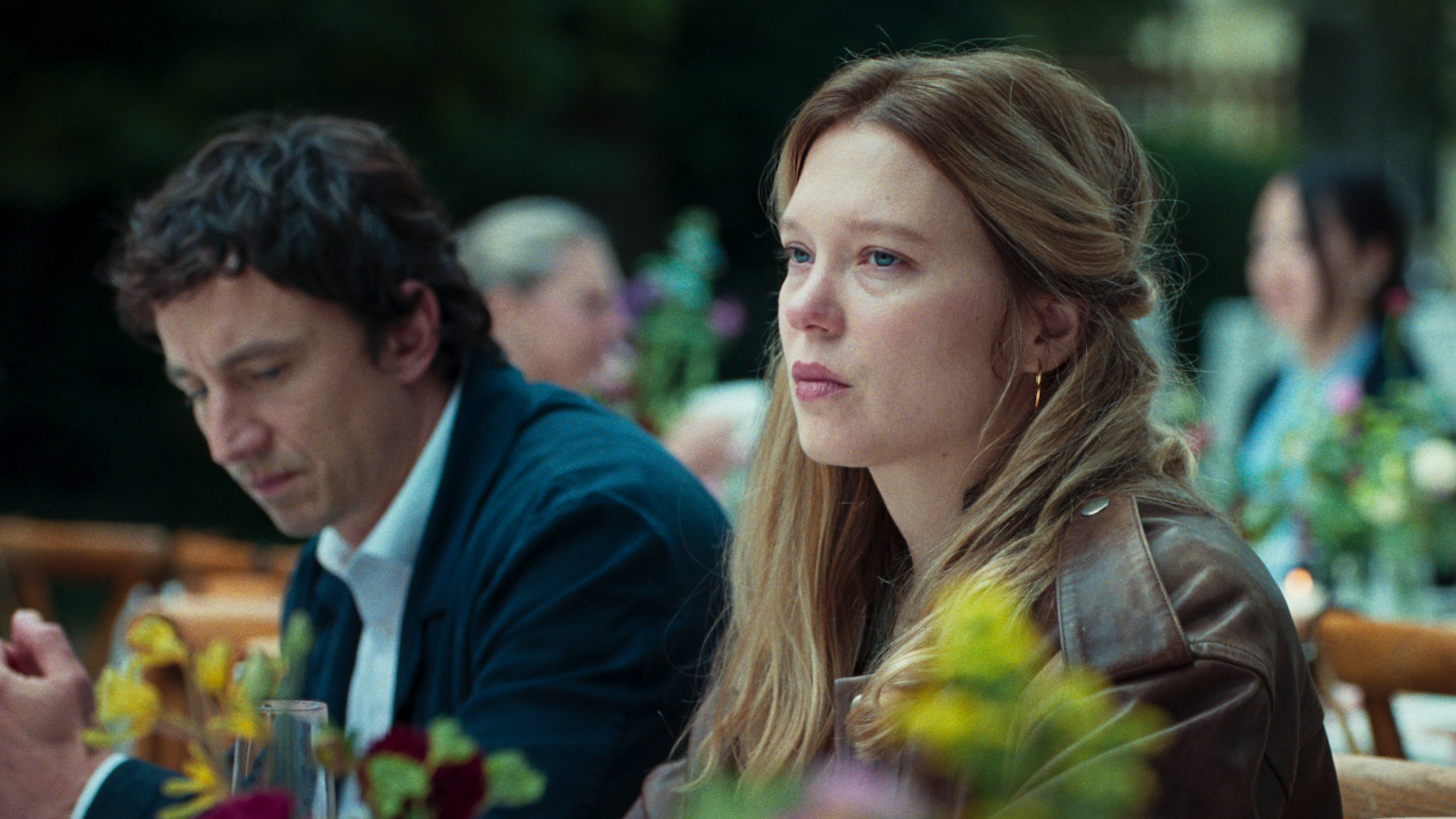
Here, the film splinters, as Elsa’s own homelife involves a predator: her elderly father, who harasses his live-in nurse under their shared roof. Through her we see Lucy’s case plainly, making her own eagerness to keep the nurse in-house murkier. Yet the complexities of her story and the broader picture of men’s wretchedness that it paints aren’t enough to justify drawing the focus away from Lucy.
When the spotlight is on her, Seydoux’s sensibilities bloom as a dazed woman struggling to eject herself from her train crash of a marriage. Writer-director Marie Kreutzer often keeps the camera lingering close to the actor’s anguished face as further revelations crash down on Lucy’s solitary life, emotion flooding the frame. Occasionally it all lands too heavily — the sentiment of the songs that Lucy unravels then reconstructs as her own, a scene which places her quite literally at a fork in the road — but Seydoux’s ability to grind down through her character’s panic and vulnerability bring nuance to her narrative. Haase is commendable, although Elsa is harder to read: an extension of her bleak profession, sure, but also a further distraction from a thorny dilemma that poses deep questions of morality with no promise of answers.
Seydoux is remarkable in this searing if unsubtle study of male predators, and the women left reeling in the aftermath of their crimes.