
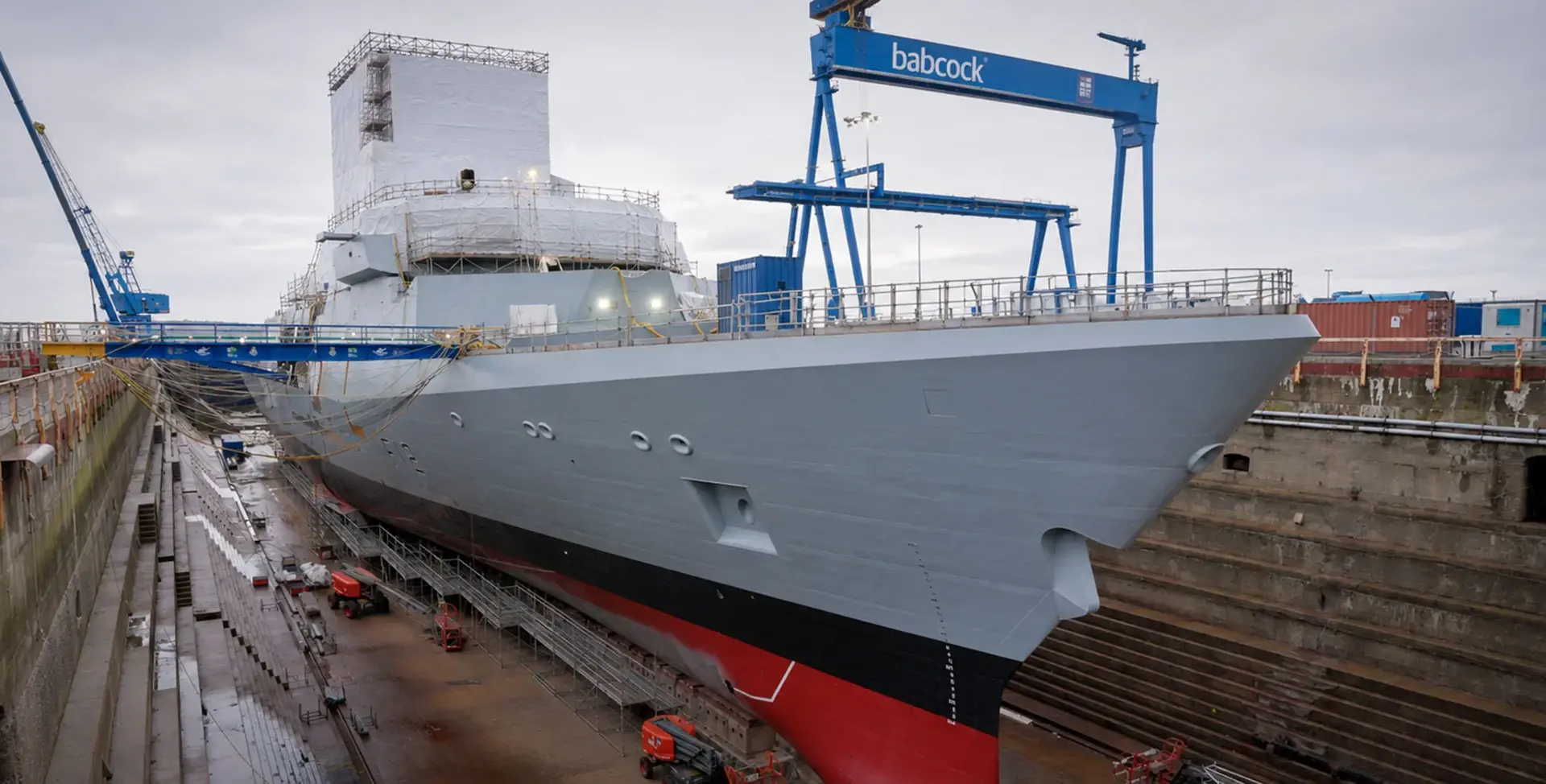
Babcock has confirmed they expect to deliver HMS Venturer to the RN in 2028, around two years later than the handover anticipated when she was launched. The date provides some clarity on the delayed Type 31 programme, but delivery is a very different milestone from being ready for operations.
Babcock’s marine chief executive Sir Nick Hine told the Scotsman that he was trying to contain the impact of delays across the five-ship programme. However, the speed at which the customer can accept and introduce the ships into service will influence the overall timetable.
Hine points primarily to external pressures since the contract was signed in 2019, including COVID and the war in Ukraine. Rising energy, labour and supply chain costs have squeezed a programme constrained by its funding profile. Some mistakes were also made in the early construction phases of the first two ships, with Babcock absorbing the costs. Together with the external pressures, maintaining the required performance within a restricted financial envelope has inevitably caused the schedule to slip.
The potentially greater concern now lies on the customer’s side. There are unconfirmed indications that shortages of suitably qualified personnel within the RN and National Armaments Director Group could constrain the acceptance process. The extent of this problem has not been publicly established, but a shortage of people authorised to assess evidence and approve systems risks adding another queue between completion at Rosyth and operational service.
There are also concerns that so far, the MoD is unwilling to simplify its approach to certification after delivery. This process requires inspections and tests to ensure the ship is safe and performing as specified. Sticking to very strict certification procedures because this is always how we have done it is difficult to justify when the RN’s desperately needs ships as quickly as possible. Taking a common sense approach, balancing safety with a determination to get a minimum deployable capability to sea quickly should be the priority.
A similar issue was encountered when the aircraft carriers were brought into service. This forced the MoD to make use of personnel employed by the shipbuilders, although partially a case of marking your own homework, this reduced some of the delay. More broadly, the situation can be traced back to the disastrous erosion of the MoD’s own in-house design, engineering and technical assurance expertise. Successive reductions and the transfer of greater responsibility to industry have weakened the department’s ability to act as an informed customer and write good contracts. Experienced engineers provide the judgement needed to challenge contractors, assess evidence and approve proportionate solutions. Without sufficient people able and empowered to make those decisions, elaborate approval processes risk becoming a substitute for technical confidence, adding delay when the fleet can least afford it.
Similar issues also apply to getting the first Type 26 frigates into service. An embarrassing scenario must be avoided where brand new ships are tied up alongside, unable to go to sea due to lack of certification specialists and a rigid adherence to process. At a time when threats are rising and the frigate force is close to collapse, this would be unacceptable and could also undermine UK warship export success.