

The Supreme Court on Friday flagged the culture of exchanging Diwali gifts as a contributor to vehicular pollution in Delhi as the national capital continued to breathe toxic air. Underlining that a “cultural shift” was needed to curb the annual pollution menace in Delhi, Chief Justice of India (CJI) Surya Kant said the rich had turned the practice of exchanging Diwali gifts into a social and status symbol.
“This culture adds to vehicular pollution. People need to realise what our original culture is and what should be done,” the CJI said. The Supreme Court’s sharp remarks came as the overall AQI in Delhi came within touching distance of the severe category on Friday. As per the Central Pollution Control Board (CPCB), the average AQI was recorded at 389, even though it surged past 400 in several regions.
It is a situation that Delhi deals with every year, with stubble burning from neighbouring states making the city a literal gas chamber around Diwali.
Delhi’s markets have been choc-a-bloc over the past few days, witnessing a festive rush ahead of the key festival on November 8. Especially in North India, exchanging gifts during Diwali has become an entrenched tradition.
This is the issue that the CJI has raised.
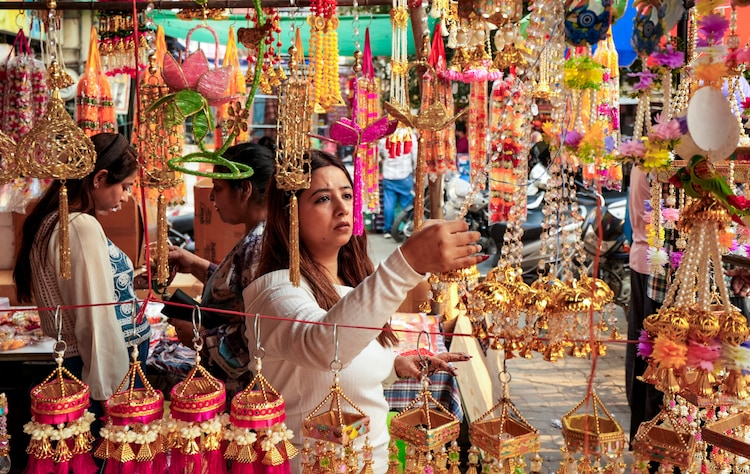
The CJI said a ‘cultural shift’ was needed to curb the annual pollution menace in Delhi (PTI)
WHAT CJI SAID ON DELHI’S POLLUTION MENACE
The CJI pointed out that the root problem was not merely the number of vehicles on Delhi’s roads, but the fact that vehicles from across the country enter the city, making it difficult to monitor their emissions.
“It’s a free-for-all. Vehicles from across the country come in. You cannot monitor the overall condition of the vehicle or what kind of emissions it is making. Even if a vehicle comes in for two hours, the damage is done,” the CJI said.
To this, Additional Solicitor General (ASG) Aishwarya Bhati, appearing for the Centre, said steps were being taken to tighten monitoring.
Stage 2 of the Graded Response Action Plan (GRAP) has already been imposed, which includes measures like water sprinkling and stricter border checks to enforce vehicle restrictions.
“Pollution Under Control (PUC) certificates are now being geotagged at the spot where the tests are being conducted,” the ASG said, adding that measures were already underway to stop “visibly polluting vehicles”.
However, the top court pointed out that the issue was not simply the number of vehicles. “It’s not the strength of the vehicles. It’s how long they are on the road,” the CJI said.
CJI CALLS FOR ‘CULTURAL SHIFT’
A counsel suggested that the practice of exchanging Diwali gifts might need to be stopped to arrest vehicular pollution. The CJI said this was the kind of “cultural change” that people needed to embrace.
Justice Joymalya Bagchi, who was part of the three-judge bench, also flagged the growing commercialisation of festivals like Diwali. “There is a trend of commercialisation and commodification of the festival,” Justice Bagchi said.
To this, senior lawyer Aparajita Singh, who is helping the Supreme Court as the amicus curiae, argued that the poor suffer the most.
The CJI, however, cautioned against overlooking the economic realities of the poor during the festive season.
“We should not say much. This is the time when the poor people, who don’t generate any pollution, earn money. They set up stalls, sell diyas,” the CJI said.
“It is those who can afford and are making this a part of their social and status symbol. They are adding to the vehicular pollution,” he further said.
Before wrapping up the hearing, the CJI said that the more orders the Supreme Court passes, the more cases of non-compliance could occur.
“No restriction will work without people’s contribution. The more we restrict, the more we will see violations. The local councillors and RWAs should request people that Diwali celebrations should not contribute to pollution,” the CJI said.
– Ends