
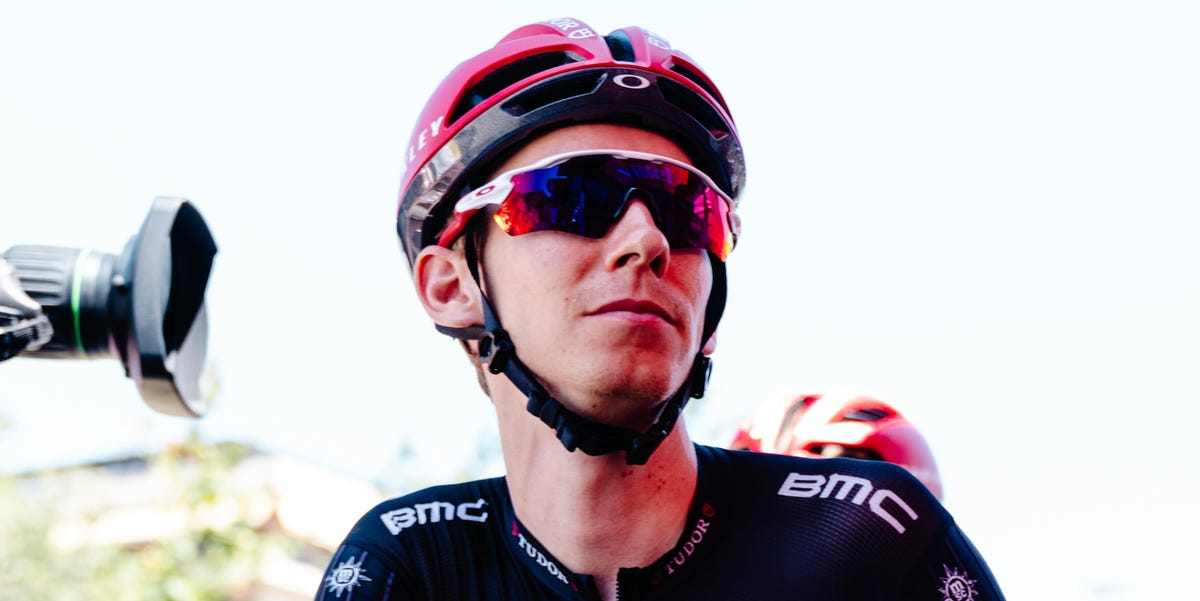
“I think you probably need to be quite insane to do this”, I say to Fabian Cancellara, two-time Olympic gold medallist and head honcho of Tudor Pro Cycling, at the end of a wild and long day on the Tour de France. Is ‘insane’ the right word? Probably not… Fanatical? Obsessive? Compulsive?
“A screw loose,” he offers up.
If you don’t know quite how bonkers the Tour de France is, here are some numbers. 3,245km over 21 daily stages. That’s approximately 155km of racing per day for almost the whole of July, day in, day out. You’d probably be exhausted just driving it, let alone saddling up every day and competing tooth and nail in the third most watched sporting event on the planet.
SWP-3109
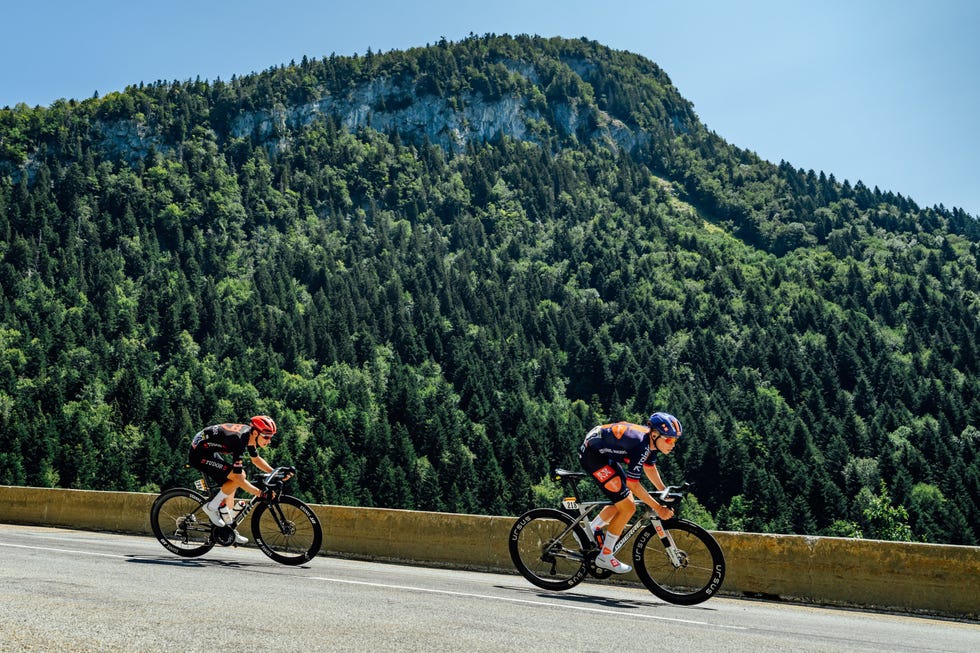
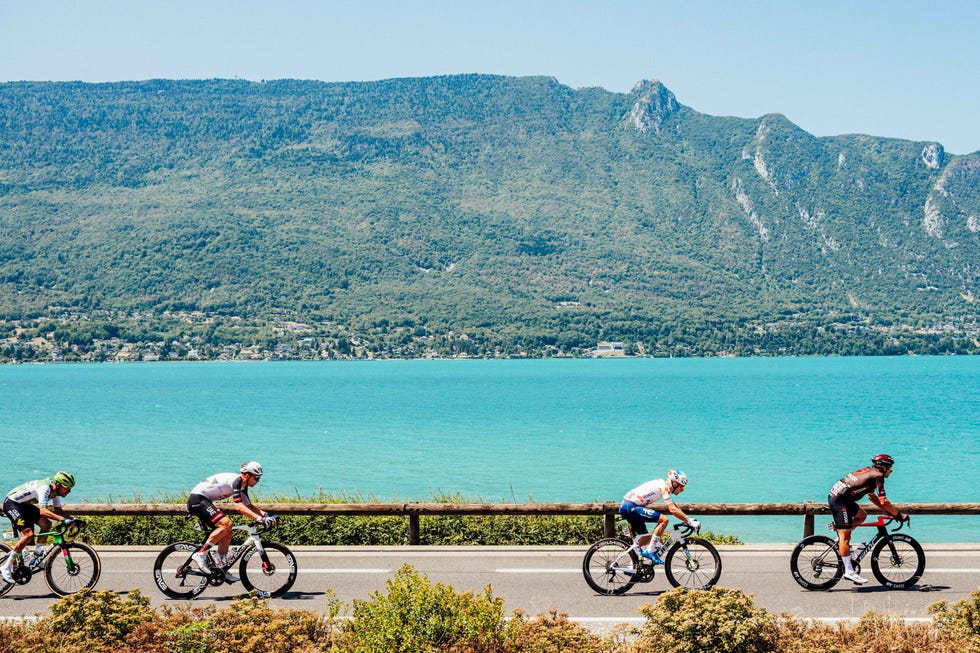
It’s also difficult to explain quite how fast these guys are going all the time. Well, technically it’s not that difficult: the average speed was 43km/h across the whole Tour, with speeds regularly exceeding 100km/h (62mph) on the downhills. But the actual feeling of the peloton coming past you in a blur of carbon fibre and whirring Lycra-clad limbs is basically just “WHOOSH!” and goodbye. Even when they’re riding uphill.
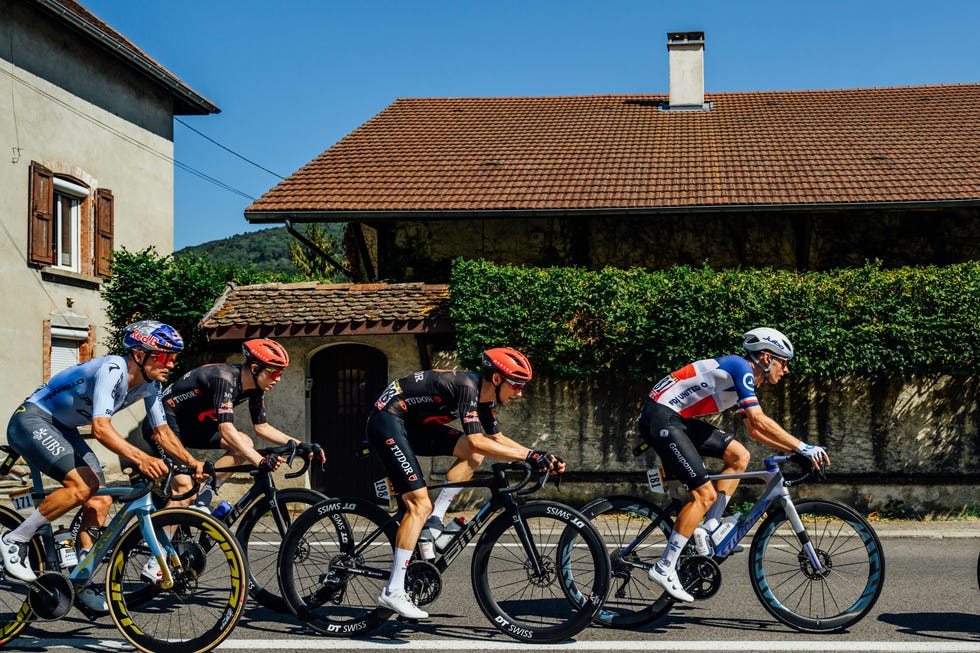
Esquire has been invited along to witness the exploits of the Tudor Pro Cycling Team, which is now in its second season on le Tour, so I’ve found myself here on the leg from Chambéry to Voiron. It’s a not-so-breezy 175km, with gruelling climbs taking the riders 2,000m up into the foothills of the Alps in 33-degree Celsius heat.
SWP-3109
My front-row seat is in one of the support cars that follow the riders on the race, but which also zoom off the course to make shortcuts and get ahead of the peloton for whatever is needed. The TV footage is beamed into the car live via its own Starlink device, so you can have the uncanny experience of watching yourself being tailed by a news helicopter, OJ style.
The real experience is on the roadside though. Life truly shuts down when le Tour is in your town or petit village. If you live anywhere along the route, on the day that the race rolls through you probably aren’t going to make it to work, and you’ll join the throngs of people lining the roads as they’re closed off to all but cyclists and team cars. It’s like the carnival has come, quite literally – before the riders whip through, a caravan of sponsored trucks drives the race route, throwing gifts to the kids. And then, everyone waits around for the WHOOSH! moment.
Trying to make it home ahead of the leaders, we race off to the finish line, joining the Formula 1-style paddock of race team buses. Tudor’s is pretty palatial, black leather and a faint whiff of rock ’n’ roll – Spinal Tap except with energy gels and onboard massage chairs.
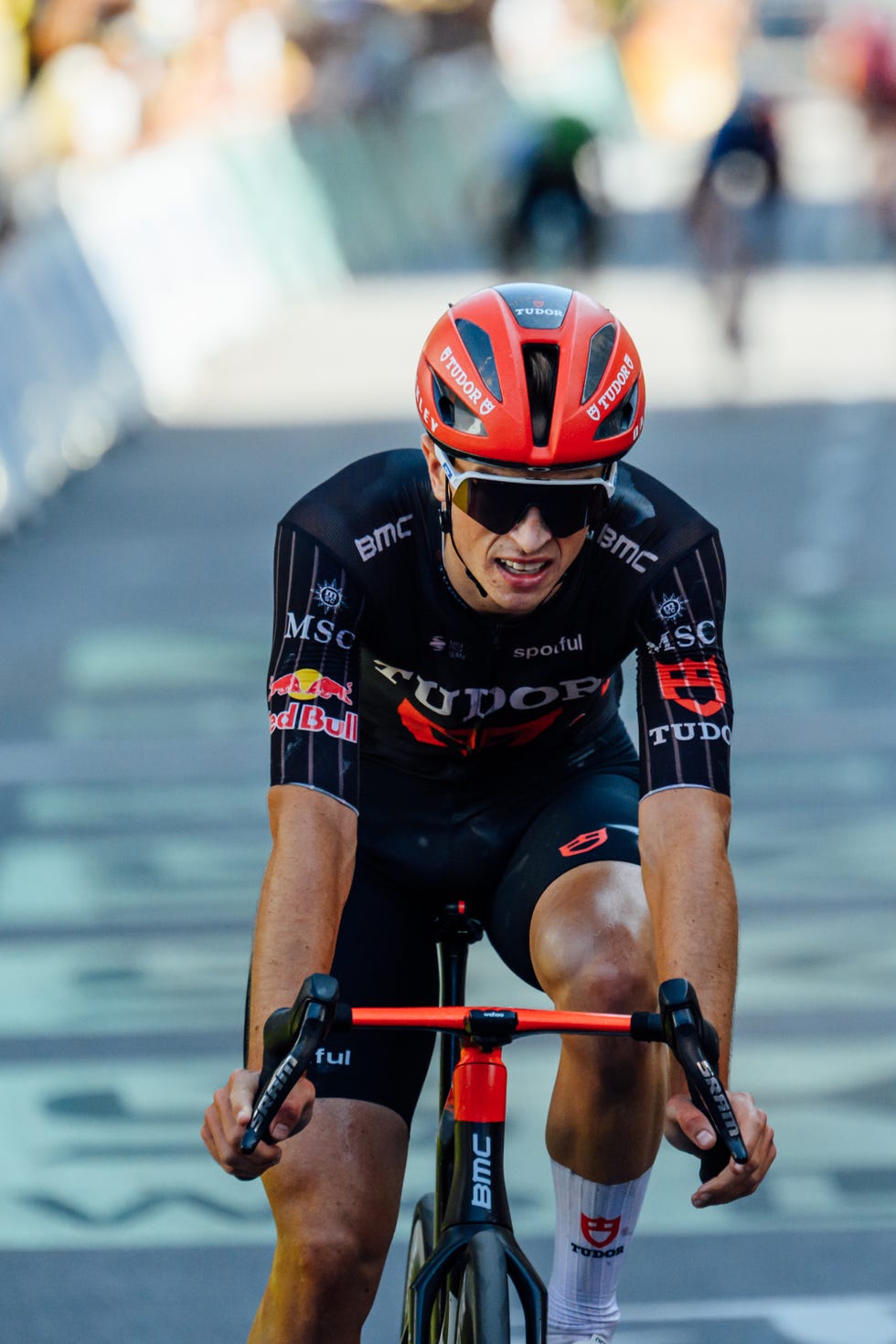
And my Lord do these guys deserve a little pampering. By the time they arrive in Voiron, most of the Tour’s riders look like skinned rabbits in Rapha – nothing much left of them but leg muscle, bone and twitching tendon. They move gingerly (or are helped to move) from their steeds to spin bikes to work off any excess lactate in the limbs, while the day’s prize winners and podium placers somehow find the endorphins and energy to bounce around in celebration.
 rs.solutions
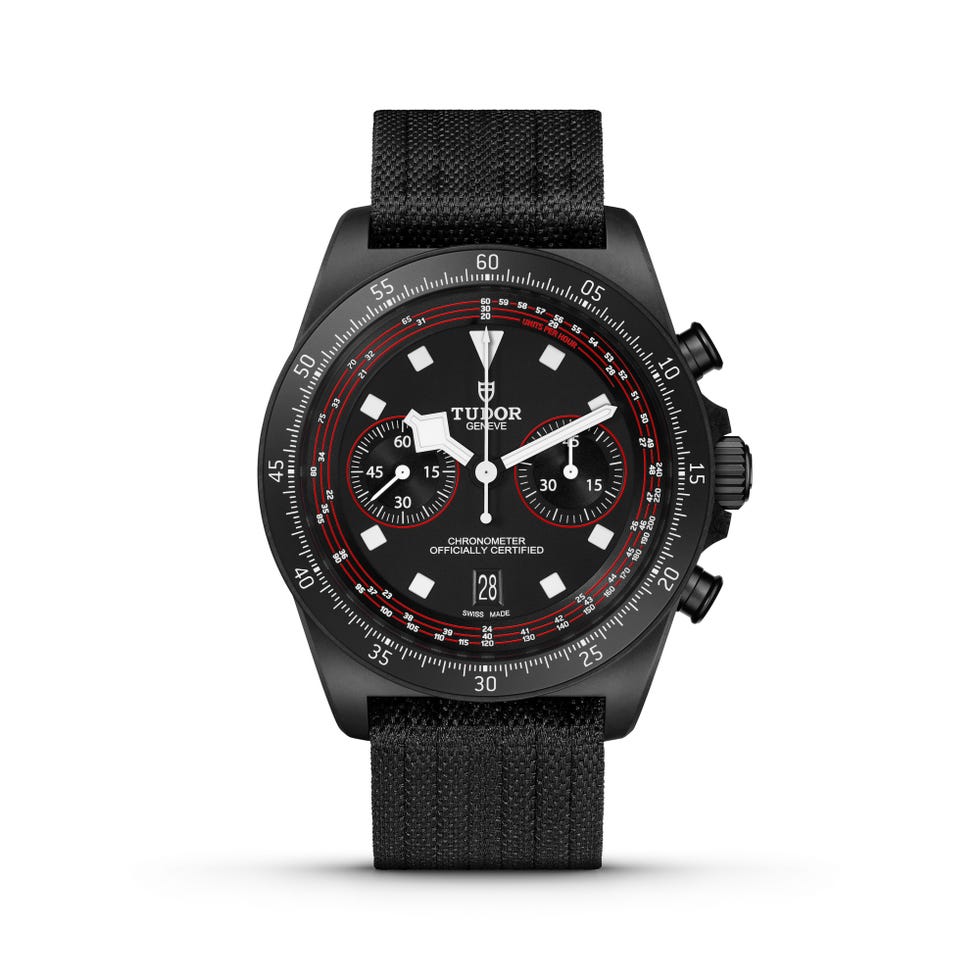
Tudor Pelagos FXD Chrono “Cycling Edition”
Finish-line duties done, Fabian Cancellara has just taken himself on a ride for an hour, flat out, on one of the team’s carbon race bikes to decompress from the stresses and strains of the day. “I call myself an ADHD kid, full hyperactive,” he says when we catch up in the hotel bar after his “me time”. That unstoppable energy has been the driving force behind the team’s origins, which started with one initial 90-minute chat between Cancellara and Tudor that extended to a five-hour meeting.
It all snowballed pretty rapidly from there, and next year’s launch of a full headquarters will be something of a first. A bespoke facility for the team’s training, yes, but also something of a brand and fan experience. “It’s not only a place for our equipment,” he explains, “it’s also a place we want people to explore. We want people to come over. We want people to learn from us and get the feeling of what we do.”
The commitment to this sort of rounded, sustainable success is all underpinned by Tudor, which is currently celebrating its first century in business. Established in 1926 by Rolex founder Hans Wilsdorf, less as a sub-brand and more a rough-and-tumble younger brother, Tudor initially made its name with diving watches for the French armed forces and the US Navy SEALs.
Today, that daring spirit underpins its partnerships with Racing Bulls in Formula 1, the All Blacks in rugby, big-wave surfing contests at Portugal’s Nazaré and Hawaii’s Jaws, and the Ultra-Trail du Mont-Blanc, aka the ‘trail-running Olympics’.
Fittingly for the partnership, Team Tudor’s on-road captain Marco Haller is a real watch guy, and there’s genuine pride for him in the partnership. Haller’s been into the Tudor workshops. “In a very digital world where everything is based around computers or whatever, it’s amazing to see how a watch actually works,” he says.
Of course, we end up doing a little wrist-off. I’m sporting Tudor’s new Black Bay Chrono 39, nicknamed “The Bumblebee” due to its bold yellow face and inky black dial. Haller is flexing the very fetching Pelagos FXD Chrono “Cycling Edition”, which fits a self-winding mechanical chronograph into a featherlight 43mm matte-black carbon-composite case. And being road captain has its perks – it turns out he politely asked Tudor CEO Éric Pirson, and was able to bag model number 10 of the carbon-fibre Pelagos to celebrate his decade on the Tour.
Tudor watches are, of course, worn by all the team members, apart from when the riders are actually racing, when truly every gramme counts. You could get envious of the office dress code chez Tudor, but then you are confronted with the insane workload and logistics that keep this show on the road, and you might think again.
RUSS ELLIS
Each evening, while the riders are being massaged back to life or fed like two-legged racehorses, a meticulous military-style operation takes place with the rest of the team. Every inch of the bikes is checked over, serviced and washed and buffed. Race uniforms are bagged up for each rider and laundered on the race truck. Even the team cars are fully cleaned inside and out before the next day’s racing. “It’s kind of a point of pride for the teams,” I’m told by one Tudor staffer as he finishes vacuuming the now spotless footwell of one of the Mercedes SUVs.
Everyone seems to have two jobs, like Clement the team physio, who’s also in charge of the in-race meals for the riders. Yes, such is the calorie requirement for cycling this fast for this long, that the riders chow down on Rice Krispies cakes and energy gels while going full pelt on their bikes, dipping into the chicly named musette bags handed to them on the fly at the less romantic-sounding ‘feeding stations’. On hot days like today they also get trimmed-down ladies’ stockings stuffed with ice cubes to shove inside their shirts, which is somehow amusingly oh là là for cutting-edge sports science.
SWP-3109
Each rider has their specific diet plan all worked out for them by Simon, the South African-born team nutritionist, who cheerily explains things I don’t fully understand about glycogen stores and rice, once all his charges are sat down eating. Every portion is weighed out to make sure they get exactly what they need and after a brief congratulations for the day’s efforts, I leave everyone in peace to chow their way slowly through a small mountain range of piled-up pasta.
The only part of the perfectly ticking mechanism of the team I haven’t been able to explore until I make my way onto the mechanics’ truck at sundown is the bikes themselves. They are, as expected, gorgeous wafer-weight things made by BMC in custom carbon. I am, as expected, not allowed to ride one around. The frames alone will set you back the best part of £10,000, before you get anywhere near the Bluetooth gear shifters (the only wires still used now are for the brakes) and other tech.
As the operation winds down ahead of the next day’s racing, you could almost say it all went like clockwork. Fanatical? Obsessive? Compulsive? Or a little bit of a screw loose? Either way, Tudor Pro Cycling will be back next summer on le Tour and, as always, one to watch.