
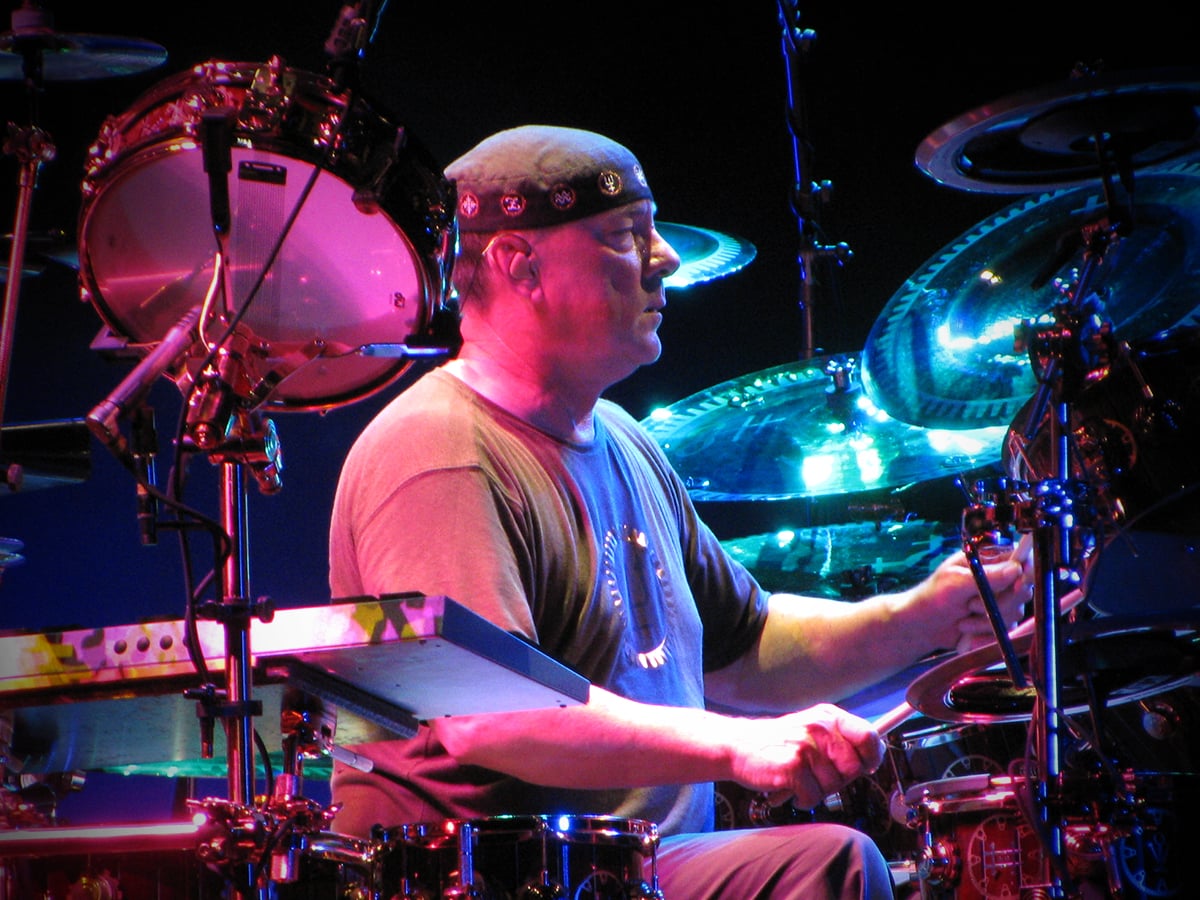
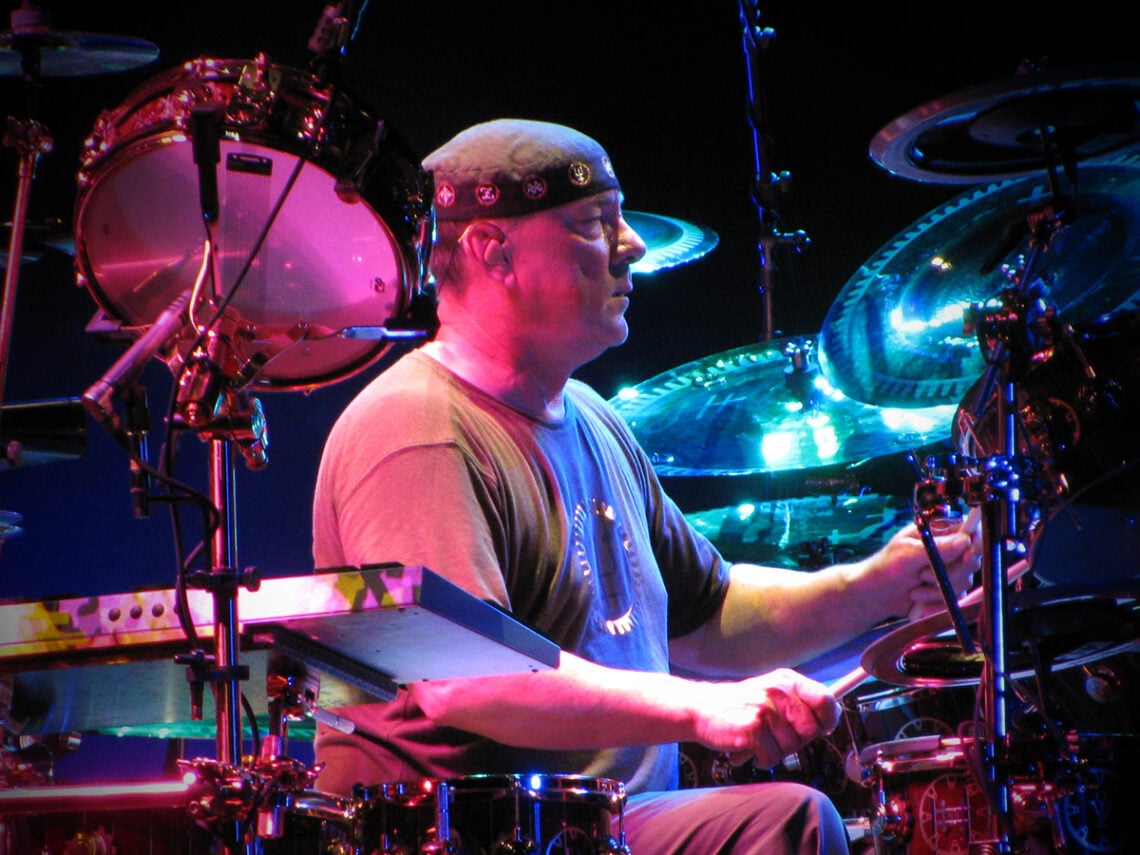
Credit: Far Out / ceedub13
November 7th, 2026 · 8:30pm GMT
Neil Peart was always looking for a different angle every single time that he worked on any of Rush’s masterpieces.
The goal of any drummer might have been to keep time in a usual rock band setup, but since Peart had to take up a lot of space in a power trio, he knew that he was much better off innovating whenever he had the right idea for how one of his songs was supposed to go. And while that came from listening to other prog giants, to be truly progressive usually means sampling genres from all over the map whenever he turned on his stereo.
Every single kid usually is brought up on whatever pop music they heard, but after listening to some of the biggest rock bands in the world, Peart already wanted to dig a bit deeper. He had been sent on a musical journey by bands like The Who and Cream, and since each of them had two of the greatest powerhouses from the back of the stage, it didn’t take him long to start finding his way behind the drum kit.
And compared to the usual drummers that everyone looked up to, Peart didn’t really cater to one genre of music. He liked music as an art form rather than any specific style, and compared to other drummers from around that time, not every percussionist would have taken an interest in new wave when that became popular or tried to bring in different electronic approaches to the drum kit in the 1980s.
But that all came from Peart using the drums in an unconventional way. There was no way that he was going to be able to copy everything that Buddy Rich was doing, and taking his mammoth kit out on the road was already a major endeavour, but in his earliest days, he was still trying to find different ways of approaching the drums, just like the greatest pop song that came on the radio.
Some of the best American music usually had different approaches to the beat, and while there were still some fantastic drummers out at the time, Peart didn’t realise how much Hal Blaine had to do with him picking up the sticks. The Wrecking Crew were one of the biggest bands that you could ask for in the studio, and considering how many sessions that Blaine was on, Peart didn’t come across him by accident.
He had found his new hero, and he didn’t even realise that he was hearing him until years after the fact, saying, “When I was growing up, I played along to the radio, so I played along to Simon & Garfunkel, The Beach Boys, The Association, and The Byrds, and I was really playing along to Hal Blaine. He played on all of those records and so many more. There was another drummer who said that he was shattered to find out that his six favourite drummers were all Hal Blaine!”
Further reading: From The Vault
Knowing his pedigree, though, Peart may be a bit too modest in claiming that his six favourite drummers were all the same guy. He already has his name across over 150 hit songs, and given the amount of time that he put into every session, he has his performances etched into history over 35,000 times throughout his lifetime. Not all of them were hits, but that’s the nature of being a session player.
You have to be able to play anything that comes across your music stand at the drop of a hat, and whether he was working on a mean R&B groove or working out whatever Brian Wilson wanted for The Beach Boys, everything was going to sound good with his signature swing. And since he came out well before prog rock even had a name, being able to play all these genres with the same finesse was the definition of what a great prog drummer was always supposed to be.
