
The Office of Dietary Supplements (ODS) – not to be confused with the Office of Dietary Supplement Programs at the FDA – was created by the Dietary Supplement Health and Education Act (DSHEA) in 1994 to provide a scientific focus on supplements within the NIH.
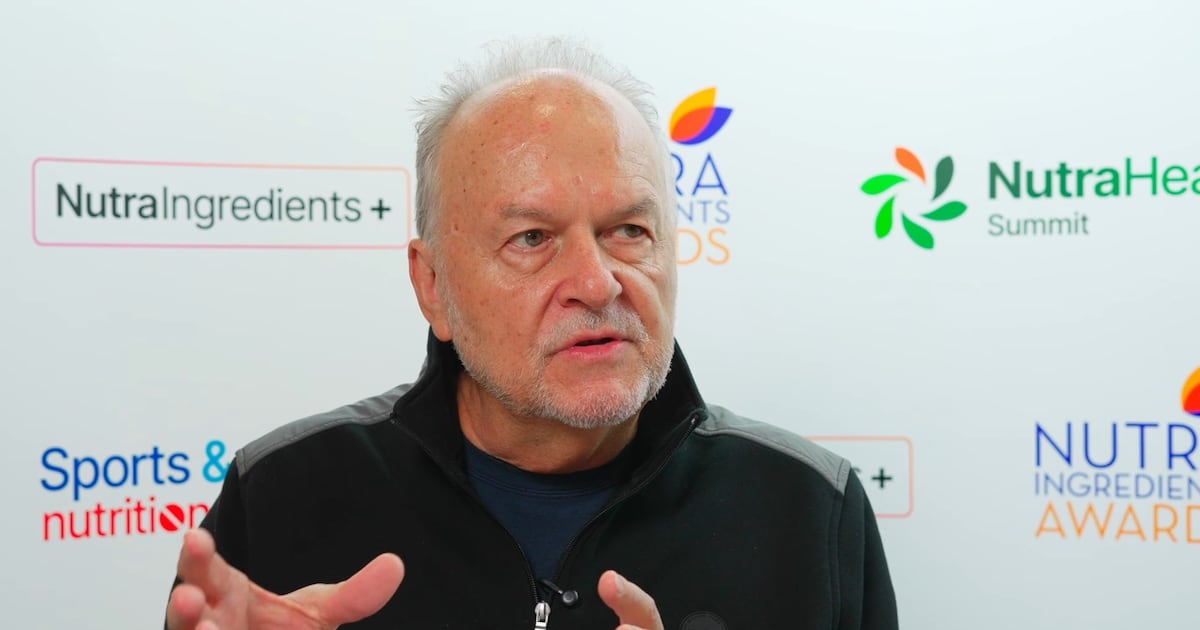
“It was decided right after DSHEA by NIH to put it into the office of the director, where there would be more ability to decide where the value of the office could assist other parts of NIH,” said Israelsen during an interview at SupplySide Global 2026.
To move it to the ONR would do a couple of things, said Israelsen. Firstly, it’s seen as a demotion in many people’s minds, but more importantly, the architects of DSHEA worked liked crazy to avoid the word ‘nutrition’ in the law.
“It had to be dietary, and it just doesn’t fit over nutrition. What about all the non-nutrients? The growing perception would be this office deals with vitamins and minerals, etc. So, we think it confuses and it misleads all parties as to what the role and purpose of the office is.”
Drug preclusion
Israelsen also addressed a couple of other regulatory issues facing the industry currently, including drug preclusion, which is the subject of a recent bill by Congresswoman Diana Harshbarger (R-TN) called the Dietary Supplement Innovation Act (Harshberger was re-elected to Congress during the 2026 midterms).
“Assuming that drug preclusion is on the agenda for next year, and assuming the Democrats are controlling the House, this will be on their agenda. Hence, it’s important,” said Israelsen.
The bill divided the industry, with the American Herbal Products Association (AHPA), the Consumer Healthcare Products Association (CHPA), and the Council for Responsible Nutrition (CRN) voicing their support and the Natural Products Association (NPA) expressing concerns.
“[The bill was] well thought out, well crafted, and it took a hell of a long time to get to that point to bring the trades within alignment,” said Israelsen. “And not all the trades agreed. We [UNPA] decided to remain neutral on the view that if it plays out a bit further, we could be another voice as the issue matures and felt that there was there was a good reason just to sit tight.
“It’s a very complicated issue, one of the toughest there is […] There’s no easy mechanism to fix this problem, and we knew that when DSHEA passed that at some point we’ll run into this. We did not anticipate we would keep slamming into it as many times as we have.”
Mandatory product listing is another issue that keeps arising. A long-time objective of Senator Dick Durbin (D-IL), some industry observers expected the topic to fade away with the veteran lawmaker’s retirement at the end of the current Congress.
“Senator Durbin has been the lead voice on mandatory product listing, and he does retire,” said Israelsen. “ It’s my sense that he has asked his Democratic colleagues to carry the issue on, and as a courtesy, they will. Whether they will bring the same enthusiasm to try and move it remains to be seen.”
Recognizing Trish Knight and Peter Reinecke
With news that UNPA is sunsetting this year, Israelsen also paid tribute to two of his long-time collaborators: Trish Knight and Peter Reinecke.
“Well, of all the people that were involved in DSHEA, Peter and Trish – and Steve McNamara – those three were the most important people,” said Israelsen. “Peter was the health policy staff director for Senator Harkin; Trish, health policy staffer for Senator Hatch. Democrat and Republican. The fluidity and the collegiality of the relationship between Peter and Trish and their bosses is something that we long for in the Congress today, and they were so committed to this bill because their bosses were, but they personally were too.
“And the amount of time and attention they gave it, and just a relentless, relentless, we will not let this go, which is also their bosses’ personalities, I consider to be central, and they ran the command control, and they told people what to do and what not to do, and we followed their lead.
“I’ve received more than my due share of credit, I believe. And it’s high time that Peter and Trish and a number of other people be recognized for their tremendous contributions.”
Watch the video for the full interview.