
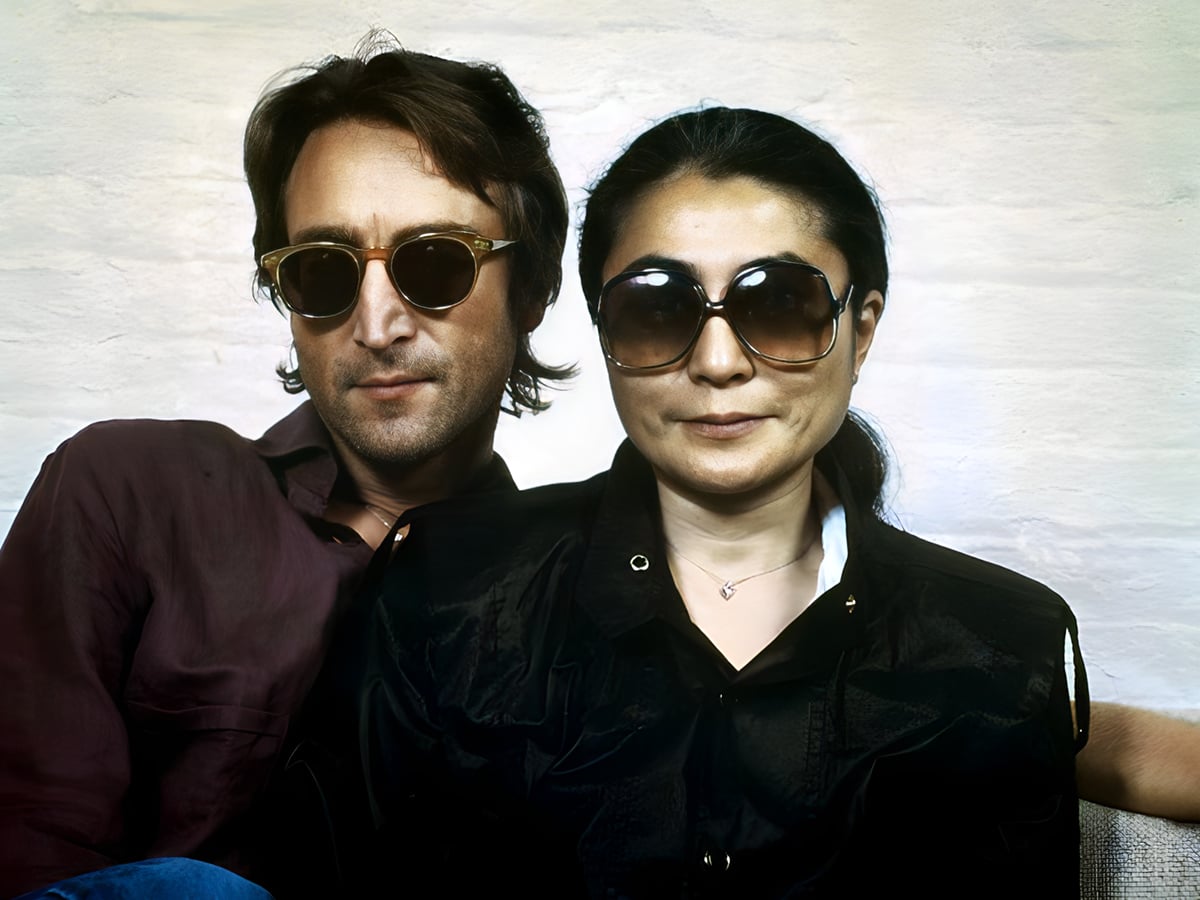
Credit: Alamy
November 9th, 2026 · 9:15pm GMT
While nobody would have been able to foresee the fact that Double Fantasy would be John Lennon‘s final studio album, it is somewhat fitting that the polarising former Beatle would end his career with an appropriately divisive record.
Having taken a five-year hiatus from music in order to raise his son, Sean, and having bowed out previously on the underwhelming and self-indulgent covers album, Rock ‘n’ Roll in 1975, Double Fantasy was meant to be the grand return of the prodigal songwriter, and it couldn’t have had a more underwhelming reception for someone who had previously claimed he was “more popular than Jesus.”
Firstly, one of the main reasons for the album’s derision was that its entire angle presented itself as a lovey-dovey concept album of sorts, with him and Yoko Ono taking up plenty of space to gush over each other despite the fact that they’d very publicly had marital issues over the course of their legally binding union.
But perhaps more confusingly, Lennon had chosen to take a stylistic punt on the flavour of the moment, choosing to make it a new wave-inspired album despite having not really toyed with anything remotely similar in the past.
Sure, his former bandmate and sometimes nemesis, Paul McCartney, had taken some steps towards pursuing this nascent style on both the final Wings studio album, Back to the Egg, and his solo album, McCartney II, from earlier in 1980. However, neither of these albums was particularly warmly received either, and while you might be thinking that Lennon had thought that he would be able to do a better job than Macca, in fact, he thought that McCartney II’s lead single, ‘Coming Up’, was something of a triumph for his former colleague; a rare bit of positive feedback from him to his old adversary.
However, while Lennon made it clear that he wanted to bring in musicians who were evidently comfortable with the material, producer Jack Douglas chose to bring in Rick Nielsen and Bun E Carlos from Cheap Trick to work on a couple of songs, which proved to be controversial in the studio. As far as Ono was concerned, they weren’t going to make it anywhere near the finished product.
In a 2010 interview with Guitar World, Douglas reflected on his time working on Double Fantasy, and said that the two songs that Cheap Trick initially contributed to, ‘I’m Losing You’ and ‘I’m Moving On’, had to be re-recorded so as to not give them the benefit of having been able to say they were a part of the record. According to Douglas, this was entirely Ono’s doing.
Further reading: From The Vault
“She thought Cheap Trick were just some band I was trying to give a boost to,” he remarked, “even though they’d been quite successful and were in the process of making an album with George Martin, ironically enough.”
Would their inclusion have made the difference if their versions of the songs had been used for the album? Probably not, but Double Fantasy would go on to develop a newfound loving audience only less than a year after its release in the aftermath of Lennon’s tragic passing, so Cheap Trick are probably gutted about the fact that they ended up recording with Lennon and never making it to his farewell record.
