
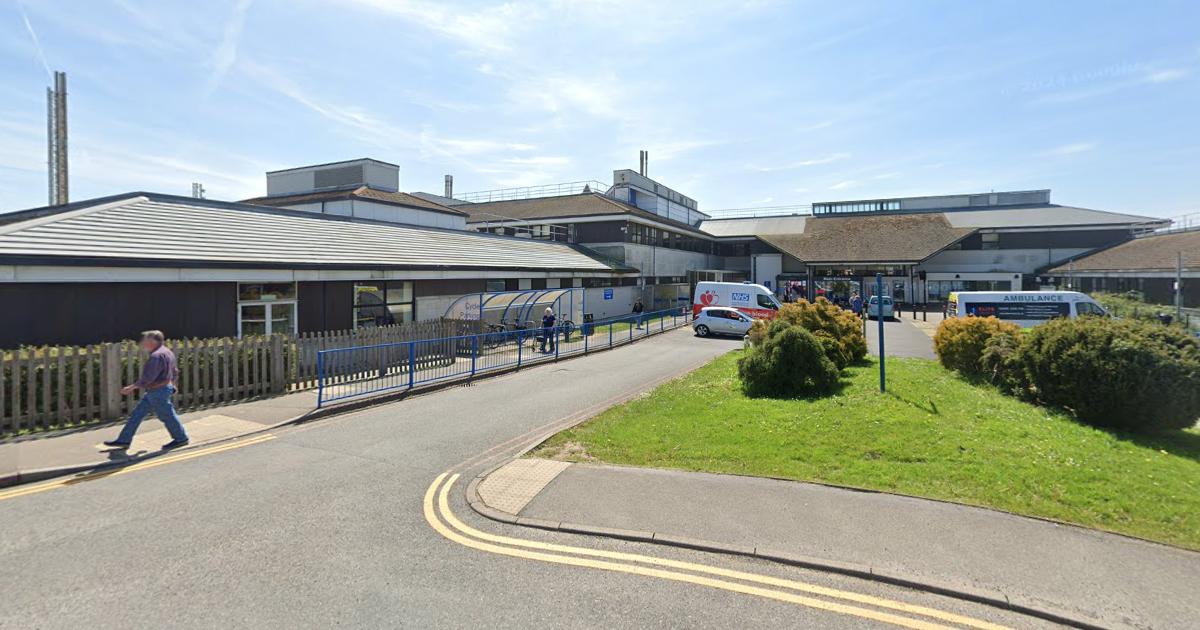
The Care Quality Commission (CQC) downgraded urgent and emergency care at Conquest Hospital from good to requires improvement after an inspection in February.
Urgent and emergency care at Eastbourne District General Hospital was again rated requires improvement.
Both hospitals are run by East Sussex Healthcare NHS Trust.
At Conquest, ratings for safe, caring, responsive and effective care fell from good to requires improvement. The well-led rating fell from outstanding to requires improvement.
The service was found to be in breach of four legal regulations. These related to safe care and treatment, staffing, dignity and respect, and the management of the service.
At Eastbourne, the overall, safe, effective and responsive ratings remained at requires improvement. The well-led rating fell from good to requires improvement, while caring was rated good.
The service was in breach of three regulations covering safe care and treatment, staffing, and the management of the service.
The CQC has told the trust to submit an action plan for each hospital.
The changes mean Conquest Hospital’s overall rating has fallen from outstanding to good. Eastbourne District General Hospital’s overall rating has fallen from good to requires improvement.
Amanda Williams, CQC deputy director of hospitals, secondary and specialist care in the South East, said: “When we visited the urgent and emergency care services at Conquest Hospital and Eastbourne District General Hospital, we found departments that were operating under sustained pressure and where staff were struggling to provide safe and effective care for people.
“We saw staff treating people with kindness and compassion, and this was reflected in positive feedback from people and their families.
“However, both emergency departments experienced significant overcrowding, primarily driven by issues with flow across the hospitals which leaders must look to address.
“For people needing urgent care, this too often meant long waits for treatment or transfer to a ward, and a risk of deterioration or prolonged pain.
“For example, one person with a potentially life-threatening condition spent more than six hours waiting for a scan because of delays in accessing diagnostics.
“Like many emergency departments, staff had to care for people in temporary escalation spaces (known as corridor care) to cope with demand and this wasn’t always safe.
“We saw people didn’t always have call bells to alert staff if they needed help and staff couldn’t always protect people’s dignity and privacy.
“One person described their care as undignified.”
The CQC also found people with mental health needs were not always assessed by the mental health liaison team within an hour, which is the national standard. At Eastbourne, about 60% of people with mental health needs left before being seen.
At Conquest, inspectors found there was no dedicated pharmacy support – one person person spent nearly 24 hours in the department without critical blood clot and blood pressure medicines.
The hospital also lacked 24-hour cardiology cover, with one person waiting overnight for a specialist review.
While risks including sepsis management and overcrowding had remained on the risk register for more than five years, an AI-enabled patient tracking system had reduced time in the department by 21%.
At Eastbourne District General Hospital, inspectors found triage information was not always used to decide who should be seen first.
Children were also sometimes transferred to Conquest because arrangements about treatment were unclear.
Up to 33% of people at risk of sepsis did not receive intravenous fluids within an hour in August 2025, while 20% to 30% did not receive antibiotics.
Ambulance handover times had improved, however. By September 2025, fewer than 10% of ambulance arrivals waited more than 30 minutes to transfer.
The CQC reports are due to be published on its website in the coming days.
Jayne Black, Chief Executive East Sussex Healthcare NHS Trust said: “We accept the findings of the CQC and recognise that there were areas where the care provided in our emergency departments was not consistently at the standard our patients should expect.
“These inspections took place in January and February and we have made a number of changes since then. These include strengthening rapid assessment at the front door, increasing senior clinical oversight of patients waiting in our departments, improving staffing and escalation arrangements, and strengthening the day-to-day management and oversight of our emergency departments. We are also continuing work to improve patient flow and reduce overcrowding and long waits.
“There is more to do, particularly around flow through our hospitals, and we are not complacent about that. Our focus is on making sure the improvements are sustained and translate into safer, more timely care for patients.
“We are grateful to our colleagues who continue to work extremely hard under considerable pressure, and welcome the CQC’s recognition of the kindness, compassion and professionalism shown by our teams.”