
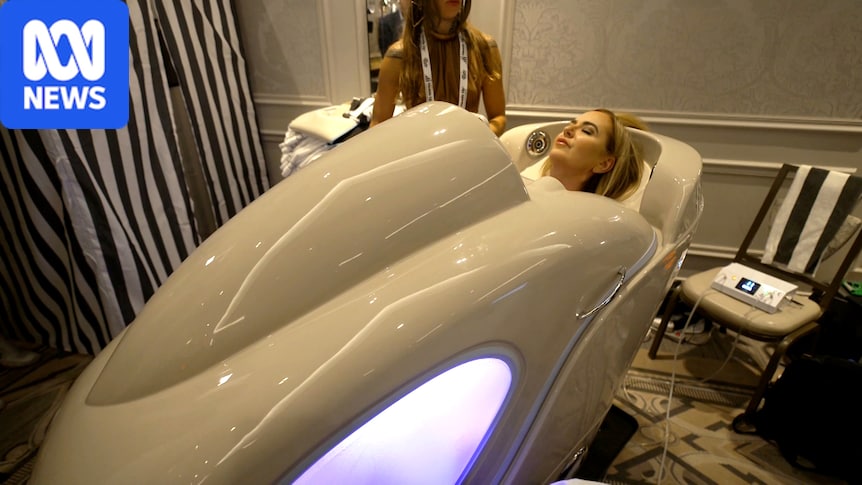
Ashley Bowden spends a large part of his workday counselling patients for their health anxiety in his regional NSW practice.
“It almost feels as if it’s 50 per cent of the patients I see; we end up touching on health anxiety,” he said.
“There’s certainly a number of patients that have quite severe anxiety around their health.”
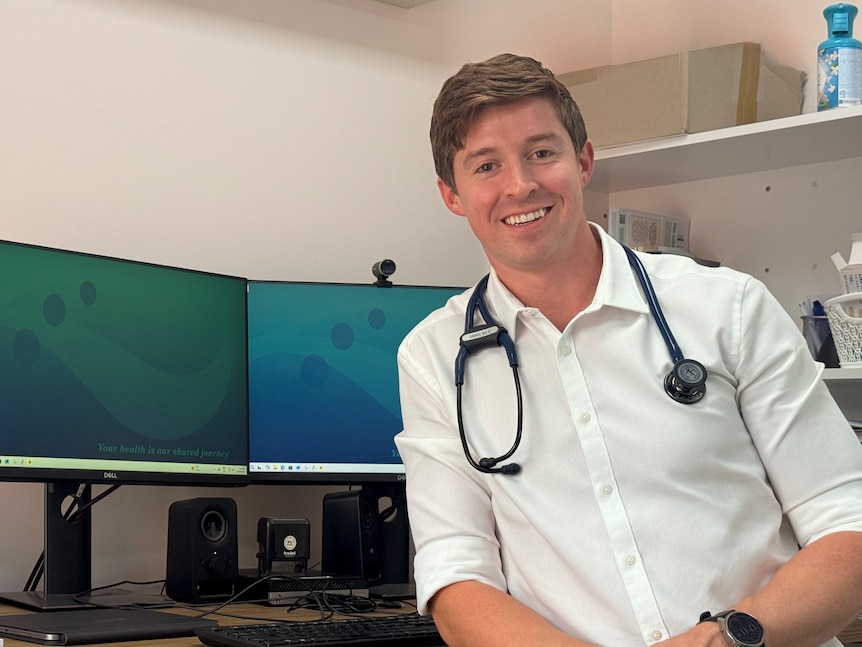
Ashley Bowden is a GP in regional NSW. (Supplied: Ashley Bowden)
Dr Bowden said social media was fuelling the issue.
“I absolutely love talking to patients about what they’ve seen online … what they’re worrying about and what’s causing them to spiral,” he said.

Olivia Loughnan completed her PhD on the link between social media and health anxiety. (Supplied: Olivia Loughnan)
Psychologist Olivia Loughnan said social media played a “significant” role in triggering health anxiety.
She said algorithms reinforced health-related fears by responding to what users watched, searched for and engaged with.
“Someone who watches a video about the early warning signs of a serious illness, they may subsequently be exposed to more content about related symptoms,” Dr Loughnan said.
“It can create the impression that serious illnesses are increasingly common or personally relevant to them.”
Predictive tests advertised online
Dr Bowden said the online marketing of predictive medical tests and health screenings, such as full body MRI scans or blood tests, was also playing a role.
“I have a lot of patients that are on supplements or they’re undertaking private tests at huge expense,” he said.
“It can lead to a huge amount of health anxiety.”
The products are part of the world of longevity, biohacking and health optimisation, which has a strong following online.
There’s anti-aging hype. Then there’s the science showing real promise
Dr Loughnan said the trends could be positive by encouraging people to be more proactive about their health and wellbeing.
“However, the concern is that pursuit of that optimal health can become excessive,” she said.
“When people are constantly exposed to information about hidden diseases, prevention scans, biological aging … they can begin to feel that being healthy is simply not enough.”
She said it reinforced the idea that people should be constantly monitoring their bodies for symptoms.
“Psychologically, this can create heightened need for control, increased body monitoring and difficulty tolerating uncertainty,” she said.
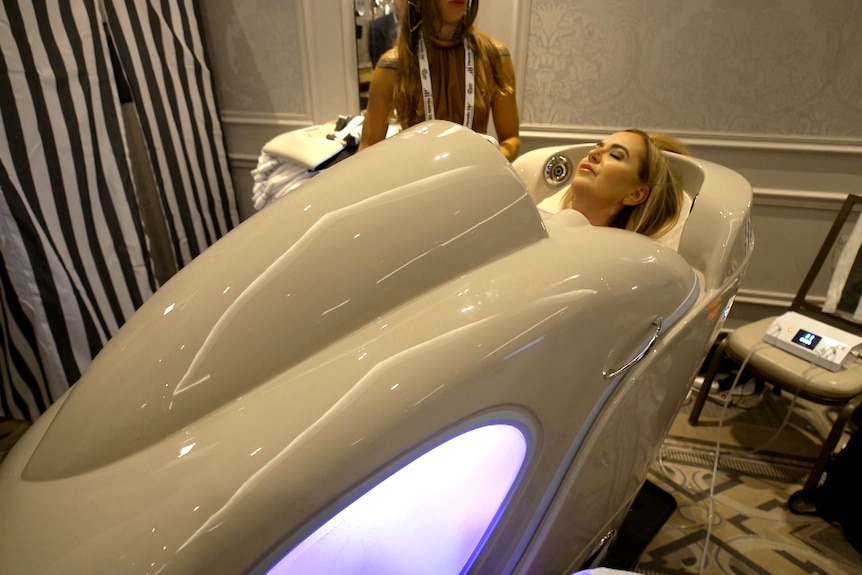
A woman at a biohacking conference in New York City. (Four Corners: Ryan Sheridan)
“There’s a difference between taking reasonable steps to look after your health and becoming preoccupied with preventing every possible illness.”Patients urged to talk to their GPs
Australian Medical Association president Michael Bonning said the tests were increasingly popular around the country.
“We see more patients seeking frequent or increasingly, not just comprehensive, but almost fringe investigations,” Dr Bonning said.
“It’s sometimes very difficult for a doctor to push back and say, ‘No, you really shouldn’t have that,’ even though it is very clear that intervention or investigation doesn’t have an evidence base to it.”
An example of one of these tests being advertised online is full body MRI scans, which cost thousands of dollars and do not use radiation.
“It’s really tempting to think that surely that’s going to give us more information … we’ll find the bad thing if it exists, whether it’s a lump or a cancer,” Dr Bowden said.
Dr Bonning and Dr Bowden said they were more likely to catch incidental findings, which could lead to false positives and invasive tests.
“There’s no study that has demonstrated improved disease-specific survival from screening asymptomatic people without specific health risks,” Dr Bonning said.
Dr Bowden said if people were concerned by something they had seen online, or were thinking about taking one of the tests, they should speak to a trusted GP.
“They can say, ‘I’ve seen this online’ or ‘I’ve put it into an AI bot,’ because that gives us a point of the conversation to talk around,” he said.
He also said it was important to be critical of ads.
“Is the person marketing that in any way interested in improving their health, or do they have an ulterior motive like making money?” he said.