
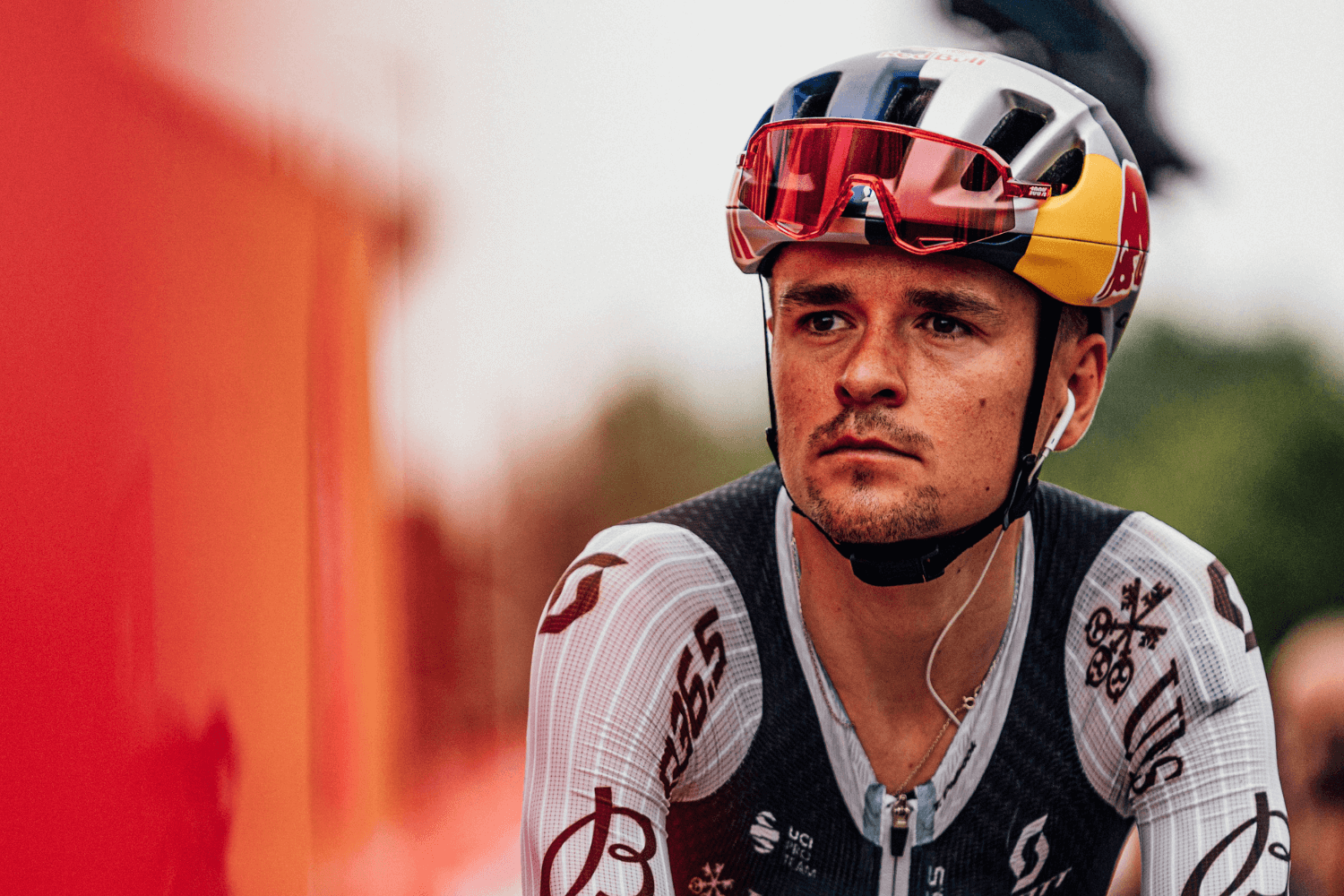
That was a big statement from Tom Pidcock. Bigger than his second place on stage nine at the Vuelta a España up a genuinely difficult climb, bigger even than his win on Alpe d’Huez at the Tour de France three years ago. On stage 11 of the Vuelta, a circuit race around Bilbao that swung back and forth all day with a number of riders putting their hands up to be the protagonist, Pidcock attacked on the final climb and dropped Jonas Vingegaard. No one, except Tadej Pogačar, drops Jonas Vingegaard. But Pidcock did.
Vingegaard responded, eventually, and caught the Briton up and they finished together as a duo, but the significance will not be lost on anyone. Pidcock has promised for years that he can challenge for Grand Tour titles, or at the very least Grand Tour podiums, and here was the proof that yes he can. Of course, the climb in question, Alto de Pike (2.1km at 9.4%), is exactly the sort of aggressive, punchy ascent that we’ve seen Pidcock dominate on before; it was not the Angliru, or any other Alpine-length climb. But Pidcock has never before blown the front of the race apart like that in a Grand Tour, and he’s certainly never before dropped all the GC candidates.
How Ineos Grenadiers must be wondering what could have been. How Q36.5 management must be patting themselves on the back. How Tom Pidcock would have loved a stage win to go with his move. That was taken away from him, with the stage neutralised and times taken 3km from the finish in Bilbao due to the size and scale of pro-Palestine protests at the finish. Pidcock might have lost in a sprint with Vingegaard, or he might have won. We’ll never know. But the most important takeaway from the stage is that Pidcock is seemingly coming of age in three-week racing.
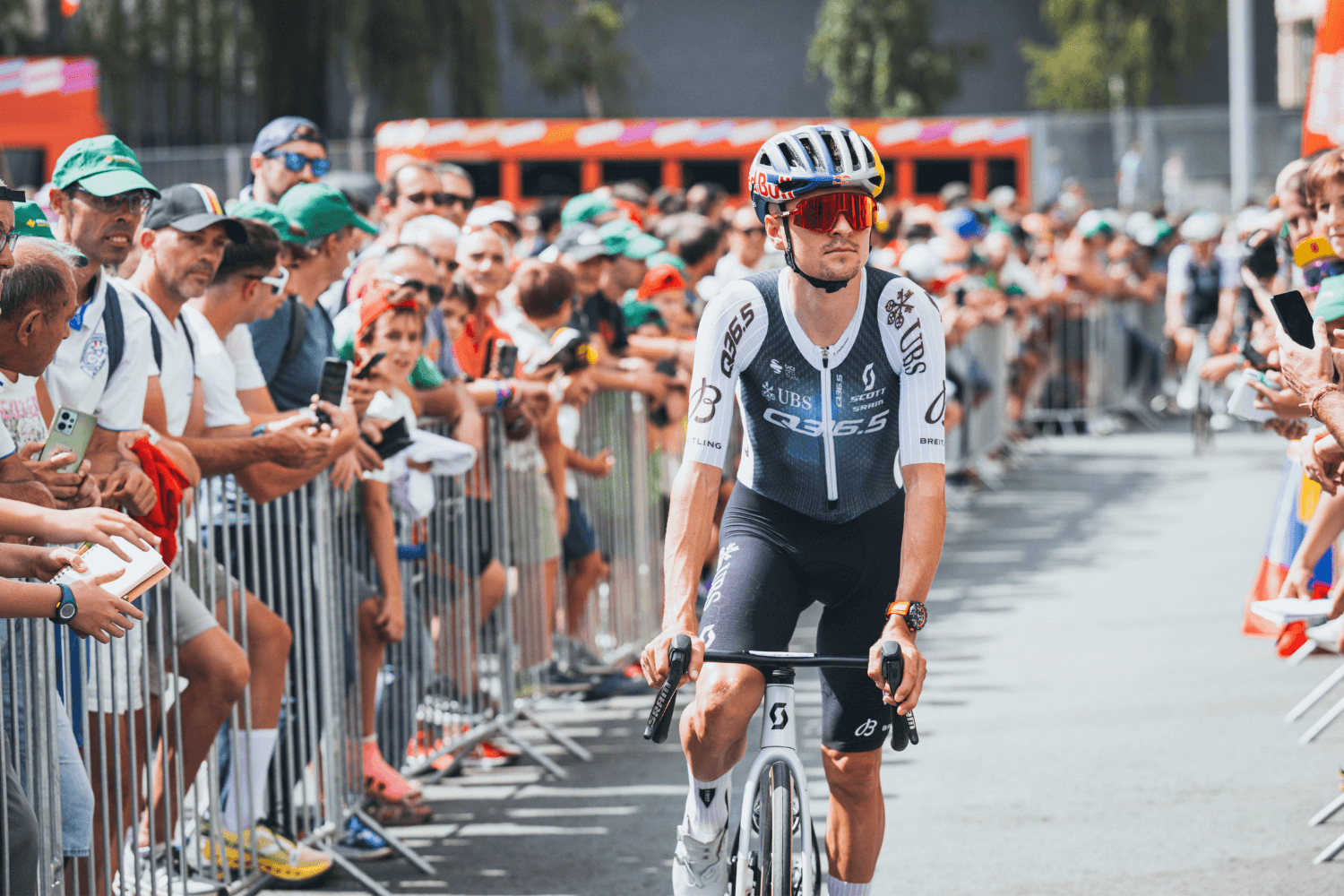
Pidcock now has to prove he can fight head-to-head with Vingegaard and Almeida up the Angliru. Photo: Unipublic / Cxcling / Antonio Baixauli
Far tougher tests await – the Angliru and Farrapona on Friday and Saturday, respectively – and he’s doing this with a team not just subjectively but objectively weaker than Vingegaard’s Visma-Lease a Bike, and João Almeida’s UAE Team Emirates-XRG – even counting for the personality clashes on the UAE bus. It’s entirely plausible, too, that Pidcock cedes not just a bit of time but big chunks of time on the steep, unforgiving ramps of Asturias and Galicia. When he’s gone for GC at the Tour de France (16th, 2022; 13th, 2023) and Giro d’Italia (16th, 2025) in the past, he’s come unstuck on the longer climbs. History would suggest that the same thing will happen again in the forthcoming 10 stages.
Or maybe it won’t. Maybe Pidcock, recently-turned 26, really has matured and developed into a consistent three-week racer who is capable of going head-to-head with the best in the business. His decision to drop down a division and join Q36.5 is turning out to be so inspiring that other WorldTour riders are following suit. Demotion, at least in Pidcock’s case, is a form of promotion when it comes to performance.
Whatever happens between now and Madrid, this has been the most revelatory and significant Grand Tour of Pidcock’s career. Mountain bike Olympic and world champion. Cyclocross world champion. Strade Bianche and Amstel Gold victor. Maybe soon Grand Tour podium finisher. After temporarily distancing Jonas Vingegaard, it’s never looked more realistic.
Cover photo: Zac Williams/SW Pix.com