
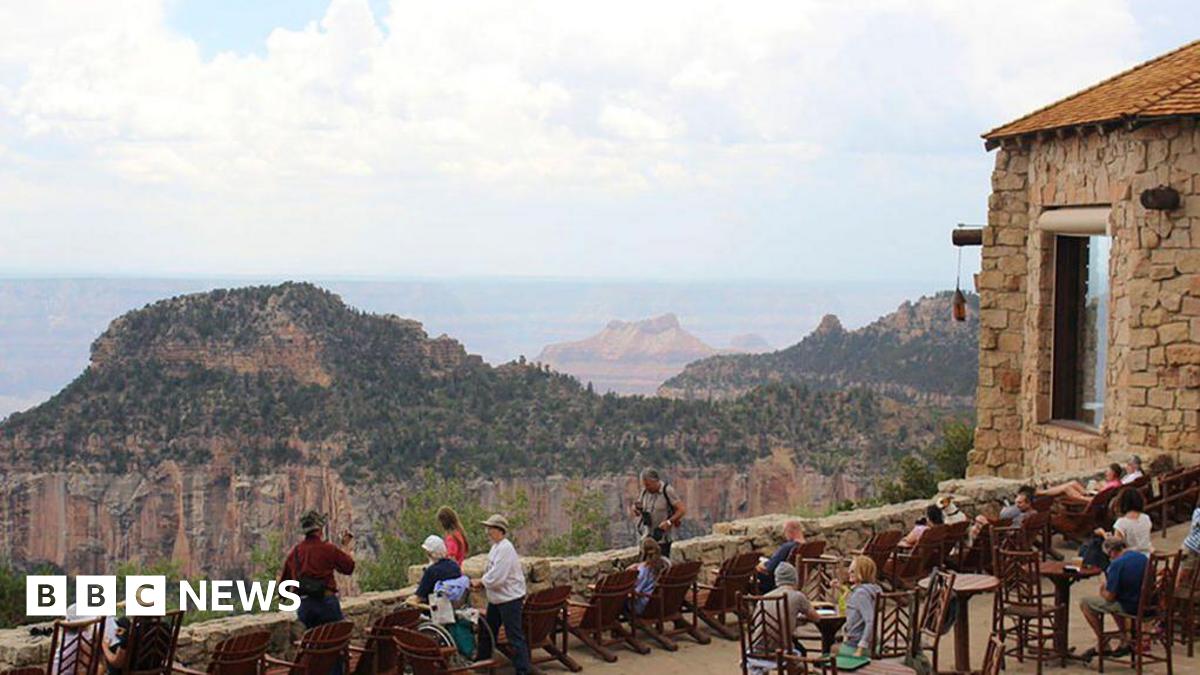
This was the second time the lodge burned down.
A version that opened in 1928, designed by architect Gilbert Stanley Underwood, was lost four years later to a fire that started in its kitchen.
Building a new structure during the Great Depression took years and perseverance, repurposing much of the original building’s stonework and lumber.
A smaller, temporary lodge that housed construction workers also burned down for unknown reasons, according to Mr Crockett.
Then, a massive snowstorm dropped 12 feet of snow in the area one winter, cutting the workers and their families off from food and the outside world for weeks, he said.
Finally, some of the workers hiked down to the trailhead in snow shoes to call for help, bringing in snow plows to rescue the rest of the group, Mr Crockett said.
After the lodge opened once again, in 1938, it became a “summer getaway that people have just cherished over the years”, he said.
Lodge guests might encounter an occasional buffalo while walking beside tall pine trees. Inside, they could take in views from the massive windows in the lodge’s sun room, or from their table in the dining room, with its high ceiling that was crossed with ponderosa beams.
Park officials have yet to say whether they plan to rebuild the iconic lodge, but many visitors and locals are holding out hope.
“We have to rebuild this place,” Ms Snickers said. “It’s going to take time, but it needs to come back. It was a part of history.”