
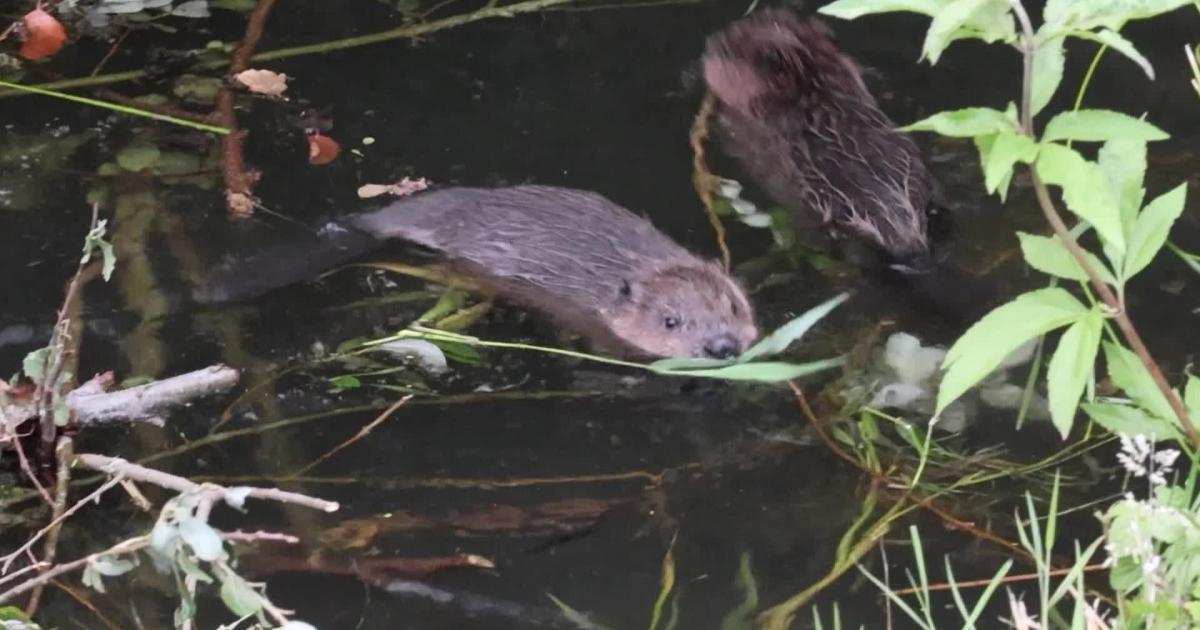
The pair was spotted at the Hawk and Owl Trust’s Sculthorpe Moor Nature Reserve, marking the third consecutive year of successful breeding since beavers were first reintroduced to the site in 2022.
Their arrival follows the birth of three kits last summer, two kits in 2023, and the introduction of the original Eurasian beaver pair to the reserve in 2022 as part of a project to enhance biodiversity and encourage more birds of prey to take up residence at the site.
The beaver kits have been filmed swimming in the water together (Image: Sculthorpe Moor Nature Reserve) Adrian Blumfield, operations director at the Hawk and Owl Trust, which manages Sculthorpe Moor Nature Reserve, said: “It’s a joy to see our resident beaver family continue to grow – a real testament to how well the beavers have settled in and the benefits they’re bringing to the wider ecosystem.
READ MORE: Norfolk is at the top of the tree in farmland bird count – for seventh year running
“The footage captured on our trail cameras shows both the kits thriving and already starting to independently explore their surroundings, with one confidently seen swimming the full length of the drain, and the other managing an impressive 50-yard underwater stretch.
“Watching these remarkable creatures interact with each other and their environment is a truly exceptional experience.”
Beavers were hunted to extinction in the UK in the 16th century for their fur, meat, and even the oil from their scent glands.
The kits have been exploring the water (Image: Sculthorpe Moor Nature Reserve) Efforts to reintroduce the species over the past few decades mean England’s beaver population now stands at around 500.
READ MORE: Baby beavers spotted for first time at Norfolk reserve
With their stocky builds and long tails, the Eurasian Beaver is Britain’s largest rodent and the world’s second largest.
England’s beaver population now stands at around 500 (Image: Sculthorpe Moor Nature Reserve) They are semi-aquatic mammals and have thick brown fur, long orange teeth for gnawing and webbed back feet for swimming.
Beavers are thought to mate for life. They live in small family groups and tend to have a litter of two to four kits each year.