
Has a county ever appeared as petty and small-minded as Lancashire after the Vitality Blast Finals Day? As a former player for the club it gives me no pleasure to say it, but the message they put out on their social media channels on Monday, two days after their defeat by Somerset in the semi-final, demeaned them.
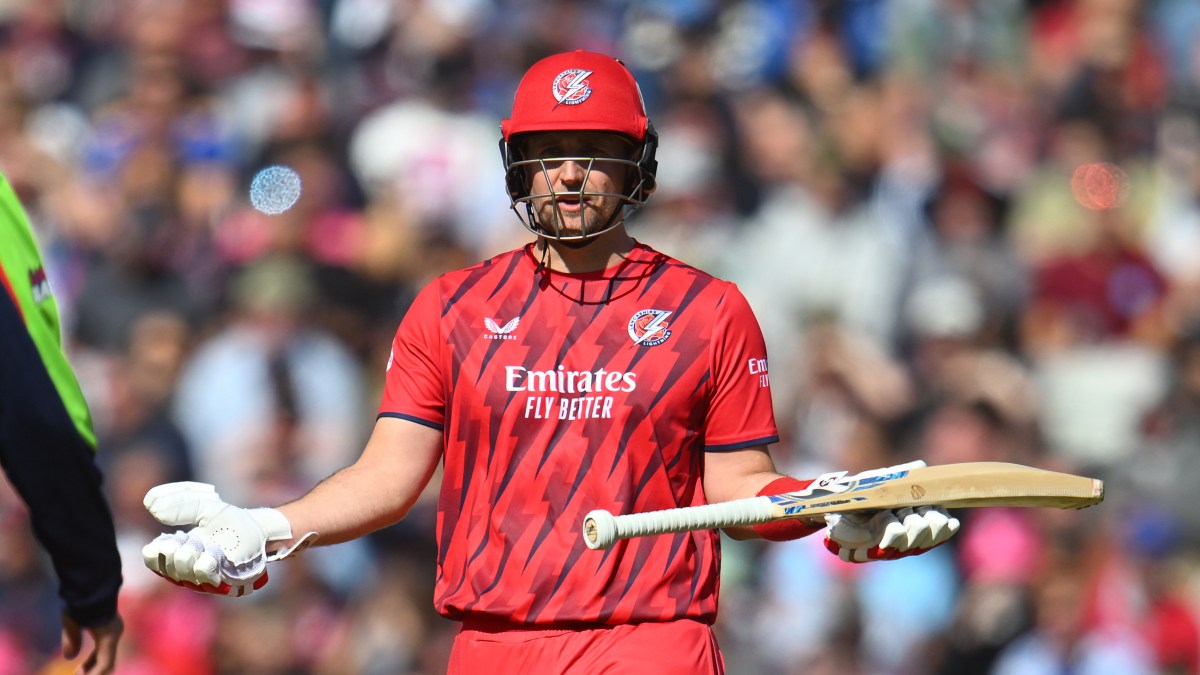
Lancashire let it be known that they had complained about the leg-before decision given against Liam Livingstone at a critical juncture of the match. They said they had “formally expressed their disappointment to the ECB” and that they remained “deeply frustrated and disappointed with the decision”, which was given out by the on-field umpire, James Middlebrook, and upheld on review by the television umpire, Sue Redfern.
But the moment that message went out, their complaint about the umpiring became public rather than private. While not naming Redfern — the message said Livingstone was given out “following a review by the TV umpire” — Lancashire also, rightly, criticised the online misogynistic abuse that she is said to have suffered after the game.
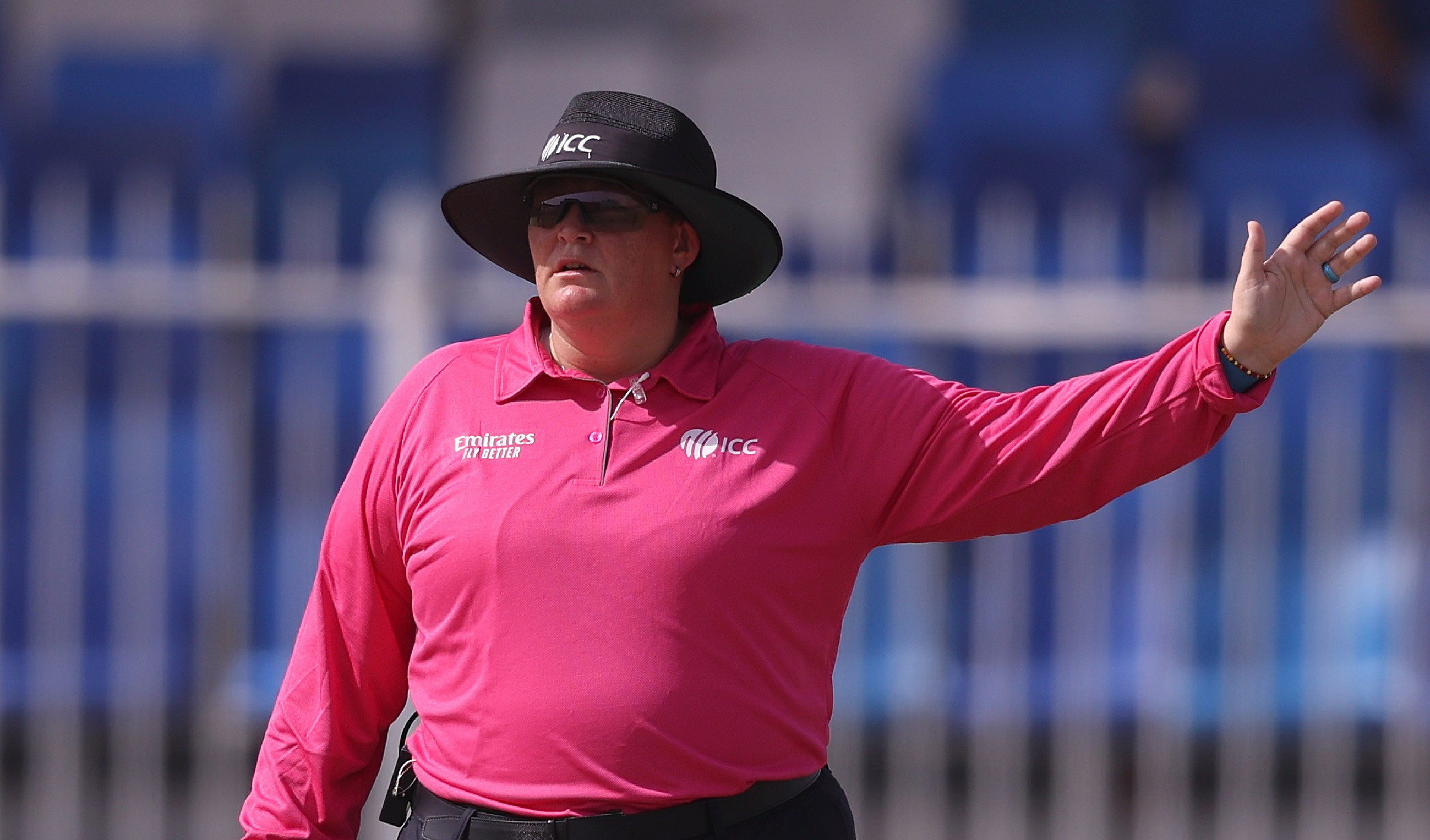
Redfern was TV umpire for the game between Lancashire and Somerset
MATTHEW LEWIS-ICC/ICC VIA GETTY IMAGES
A better statement would have retained the criticism of the abuse heaped on the umpire, while omitting thoughts on the leg-before decision in the first place. Did they not stop to consider the possible inherent contradiction in their statement and that by criticising the umpire in a public way, this had the potential to aggravate rather than soothe matters?
In any event, looking at the responses, criticism rained down on Lancashire. Of the decision itself, it was not clear to me that an obvious mistake had actually been made in the first place. I could not be certain in real time whether Livingstone had hit the ball or not and, having seen numerous replays at the time, the technology offered little in a definitive way to unpick the muddle.
Had I been in the third umpire’s chair, I would simply have indicated that there was nothing to suggest that a clear and obvious error had been made by the standing umpire, and therefore the on-field decision, which was “out”, should remain. That is not precisely how it transpired, but the end result was the same: Livingstone had been given out and, in my view, there was nothing clear cut to show that it should have been overturned.
Even if an obvious error had been made (and some will disagree with my reading of it), Lancashire would still have been wrong to complain so publicly. Umpires are not, and should not be, beyond scrutiny. In televised games, decisions are analysed immediately in a fair and, hopefully, empathetic way. Mistakes get called out. Streams of county matches now allow for far greater public scrutiny of decisions. Umpires are judged internally by the match referees and there are avenues by which competency concerns can be raised. High standards should be the aim and umpires should be held accountable in the right way.

There was nothing clear-cut to show that Livingstone’s dismissal should have been overturned
GARETH COPLEY – ECB/ECB VIA GETTY IMAGES
The right way is not a tweet on social media. The Cricket Regulator was right to warn clubs at the start of the season about the potential for inflaming reaction by careless social media posts. And this was not a heat-of-the-moment response, but one that was thought through and sent two days later. A decision presumably endorsed by the grown-ups in the room, in other words. Cricket should not descend into the situation in which football has found itself, where decisions and officials are criticised frequently, thus encouraging poor behaviour to filter down to recreational level.
Above all, it was such a graceless reaction to defeat. One understands why players occasionally get things wrong in the moment, but this came from the club itself after due consideration. They should not need reminding that the preamble to the Laws of Cricket highlights the need to respect “captain, team-mates, opponents and the authority of the umpires” to “accept the umpire’s decision” and to “show self-discipline even when things go against you”.
It also obscured the fact that Lancashire did have plenty to complain about legitimately after the culmination of the T20 Blast. Keaton Jennings, their captain, was right to call out the schedule as “absolutely ludicrous” — which he did, by the way, before and not after the semi-final defeat. A competition with a lengthy break between the group stage and knockouts is totally unsatisfactory, as good an event as Finals Day proved to be.
Somerset were missing key bowlers, Riley Meredith and Matt Henry, as well as Tom Banton, on England duty, while Lancashire had to do without five players — Jos Buttler, Phil Salt, Luke Wood, Chris Green and Ashton Turner — who had been important to them in their group-stage success. The schedule will be better next year, but still. Plenty of issues to complain about publicly, then, but the standard of umpiring was not one of them.
Always thank the bus driver
About the same time that Lancashire were embarrassing themselves on their social media accounts, Somerset, the eventual winners on Finals Day, were also active on theirs. They filmed a short clip on their journey home through the driving rain and a short speech from their bus driver, Nick, who was retiring after 11 years with the team.
His comments are worth repeating in full: “I was leaving the ground at the end; most people had left already but there was a few people still around and someone came up behind me and tapped me on the shoulder. It turned out to be the head steward at Edgbaston.
Please enable cookies and other technologies to view this content. You can update your cookies preferences any time using privacy manager.
Enable cookiesAllow cookies once
“He said, ‘I’ve been looking for you.’ He said, ‘I just wanted to say how pleased we are that you [Somerset] won.’ He said, ‘We always, always love having you here; your guys are always so friendly, so respectful to us; we are just so chuffed that you’ve won.’
“So my already amazing day turned into something even more special. And it’s down to you. I guess we can’t always be great cricketers but we can be great people, and you are, and that is what makes this team and this club so special and I would just like to reiterate how lucky I am and how lucky I feel to have spent the last 11 summers with you.”
English game is still alive
The early part of my week was spent at the Oval watching the champions, Surrey, and their nearest challengers, Nottinghamshire. The quality of the bowling was unusually high: Josh Tongue, Dillon Pennington, Matt Fisher, Gus Atkinson, Tom Lawes and Dan Worrall were all of, or pushing, international class.
It being September and cool and a Monday start, rather than the Friday start that had characterised the early-season matches, the crowd was a little down on earlier games. Nevertheless, Surrey had cause to celebrate: the numbers over the first two days meant that more than 80,000 had come through the gates at the Oval for the championship this year, a record for the 21st century.
Over in Australia, the domestic season has just begun. Peter Lalor, formerly of the Australian newspaper and now co-producer of the website Cricket Et Al, found himself at the opening 50-over match of the domestic season in Sydney between New South Wales and Tasmania. He counted 206 people in the crowd. It is a tired cliché to say that no one watches domestic cricket in this country, but nowhere is it better supported than here.