
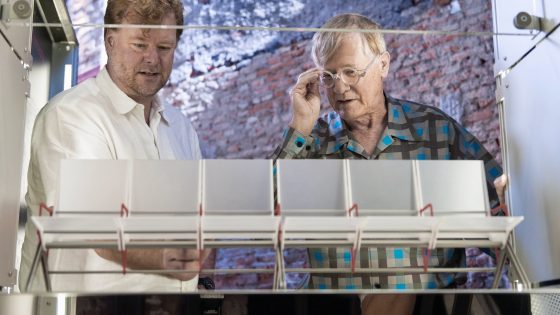
Tributes have been paid to Nicholas Grimshaw, the pioneer of High-Tech architecture best known for the Eden Project and the International Terminal at London’s Waterloo station, who died this month, aged 85.
The innovative architect played a key role in British architecture over half a century, creating ‘Space Age’ buildings, such as the Sainsbury’s supermarket in Camden, the British Pavilion at the 1992 Seville Expo and the Western Morning News HQ & Print building in Plymouth.
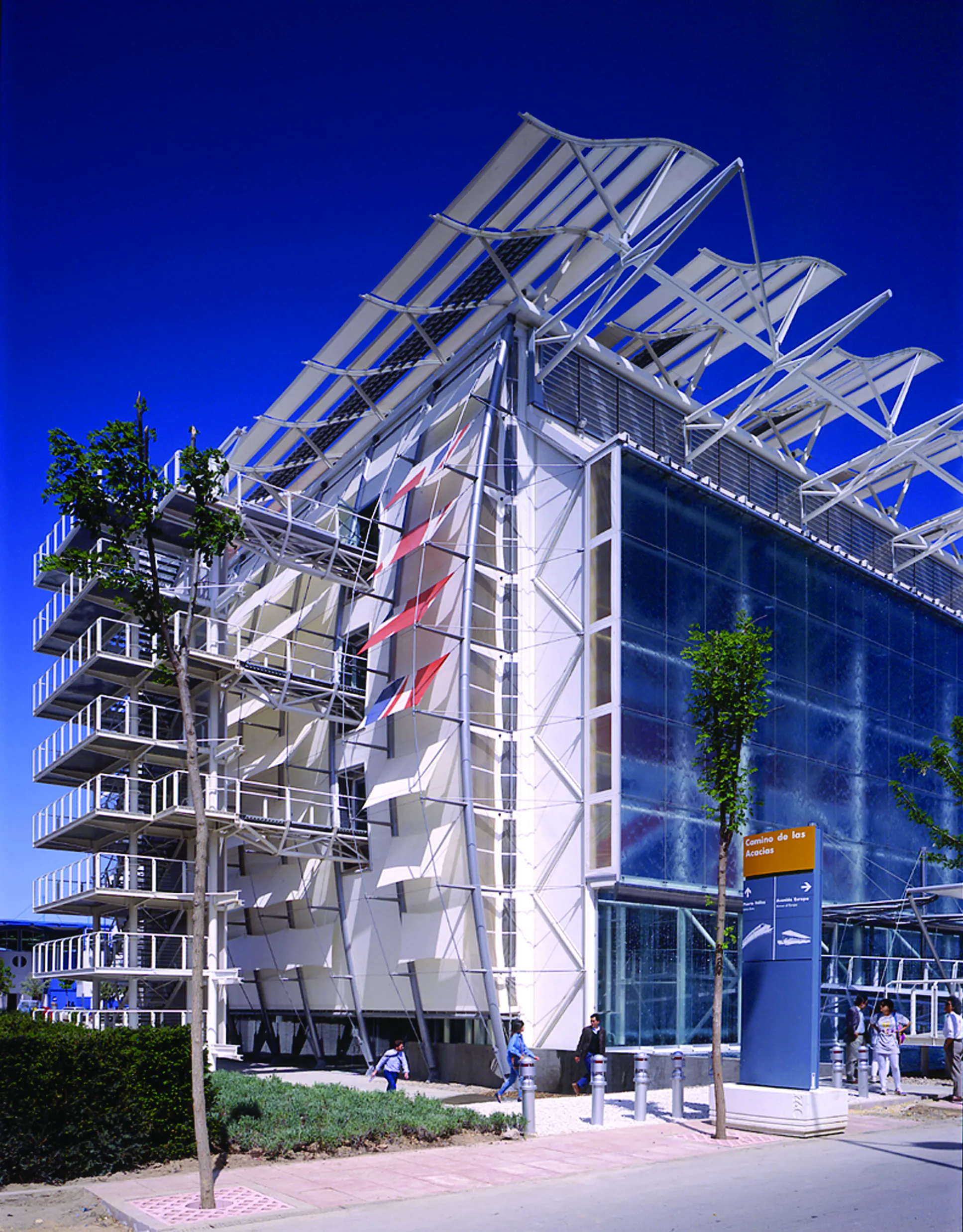
Grimshaw’s British Pavilion at the 1992 Seville Expo
After working at Terry Farrell’s practice for 15 years, where he worked on the breakthrough ‘kit of parts’ Service Tower for students, known as ‘the Bathroom Tower’ and built in London’s Paddington, Grimshaw set up his own practice in 1980. Today, the company, whose high-profile projects include Thermae Bath Spa and the overhaul of London Bridge station, employs more than 650 staff and has offices around the world. Grimshaw was knighted in 2002 for his services to architecture and served as president of the Royal Academy from 2004 to 2011. He also received the Royal Gold Medal in 2018, a year before he stepped down as practice chair, aged 79.
Read Catherine Slessor’s obituary
Catherine Croft, director, Twentieth Century Society:
Nick was an inspirational architect and a gentleman. His buildings are always beautiful, original and inventive solutions to elegantly analysed briefs. Many are, quite rightly, listed, including The Western Morning News building in Plymouth (1993) and Sainsbury’s supermarket in Camden Town (1988). His joyous and spectacular Eden Project pioneered the 21st century ecologically responsible visitor attraction, while the Herman Miller Factory near Bath perfectly demonstrates the inherent flexibility of High-Tech: constructed in 1977, listed in 2013, the practice returned in 2019 to successfully retrofit the building as a new campus for Bath Spa University.
We can think of no finer tribute than finally listing the former Eurostar International Terminal at Waterloo – the project he considered his most important work. Its quality and significance are beyond doubt. We put the building forward for listing to mark its 30th birthday in 2024. We’re still awaiting a decision from the Department for Digital, Culture, Media and Sport.
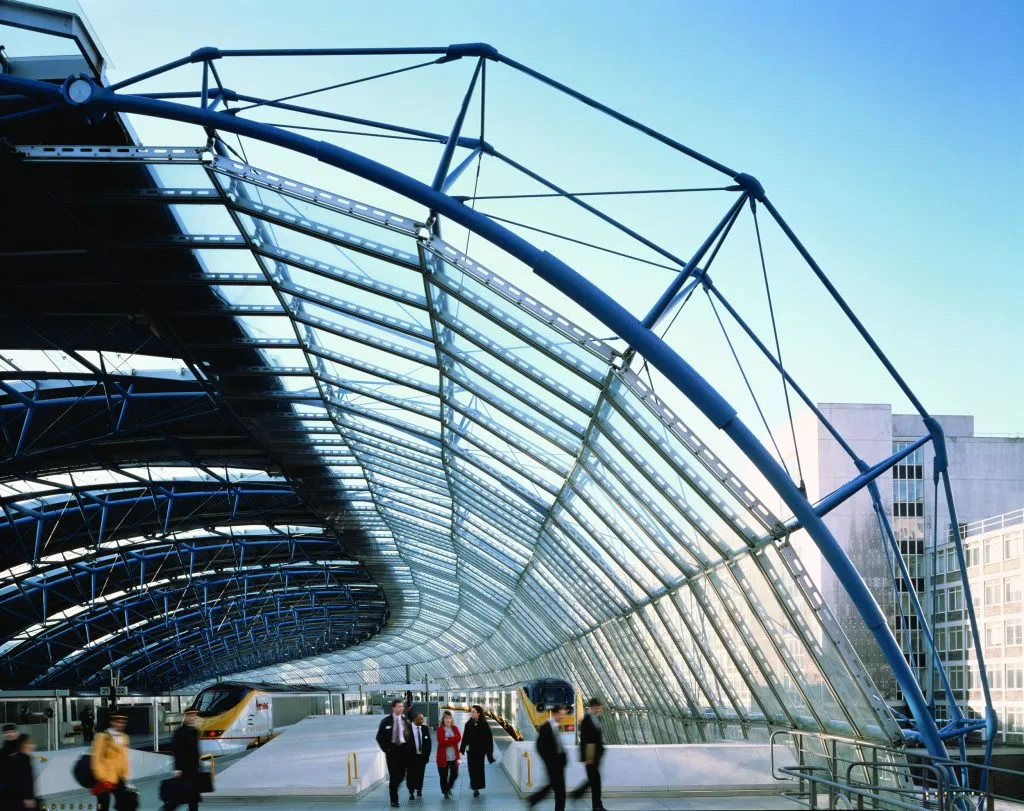
Grimshaw’s Eurostar International Terminal at Waterloo
Pippa Goldfinger, head of design, Design West:
Nick was one of my High-Tech heroes. His architecture was expressive and exciting and felt like an evolution of both modernism and the Victorian tradition of expressive engineering. I lived in Camden in the early 90s and loved the Camden Road Sainsbury’s. It felt like a glimpse of the future and the associated space-age flats on the Regent’s Canal looked thrillingly modern.
Camden at the time was a little down at heel in places and this felt like an injection of energy and modernity. I was sad to hear of the loss of such a titan of the high-tech movement. It really feels like the end of an era.
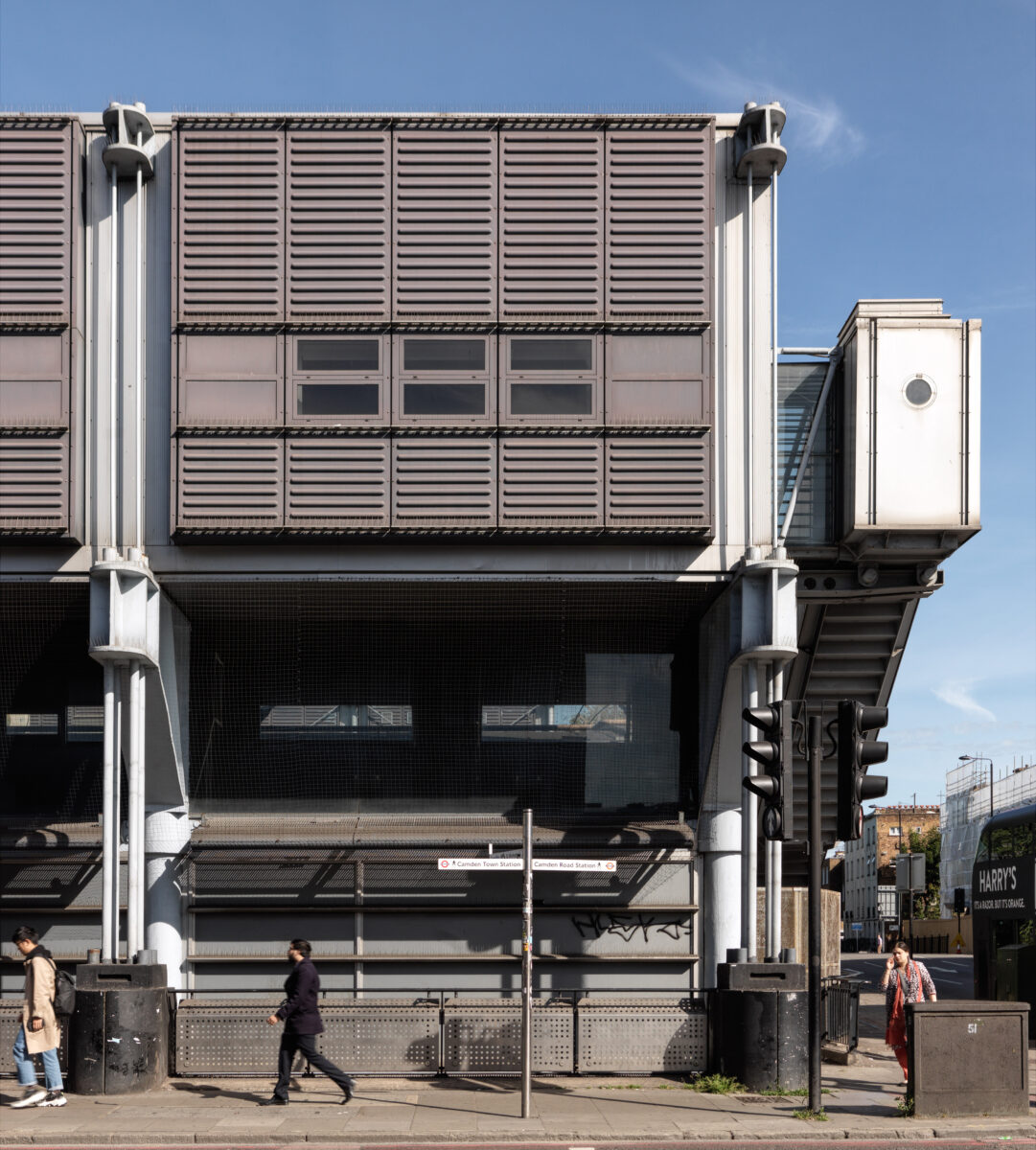
Grimshaw’s Sainsbury’s superstore and housing in Camden Town, Greater London – listed at Grade II
Norman Foster, founder, Foster + Partners:
Nick found delight in meticulously crafting the structural expression of his buildings, evident in two of his best-known works – Waterloo International Railway Station and the Eden Centre in Cornwall. Waterloo Station, a structural and spatial tour de force, was the gateway to Europe for 13 years and proclaimed by Grimshaw as his favourite building.
Given his love of engineering and long association with the arts, it is telling that his father was an aircraft engineer, and his mother and grandmother were artists. Before embarking on a career in architecture he first studied art at the Edinburgh College of Art.
Afterwards, he moved to London and entered the Architectural Association where I can sense the influence of his teachers – notably Peter Cook and Cedric Price. After graduation he teamed up with Terry Farrell, who was a year older and had just returned from studying in America. Their partnership lasted for 15 years until in 1980 he set off on his own, forming a practice, later to be known as Grimshaw and Partners.
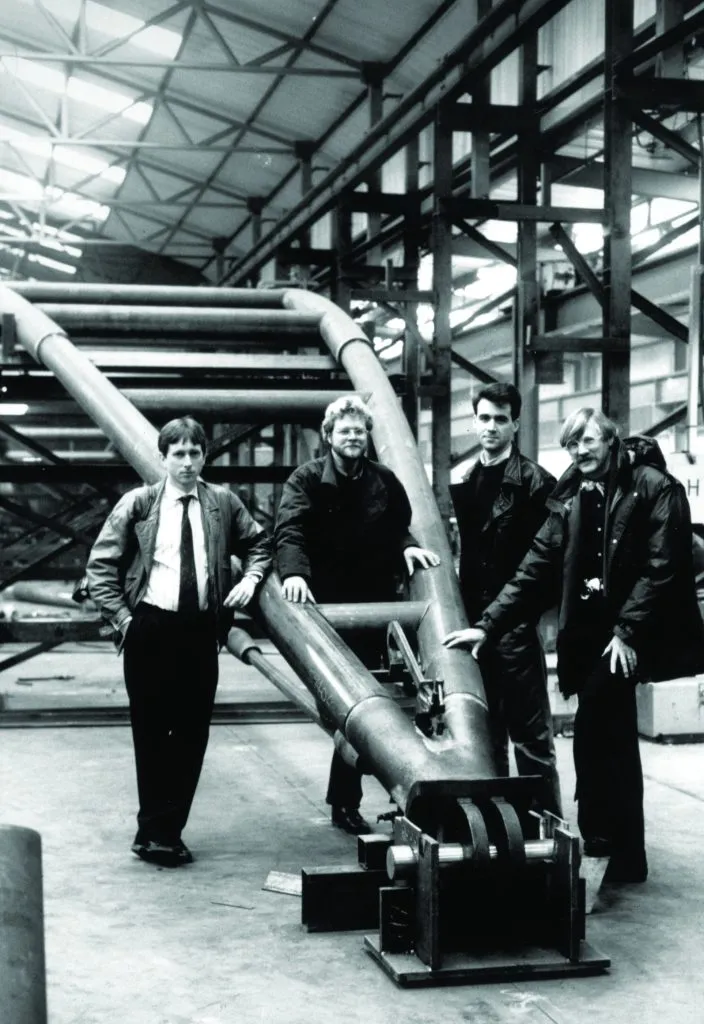
First truss fabrication for Eurostar International Terminal at Waterloo
In an independent career that spanned decades, Grimshaw dared to experiment in a wide diversity of projects, operating from offices in America, Europe and Asia. Notable was his EXPO 92 Pavilion in Seville, with its virtuoso water-cascading glass façade, designed in collaboration with the artist William Pye, a low-energy and sustainably elegant response to the heat of an Andalusian summer.
Closer to home, his printworks for the Financial Times, known as East India Dock House of 1988, merited the accolade of a listing by English Heritage nearly 30 years later.
I admired the bravura of his earliest works in the 1960s when I had just returned from studying in the United States and since then I have followed the later, more mature works.
But perhaps the last remembrance should be in the words of those in the practice who were closest to him, a leadership that was open and embracing: ‘the lack of hierarchy in the studio, shaped by his amiable and open personality, was its true strength’ and, finally, ‘a man of invention and ideas’, who will be ‘remembered for his endless curiosity about how things are made and his commitment to the craft of architecture and building’.
Patty Hopkins, co-founder, Hopkins Architects:
Nick and I were students together at the AA in the 60s, where one could sense his individuality and determination. In practice he continued to pursue his own ideas through creative experimentation and persuasion. His clarity of purpose about the importance of architecture’s role in the world is evinced in the great buildings of his long and productive career. A good life.
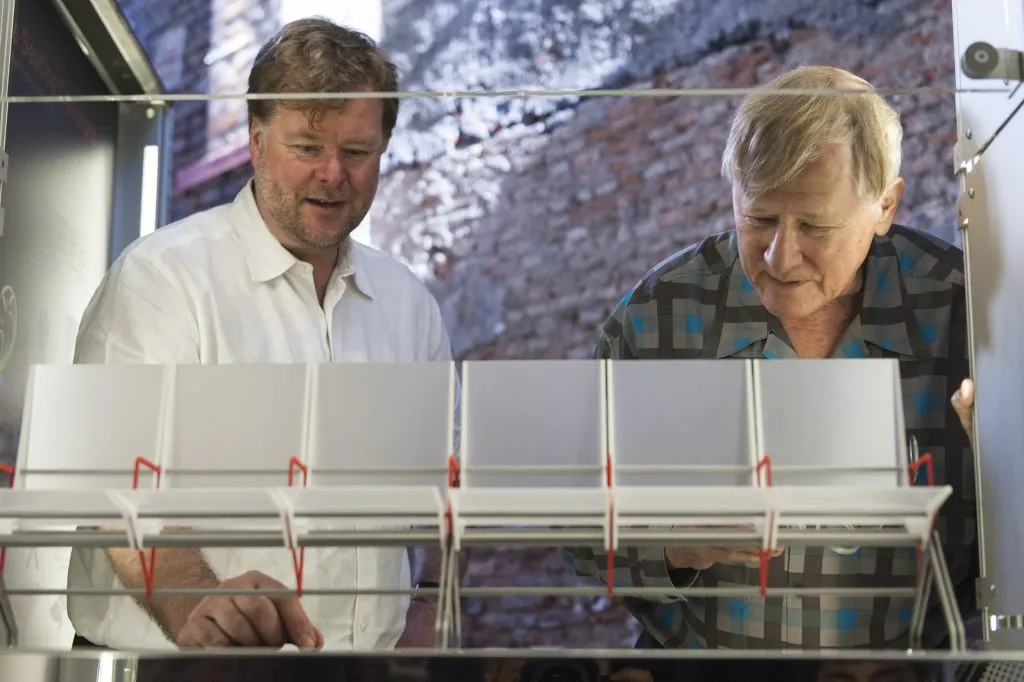
Nicholas Grimshaw and Andrew Whalley, Milan. Credit: Poltrona Frau
Eva Jiřičná, founder, Eva Jiřičná Architects:
I met Nick in the autumn of 1968 at a swinging party in Battersea held in an apartment shared by Tom Jestico. While everybody
was dancing, me, Nick and Terry Farrell found rest in the kitchen, where Nick started telling us about his big project, ‘the Bathroom Tower’. I was immensely impressed. Nick has been a part of my life ever since. He was an architect in his mind and heart. I watched him from the very beginning– inventing, changing, impressing clients, colleagues and everybody who crossed his path.
He was a brilliant architect, leader, friend, husband, father and grandfather, as well as a great president of The Royal Academy, teacher, colleague and, above all, a man who shared and lived his life to the full.
He has made his mark all over the world, changed many people’s perception of architecture, brought up and trained an enormous number of young architects – and he was fun.
He is no longer with us. But he will live in my heart and mind for the rest of my days. I am sure I am not alone.
RSHP – joint statement by the directors:
He was one of the most influential architects of his generation. A pioneer of High-Tech architecture, his work celebrated engineering as an art form, combining bold design with technical ingenuity.
Landmark projects such as the Eden Project in Cornwall and Waterloo International Terminal in London demonstrated his ability to unite innovation with elegance, creating buildings that were both functional and inspiring.
Nick and his accomplished team at Grimshaw Architects have become a dominant force in the architecture of transport, beginning at Waterloo International and leading to Southern Cross, London Bridge, Paddington and the Elizabeth line – the latter earning recognition in the Stirling Prize. Their global impact expends to major airports including Heathrow, Istanbul, Newark and Zurich.
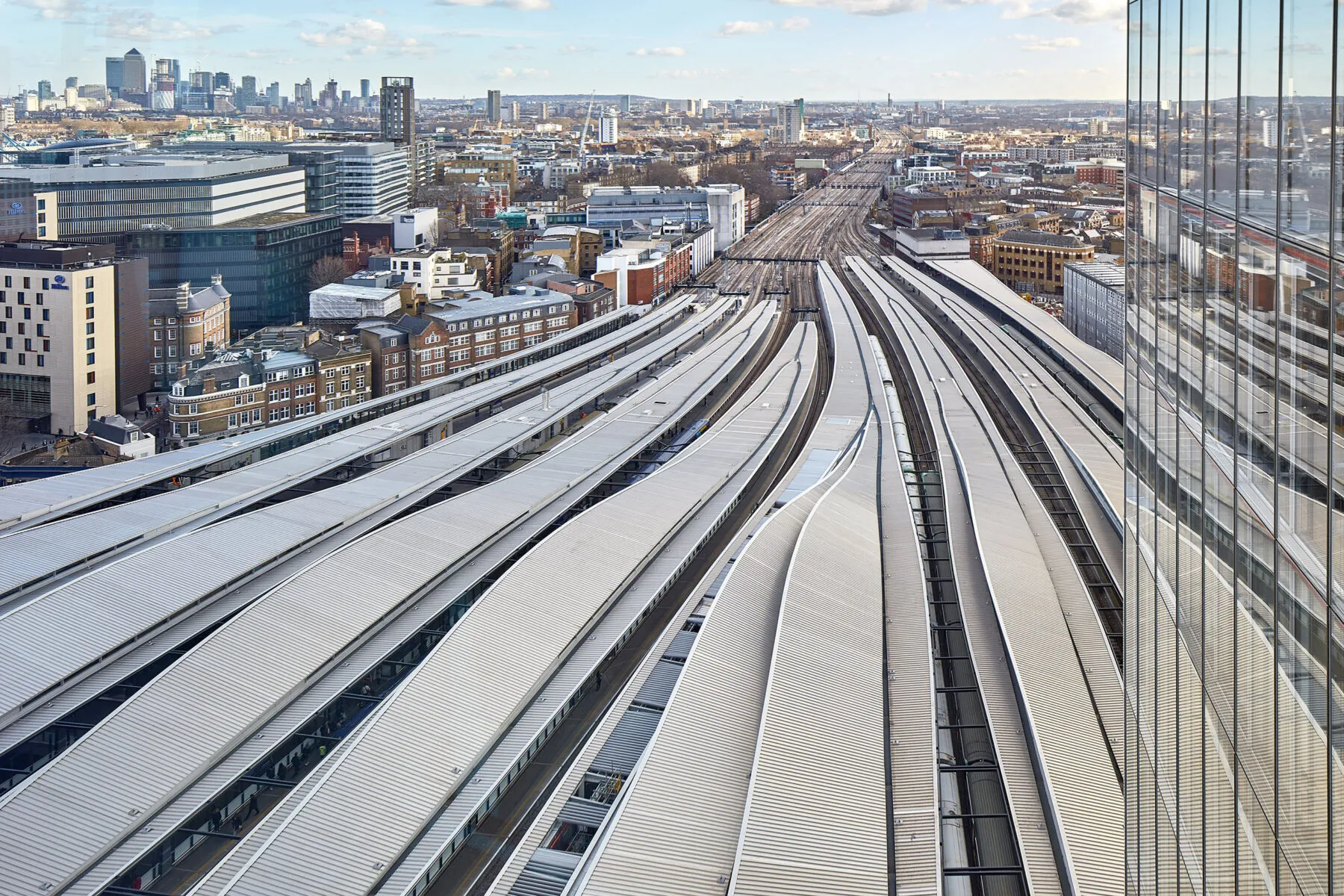
London Bridge Station
Nick was taught by Richard Rogers at the Architectural Association (AA) in London, and many of his early works resonate with our practice as he explored openness of structure, celebrated technology, and developed new approaches to space that helped shape the direction of his architectural thinking.
Through his practice, he shaped transport, infrastructure, culture and exhibitions across the globe, and influenced the way contemporary architecture embraces transparency, adaptability and sustainability. He will be remembered for his vision, creativity and enduring contribution to the world of architecture.
Jerry Tate, director and founder, Tate+Co:
Nick was an amazing person; super-talented as an architect (he could tell you what was wrong with a project with laser precision) super-passionate (he instinctively knew what good design is) and super-thoughtful (always considerate of others and wanting to help people).
He has had an incredible impact on architecture; he brought architecture and engineering together to lead the creation of some seminal buildings (Waterloo, Eden Project, Herman Miller factory to name a few), and all the way through remained a gentleman.
I had the honour of working for him at Grimshaw for eight years, then designing a new-build house with him and the Brunel Museum staircase after that, and serving as a trustee at the Grimshaw Foundation. The foundation is a real example of Nick’s leadership, an organisation totally devoted to opening up access to the creative professions and helping those who may not have believed such a career was possible.
My thoughts are with his family and his practice, both of whom I know will miss him greatly. I am really going to miss him too. You always wish you could get just one more conversation with someone, but there you go.
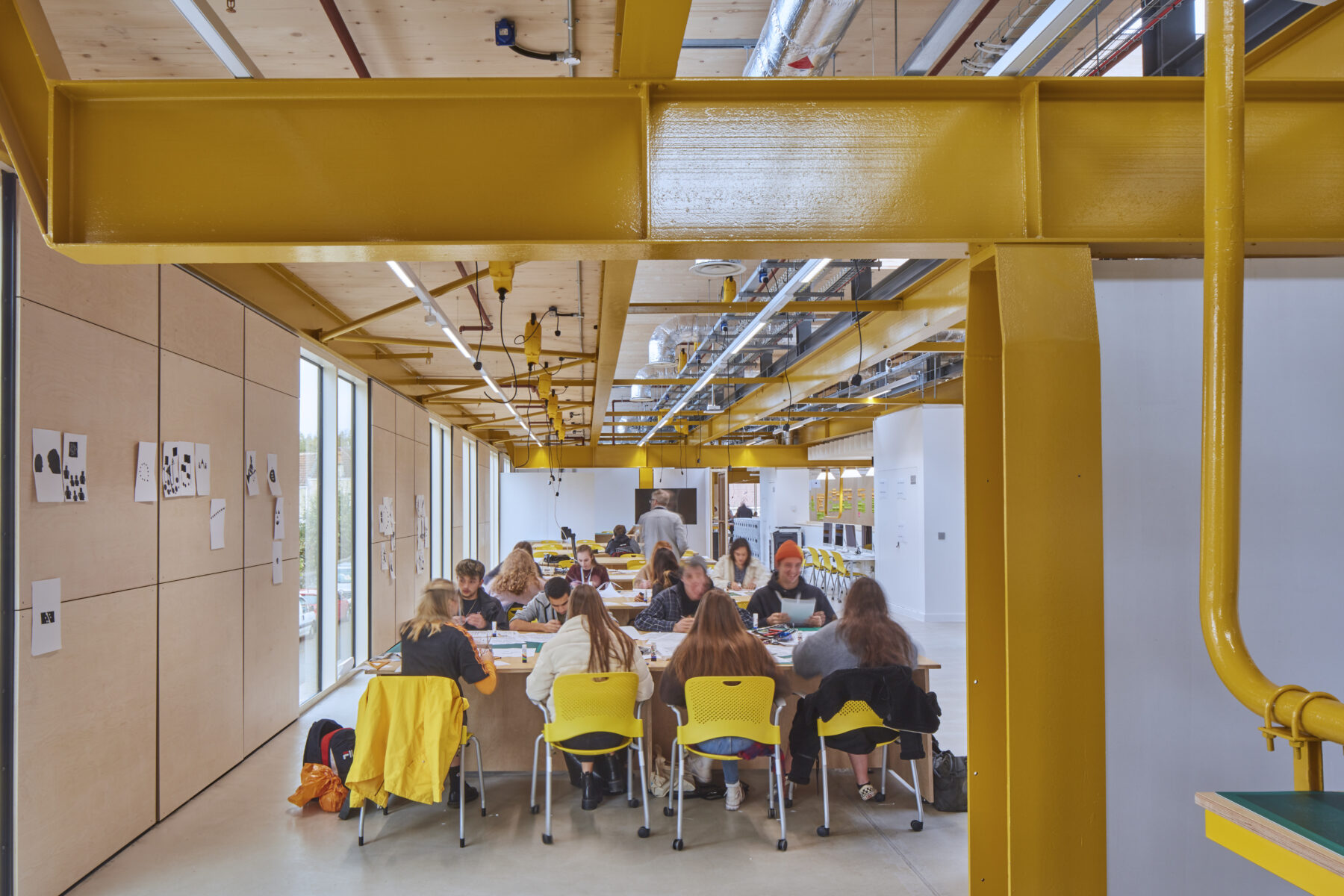
Grimshaw’s conversion of the practice’s own 1970s Herman Miller Factory into Bath Spa University’s Schools of Art and Design