
Key Takeaways
Flaxseeds are one of the best plant sources of omega-3s, which are good for heart health. Flaxseeds can help lower LDL cholesterol and reduce inflammation. Hemp seeds are a top choice for protein.
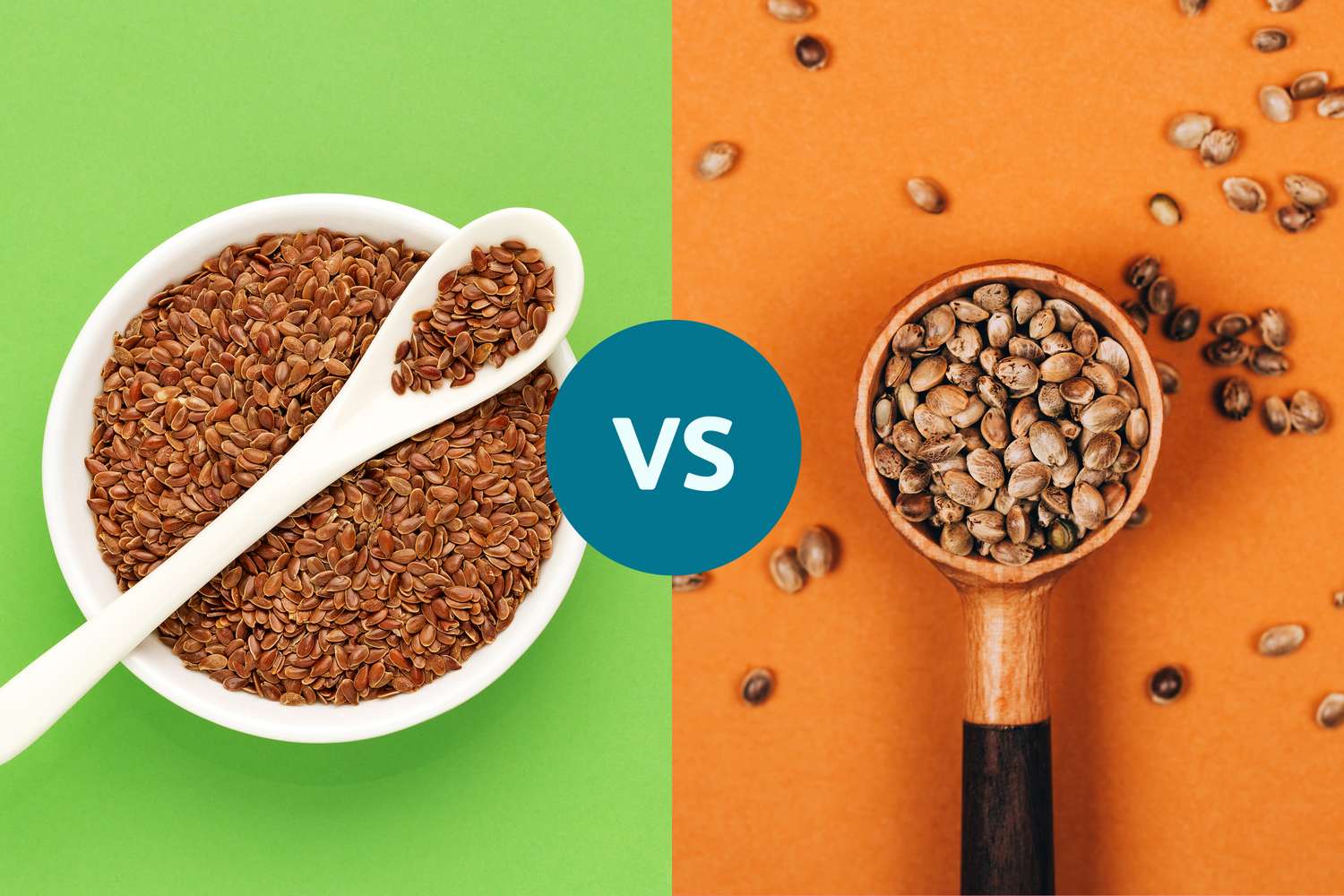
Flax and hemp seeds are tiny seeds that pack a lot of nutrition. They’re full of healthy fats, protein, fiber, and plant compounds that may help improve overall health. However, flaxseeds have a clear advantage for heart health because of their omega-3 content.
Which Has More Heart-Healthy Omega-3s?
Flaxseeds are one of the best plant sources of alpha-linolenic acid (ALA), a type of omega-3. About 50 to 60% of the fat in flaxseeds comes from ALA, giving them a great omega-6 to omega-3 balance.
Studies show that eating flaxseeds can help lower “bad” LDL cholesterol, reduce inflammation, and protect your heart.
Hemp seeds also have ALA, but less—around 15 to 26% of their fat. They still offer a healthy fat balance and protein, fiber, and plant compounds that may support heart and blood vessel health.
How Does the Nutrition Compare?
Here’s a quick look at how flaxseeds and hemp seeds stack up:
Flaxseed vs. Hemp Seeds
Nutrients
Flaxseed
Hemp
Serving Size
1 tablespoon
1 tablespoon
Calories
37
57
Fat (grams)
3
5
Protein (grams)
1
3
Carbohydrates (grams)
2
1
Fiber (grams
2
0.5
Aside from their omega-3 content, flaxseeds are high in soluble fiber, which helps your digestion, keeps blood sugar steady, and can lower cholesterol. They’re also rich in lignans, plant compounds that act like antioxidants and may support heart and hormonal health.
Hemp seeds are a top protein choice. They contain all nine essential amino acids, making them a complete protein—similar in quality to eggs.
They’re also rich in minerals like magnesium, iron, and zinc, and provide vitamins E, D, and A. Hemp seeds are less fibrous than flaxseeds but still add some gut-supporting nutrients.
Do They Offer Any Other Health Benefits?
1. Anti-Cancer and Anti-Aging Properties
Flaxseeds are notable for their lignans, which may help lower the risk of certain cancers, especially hormone-related types. Their fiber and omega-3s also support healthy aging and gut health.
Hemp seeds provide antioxidants and reduce inflammation, but research on cancer prevention is stronger for flax.
2. Protein and Muscle Health
Hemp seeds are packed with protein that’s complete and easy to digest. They can help support muscle repair and growth, making them a solid choice for anyone on a plant-based diet.
Flaxseeds provide some protein too, but in smaller amounts and without all the essential amino acids.
3. Gut Health
Flaxseeds’ soluble fiber feeds healthy gut bacteria, supports regular bowel movements, and helps regulate blood sugar and cholesterol.
Hemp seeds can help gut health too, supporting the gut barrier and reducing inflammation, but they’re lower in fiber.
How to Add Flaxseeds and Hemp Seeds to Your Diet
Both seeds are easy to add to your diet:
Flaxseeds: Use ground flaxseeds for the best absorption. Sprinkle them on oatmeal, yogurt, or smoothies, mix into muffins or pancake batter, or stir a small amount into soups and stews. Whole flaxseeds are fine for crunch in granola, but may pass through undigested.
Hemp seeds: These have a mild, nutty flavor and can be eaten raw. Add them to salads, smoothies, yogurt, grain bowls, or avocado toast. They can also be blended into sauces or homemade energy bars.
Verywell Health uses only high-quality sources, including peer-reviewed studies, to support the facts within our articles. Read our editorial process to learn more about how we fact-check and keep our content accurate, reliable, and trustworthy.
Kunutsor SK, Jassal DS, Ravandi A, Lehoczki A. Dietary flaxseed: cardiometabolic benefits and its role in promoting healthy aging. Geroscience. 2025;47(3):2895-2923. doi:10.1007/s11357-025-01512-0
Yang C, Xia H, Wan M, et al. Comparisons of the effects of different flaxseed products consumption on lipid profiles, inflammatory cytokines and anthropometric indices in patients with dyslipidemia related diseases: systematic review and a dose–response meta-analysis of randomized controlled trials. Nutr Metab (Lond). 2021;18:91. doi:10.1186/s12986-021-00619-3
Montero L, Ballesteros-Vivas D, Gonzalez-Barrios AF, Sánchez-Camargo ADP. Hemp seeds: nutritional value, associated bioactivities and the potential food applications in the Colombian context. Front Nutr. 2023;9:1039180. doi:10.3389/fnut.2022.1039180
Apetroaei VT, Pricop EM, Istrati DI, Vizireanu C. Hemp seeds (Cannabis sativa L.) as a valuable source of natural ingredients for functional foods—a review. Molecules. 2024;29(9):2097. doi:10.3390/molecules29092097
USDA FoodData Central. Hemp seeds.
USDA FoodData Central. Seeds, flaxseed.
Sun J, Bai H, Ma J, et al. Effects of flaxseed supplementation on functional constipation and quality of life in a Chinese population: a randomized trial. Asia Pac J Clin Nutr. 2020;29(1):61-67. doi:10.6133/apjcn.202003_29(1).0009
Chen H, Xu B, Wang Y, et al. Emerging natural hemp seed proteins and their functions for nutraceutical applications. Food Sci Human Well. 2023;12(4):929-941. doi:10.1016/j.fshw.2022.10.016
Jang WY, Kim MY, Cho JY. Antioxidant, anti-inflammatory, anti-menopausal, and anti-cancer effects of lignans and their metabolites. Int J Mol Sci. 2022;23(24):15482. doi:10.3390/ijms232415482
Millan-Linares MC, Rivero-Pino F, Gonzalez-de la Rosa T, Villanueva A, Montserrat-de la Paz S. Identification, characterization, and molecular docking of immunomodulatory oligopeptides from bioavailable hempseed protein hydrolysates. Food Res Int. 2024;176:113712. doi:10.1016/j.foodres.2023.113712
Hadi A, Askarpour M, Salamat S, Ghaedi E, Symonds ME, Miraghajani M. Effect of flaxseed supplementation on lipid profile: An updated systematic review and dose-response meta-analysis of sixty-two randomized controlled trials. Pharmacol Res. 2020;152:104622. doi: 10.1016/j.phrs.2019.104622
Necib RB, Manca C, Lacroix S, et al. Hemp seed significantly modulates the endocannabinoidome and produces beneficial metabolic effects with improved intestinal barrier function and decreased inflammation in mice under a high-fat, high-sucrose diet as compared with linseed. Front Immunol. 2022;13:882455. doi:10.3389/fimmu.2022.882455

Thanks for your feedback!
What is your feedback?
Helpful
Report an Error
Other