
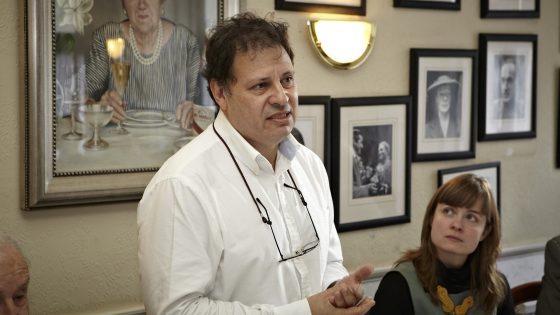
Alan Berman, who has died aged 76, was an architect of skill and modesty, a writer of clarity and insight, and a critic unafraid of polemic. At a time when much architecture chased fashion and spectacle, Berman built and wrote with deep care for context, history, and craft.
Across Oxford and Cambridge, where his buildings and masterplans quietly shaped collegiate life, and in his writings on figures such as James Stirling, he championed an architecture that served people first, respected what had come before, and spoke with a measured, enduring voice.
Born in South Africa in 1949, Alan moved to the UK in 1962. His talent as a swimmer gained him a place on the under-21s swimming team as well as British citizenship. He secured a place and a sports blue at Clare College, Cambridge in 1968 to study architecture.
Among his fellow students was Pedro Guedes, with whom he would share not only a friendship but an early architectural partnership. Both were taught under Leslie Martin’s Cambridge regime, where form and proportion were central and where, as fellow student Nicholas Ray recalled, ‘we were confident in making architectural proposals and surprised those who’d come straight through the school as undergraduates … Alan launched in, showing the way’.
After Cambridge, Alan and Pedro joined University College London for postgraduate studies at what Richard Llewelyn-Davies had rebranded the School of Environmental Studies. Here Alan wrote his dissertation on Edwin Lutyens, developing a lifelong interest in architectural history, while weekends were spent visiting Arts and Crafts and Edwardian country houses – sometimes trespassing, Ray recalls, to glimpse works by Lutyens and Baillie Scott.
Bob Maxwell encouraged Alan to gain practical experience, and he worked for contractors and on building sites before joining Maguire & Murray, a London practice known for Modernist clarity and an interest in building for people. This early exposure to both the realities of construction and architectural idealism shaped his own pragmatic yet thoughtful approach.
Another key influence was Ted Cullinan, whose socially minded, low-tech architecture and personal warmth impressed Alan deeply. Cullinan’s work offered a counterpoint to the profession’s growing fascination with iconic spectacle: humble, responsive to its site, and inventive rather than ostentatious.
‘He had a tremendous level of charm’
With Pedro, Alan formed Berman Guedes Architects in the 1970s, designing schools, housing and university buildings with a clarity and contextual sensitivity unusual for the time. After Pedro returned to South Africa, Alan founded Berman Guedes Stretton (BGS) with Roger Stretton in Oxford in 1984, the practice that would carry his name for the rest of his career.
BGS became closely associated with Oxford and Cambridge colleges, where Alan’s combination of design skill, diplomacy and historical awareness proved invaluable. At Wolfson College, Oxford, he extended Powell & Moya’s original Modernist buildings with what the college bursar Richard Morin called ‘a firm steering hand’, ensuring architectural quality and continuity.
Hermione Lee, president of Wolfson from 2008 to 2017, remembered: ‘Alan taught me about modern architecture, but what struck me most was his incredible energy and commitment. He had a tremendous level of charm, able to deal with the weird bureaucracy, internal politics and local complexities of building in Oxford.’
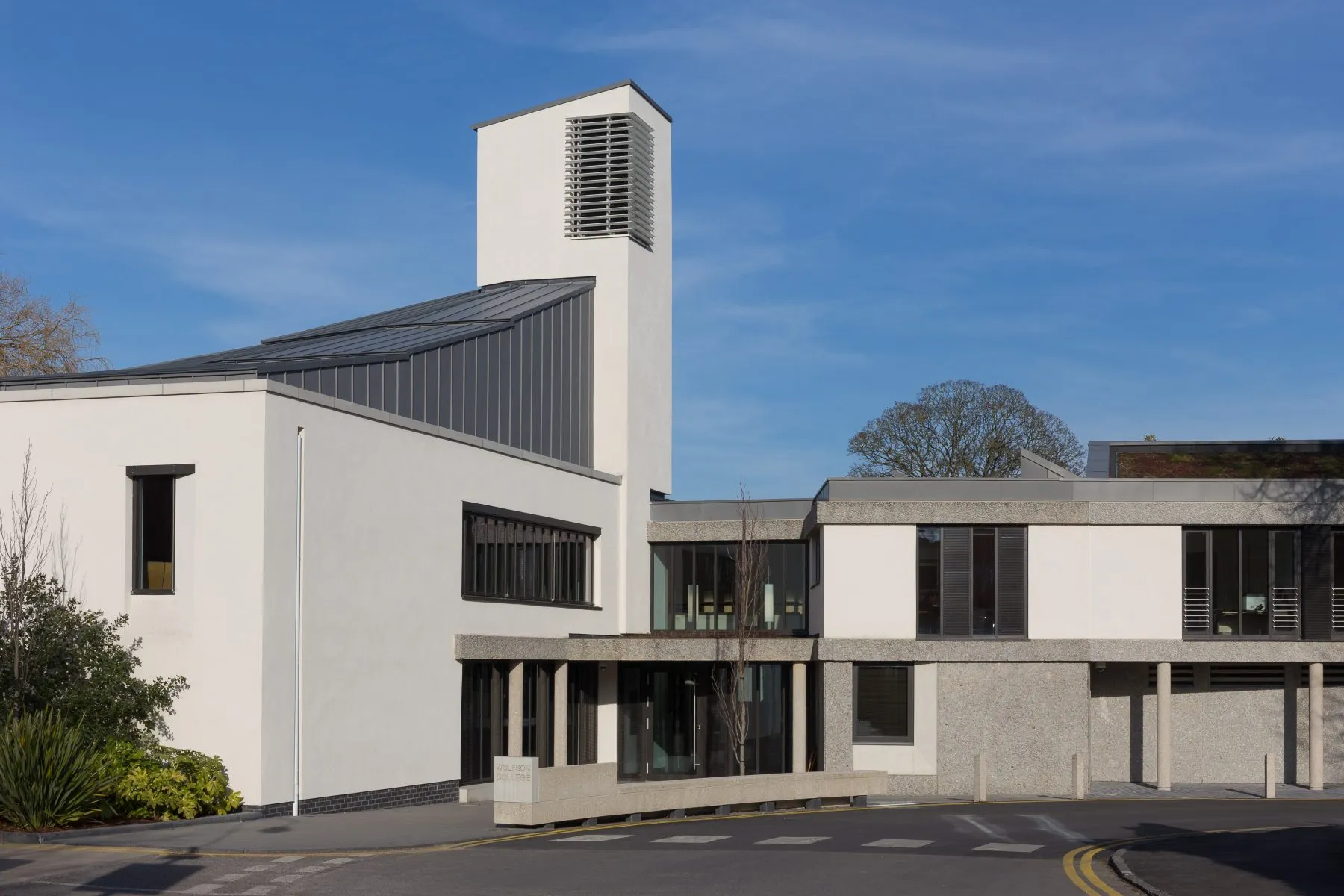
Wolfson College Oxford, Academic Wing 2016. Architect: Berman Guedes Stretton
The Shulman Auditorium and Queens College Dining Hall likewise exemplify this respect for what had come before. Where many architects sought to impose, Alan preferred to converse new with old. This modesty set him apart in a profession often driven by ego. It also rhymed with his notable admiration for James Stirling, whose work – though far bolder in style – always wrestled with history, type and context, even as it forged a distinctive architectural language.
Alan not only built but also wrote, lectured and edited with the same clarity he brought to design. He authored The Red Trilogy on Stirling and Gowan, and Stirling + Wilford: American Buildings, collecting essays by Norman Foster, Richard Rogers and others to illuminate Stirling’s work.
He defended Stirling against critics who saw only difficult plans or clashing forms, arguing instead for the social and spatial intelligence of the architecture. Yet here lay a revealing paradox: Stirling’s mature work often carried a strong, recognisable aesthetic, while Alan himself insisted: ‘My house style is the right style for the job’.
Where Stirling sometimes repeated visual motifs across projects, Alan adapted each design to site, programme and context. He could admire Stirling’s courage and distinctiveness while choosing for himself a quieter, more pragmatic path — one shaped by the sensitivities of Oxford colleges and his own principles.
Alan also believed architects should write better and think harder. He founded the Architects’ Journal Writing Prize to encourage young architects to reflect on the role of the architect in society, not just on form-making. He contributed essays and reviews to journals, lectured widely, and in Grace in Public Spaces explored the architectural form of the parvis – the gathering space before a church – as a model for civic generosity in contemporary design.
Alan could be sharply critical of architectural fashion. In interviews late in life, he lamented the culture of donors demanding iconic landmarks regardless of context. Yet he also praised emerging practices designing modest, sustainable buildings – proof, he hoped, that environmental and social responsibility might yet outlast cycles of fashion. Above all, Alan resisted the ego-driven signature style. If this cost him publicity in an era of architectural branding, so be it. The work came first.
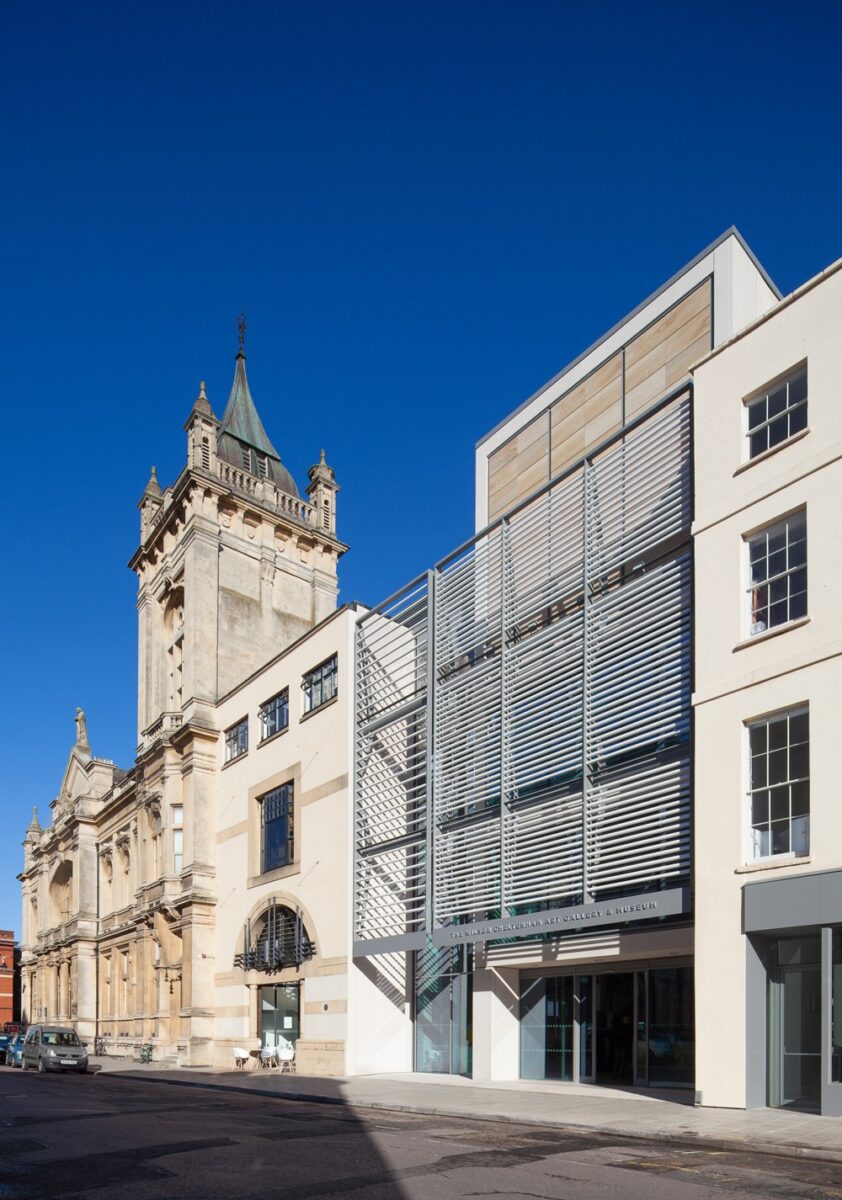
The Wilson: Cheltenham Art Gallery & Museum. Architect: Berman Guedes Stretton
Alongside practice and writing, Alan taught at Cambridge, Liverpool, Oxford, and internationally in Italy, bringing to students what Edmund Fowles called ‘incisive and insightful critique … always charming, respectful, and good-humoured’. Sarah Wigglesworth, who contributed an essay to the Red Trilogy: Three Radical Buildings, described Alan’s ‘energy, curiosity and insightfulness, and his ability to discuss and comment while gently guiding’.
He encouraged close analysis of buildings – especially Stirling’s – to counter what he saw as superficial, purely stylistic readings. Ray admired his ‘ability to convey a knowledgeable and authoritative position without condescension’, recalling summer schools in Ancona where Alan combined intellectual rigour with warmth over long Italian breakfasts.
Even in illness, Alan continued serving on Oxford’s Design Review Panel, mentoring younger architects and guiding competitions for colleges such as Green Templeton and Mansfield, championing architectural quality to the end.
Outside architecture, Alan found solace and creativity in pottery, hand-making vessels and sculptural forms in his Oxfordshire studio. He described working with clay as total focus: ‘The rest of the world disappears … you’re just searching for the right form.’
This love of craft echoed his architecture: attention to material, proportion, touch and the meeting of hand and mind. He often worked late into the night after college meetings, shaping clay into what he called ‘simple, generous forms’.
Apart from pottery, Alan had a passion for planting trees, seeing it as part of the same instinct toward craft and stewardship that guided both his architecture and his ceramics. Each tree, like each building or pot, required thought about a future life beyond his own.
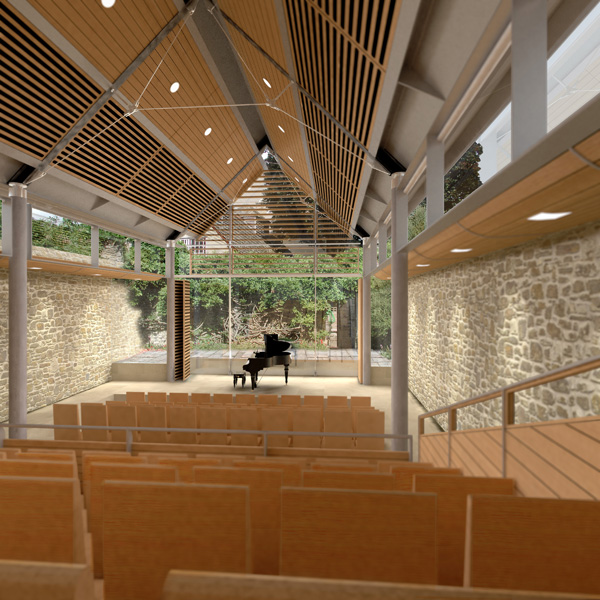
Shulman Auditorium by BGS Architects
Alan’s legacy lies not only in the buildings he designed – the halls, libraries, auditoria and colleges across Oxford, Cambridge and beyond – but in the standards he set: intellectual rigor, contextual sensitivity, generosity toward students and colleagues, and resistance to architectural vanity.
In an age of spectacle, Ala’s life and work remind us that architecture’s deepest grace lies not in self-assertion but in service to place, to people, to craft, and to history.
At his final lectures in Oxford, bursars, fellows, students and architects alike paid tribute to a man whose buildings, words and mentorship had quietly shaped not only the architectural fabric of colleges but the intellectual lives within them.
Matthew Blunderfield is a photographer, host of the podcast Scaffold and producer with the Architecture Foundation
Tributes
Jo van Heyningen of van Heyningen and Haward Architects
When we all first met Alan in our first year at Cambridge in 1968, we knew him to be a delightfully friendly and knowledgeable person, but I don’t think I understood what a good architect he was. He formed a practice with another of us, Pedro Guedes, and they embarked upon a career of producing excellent and innovative work.
After Pedro left, Alan went on to develop a rewarding practice in Oxford, retaining the loyalty of his circle of clients. He was sentimental at times, opinionated at times, and always good fun. He was an important and loved figure in all our lives.
Alan was the client adviser and an associate fellow at Green Templeton College, Oxford. We began working together in late 2017 after winning a competition at the college. Despite a pause during Covid, we later went on to achieve planning in January 2024. Alan also served on the Oxford Design Review Panel and, more recently, reviewed our scheme for Mansfield College. He was both a guardian and a champion for excellence in architecture within Oxford.
Edmund Fowles of Feilden Fowles
I recall soon after the competition win at Green Templeton, Alan came to visit us at our studio. He wanted to get straight to business and talk design! At first daunted by the prospect of such an experienced Oxford/collegiate architect sitting ‘client side’, we soon discovered Alan’s warmth and supportive nature as he generously guided us and steered the project through to a successful planning outcome.
Alan had a special ability to deliver incisive and insightful critique on our designs while being completely charming, respectful and well-humoured – qualities only the best teachers and mentors possess. He was tremendously supportive, patient and encouraging of our fledgling practice, embarking on our first project in Oxford.
I was very fortunate to see Alan in April this year as he continued his duties on the Oxford Design Review Panel despite his illness. He reviewed our scheme at Mansfield College. I was reminded of his absolute commitment to architectural quality, his attention to detail and to the integrity of design, especially within the historic, collegiate setting of his much-loved home city of Oxford. I will remember with great fondness our work with Alan on Green Templeton and our many enjoyable conversations over a set of drawings.
Graham Morrison of Allies and Morrison
Both Bob and I separately worked with Alan when he was with Pedro Guedes as Berman Guedes. Though it was a serious architectural practice and they were way ahead of us, we both remember their studio was just full of good humour and there were very amusing comments and jokes. Alan reminded me, as I was a bit grumpy, altering ink drawings with a razor blade (those were the days), that ‘scratch or draw pays the same!’
He was very clear about business, and I learned a lot from him on that, not least that he divided business people into those who were buying or selling – a helpful categorisation to which almost everyone conforms.
He loved writing, and the more I got to know him as we both got older, the more I realised he constructed his thoughts as if he were writing. He had a clear-headed, logical mind, yet never lost his passion for architecture and its detail.
He was also a really good diplomat. Though not uncritical, he always saw other people’s point of view and found it easy to explain things to non-architects. No wonder the last chapter of his career was advising Oxford colleges. That diplomacy extended to the competitions we had for Oxford projects.
He was a dear friend, and I am going to miss him.
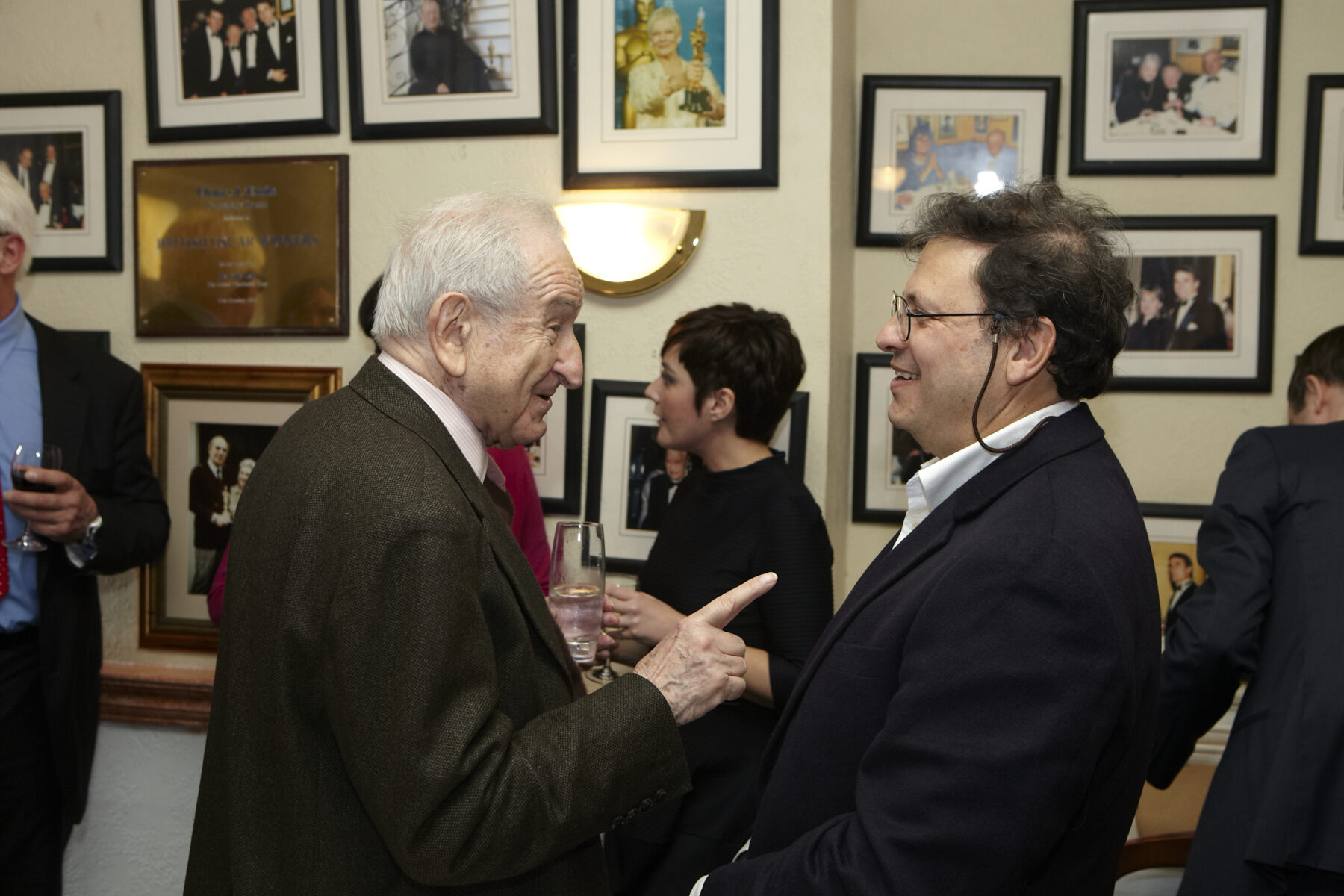
Joseph Rykwert and Alan Berman at the celebratory AJ Writing Prize lunch (2012). Photography by Peter Searle