
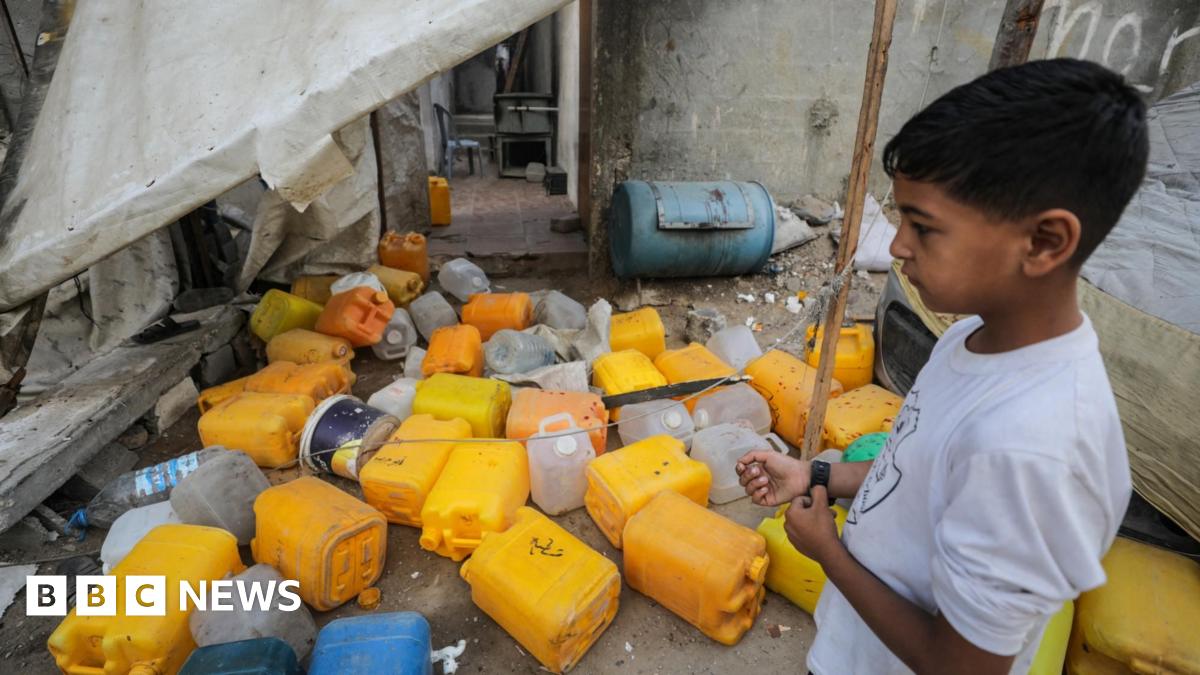
The UN says water shortages in Gaza are worsening due to the lack of fuel and spare parts for desalination, pumping and sanitation facilities, as well as insecurity and inaccessibility due to Israeli military operations against Hamas and evacuation orders.
As a result, many people are receiving less than the emergency standard of 15 litres per day, amounting to what the UN calls “a human-made drought crisis”.
“You see children queuing up, by the side of the road, with yellow jerrycans every single morning, waiting for the daily water truck to come and get their five litres [or] 10 litres, of water used for washing, cleaning, cooking, drinking, etc,” Sam Rose, the acting Gaza director for the UN agency for Palestinian refugees (Unrwa), told the BBC.
“Every death is a tragedy. This one is particularly emblematic, given the circumstances in which it took place. But it’s one of many,” he added.
Last Thursday, 10 children and three women were killed as they waited for nutritional supplements outside a clinic in the nearby town of Deir al-Balah.
The Israeli military said it had targeted a Hamas “terrorist” nearby and, as with Sunday’s incident, that it regretted harming any civilians.
“We focus on these incidents, but of course these weren’t the only children killed in Gaza [on Sunday],” Rose said. “Every single day, since the start of the war, on average of classroom full of children have been killed.”
The executive director of the UN children’s agency (Unicef), Catherine Russell, meanwhile called both incidents “horrific” and demanded that Israeli authorities “urgently review the rules of engagement and ensure full compliance with international humanitarian law”.