
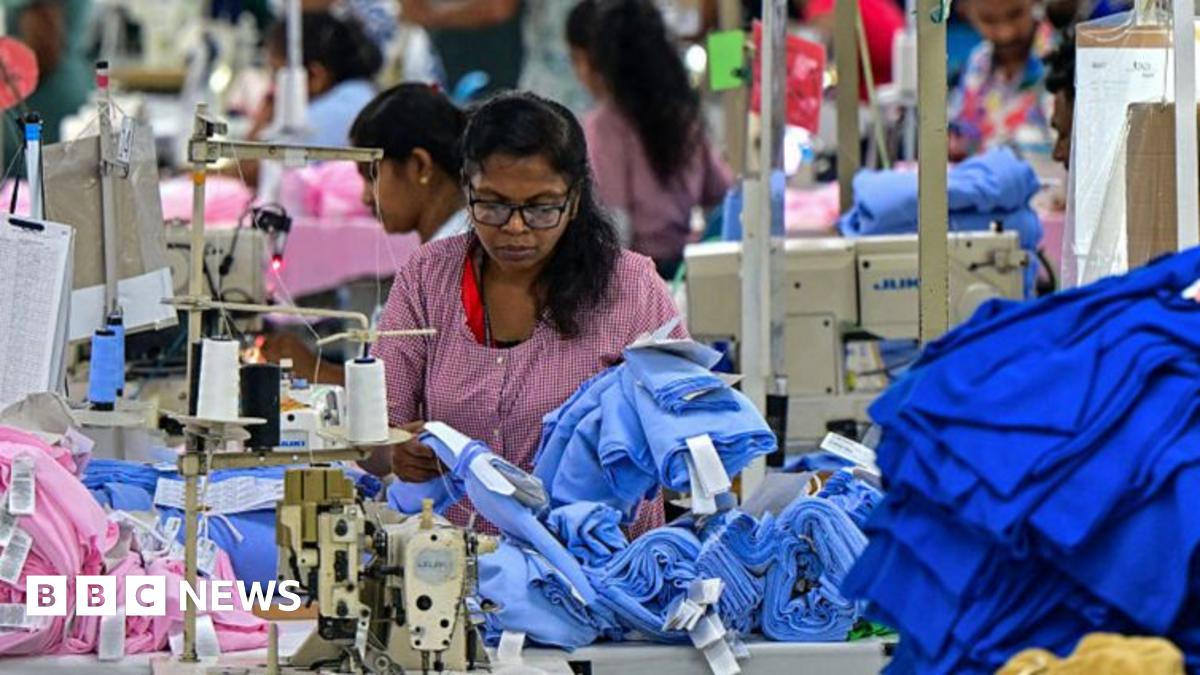
“Can you imagine what will happen if [we] lose our jobs? I’m so worried, especially for my kids. They need food,” says Nao Soklin, who works in a garment factory in southeastern Cambodia.
Ms Soklin and her husband Kok Taok make a living sewing bags for 10 hours a day. Together, they earn about $570 a month – barely enough to cover rent and provide for their two young sons and aged parents.
“[I want to] send a message to President Trump, to tell him to please lift the tariff on Cambodia… We need our jobs to support our families,” she told the BBC.
Cambodia, which has become a popular alternative to Chinese retailers because of its ready supply of low-wage labour, exported more than $3bn worth of apparel to the US last year, according to the Asean Statistics Division. The sector, which employs more than 900,000 people, makes up more than a tenth of the country’s overall exports.
For Sri Lanka, exports to the US helped the garment industry – which directly employs some 350,000 people – earn $1.9bn last year, making it the country’s third-largest foreign exchange earner.
“If [30%] is the end number, Sri Lanka is in trouble because our competitors, such as Vietnam, have received lower tariffs,” Yohan Lawrence, secretary general of Sri Lanka’s Joint Apparel Association Forum, told the Reuters news agency.