

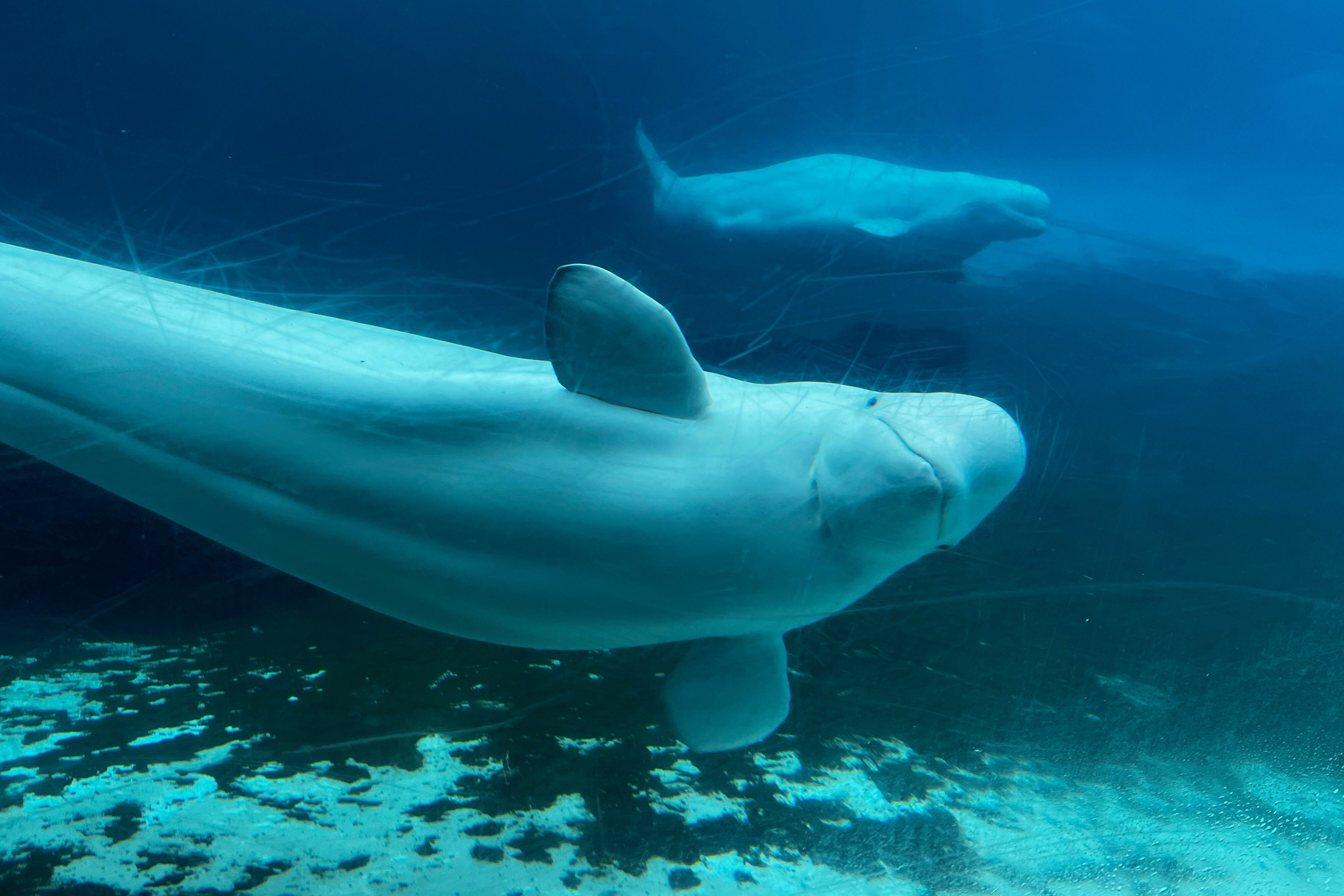
The beluga whales drift slowly and aimlessly in circles around a pool, a life of isolation that is all these gentle creatures have ever known for years, even decades, in captivity.
For years, the 30 whales delighted visitors to Marineland, a Canadian amusement park that closed last year. Now the park, near Niagara Falls, is on the brink of bankruptcy — and its owners say a lack of funding has left them with no choice but to euthanise the animals.
The plight of the “death row” belugas has triggered howls of outrage from campaigners and ignited fresh controversy over the treatment of animals in captivity.
“The whole situation is pretty crazy,” says Marketa Schusterova, whose anti-captivity organisation, TideBreakers, shared drone footage capturing the conditions at Marineland with The Times. “Threatening to kill the whales that they profited from for decades because they can’t get rid of them is a vile new low for the captivity industry.”

Drone footage from TideBreakers shows the marine mammals swimming aimlessly
Schusterova has been investigating Marineland over alleged animal safety concerns for nearly a decade. Footage of the beluga whales was taken on September 21. “There are 30 belugas cramped into tanks in a shut-down theme park with nowhere to go,” Schusterova says. She claimed: “Conditions have rapidly deteriorated and are the worst they’ve been in the eight years we’ve monitored the park.”
She added: “The tank is obviously dirtier with more waste build-up.”
Marineland had said it would have to euthanise its beluga whales by Tuesday if the federal government does not provide emergency funds for their care. The park’s owners said the government had previously blocked them from selling the whales to a facility in China.
Critics hope the park’s owners will not follow through. “Their statements about euthanasia are hopefully bluster, just to put some pressure on the government,” says Schusterova.
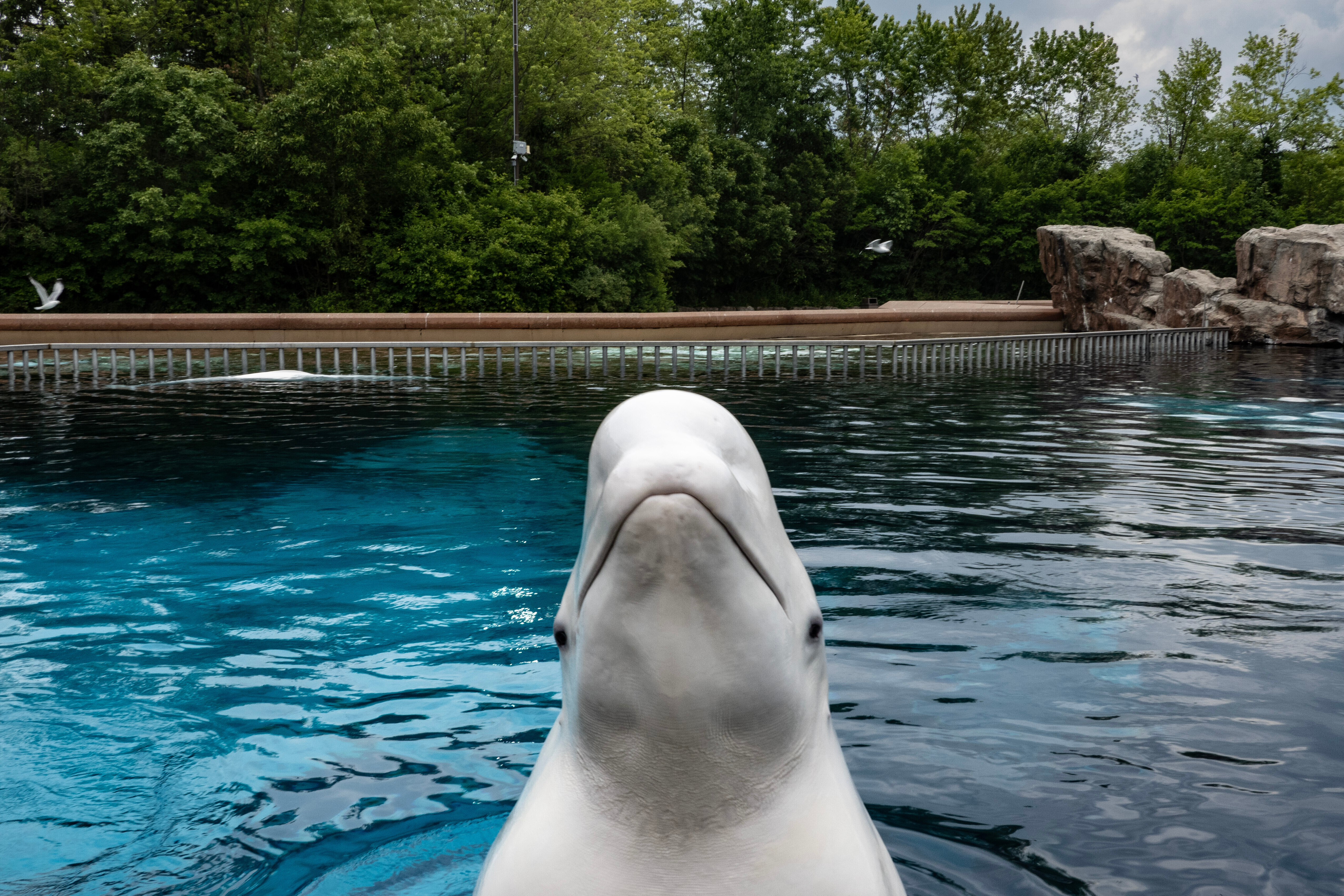
A beluga whale surfaces from a tank to be fed by an employee at Marineland
CHRIS YOUNG/THE CANADIAN PRES/AP
CHRIS YOUNG/THE CANADIAN PRESS/AP
Marineland was founded in 1961 by John Holer, a Slovenian immigrant, and was expanded over the years to eventually cover 1,000 acres of grounds. Rides and dining were added, as was the park’s first orca, named Kandu, in 1971, which quickly became the main attraction.
The park’s popularity endured for decades until 2012 when the walrus trainer Phil Demers, angered by the alleged mistreatment of animals and deteriorating conditions, blew the whistle.
Demers claimed that poor water quality and chronic understaffing was sickening the park’s sea mammals. A series of articles published in the Toronto Star reported further allegations on the neglect and Marineland’s alleged failure to maintain “responsible” standards.
“I loved my job at Marineland. It broke my heart to quit but I felt like I had no choice,” said Demers. “The water quality forced me to blow the whistle. It was the fact that the life-support system couldn’t sustain the animals. Everything was deteriorating very quickly.”
He claims that Marineland was “complacent” with repairs, which should have been carried out during the winter months when the park closed every year. Instead, small issues were allowed to mount and accumulate — resulting in the deaths of some animals, Demers says.
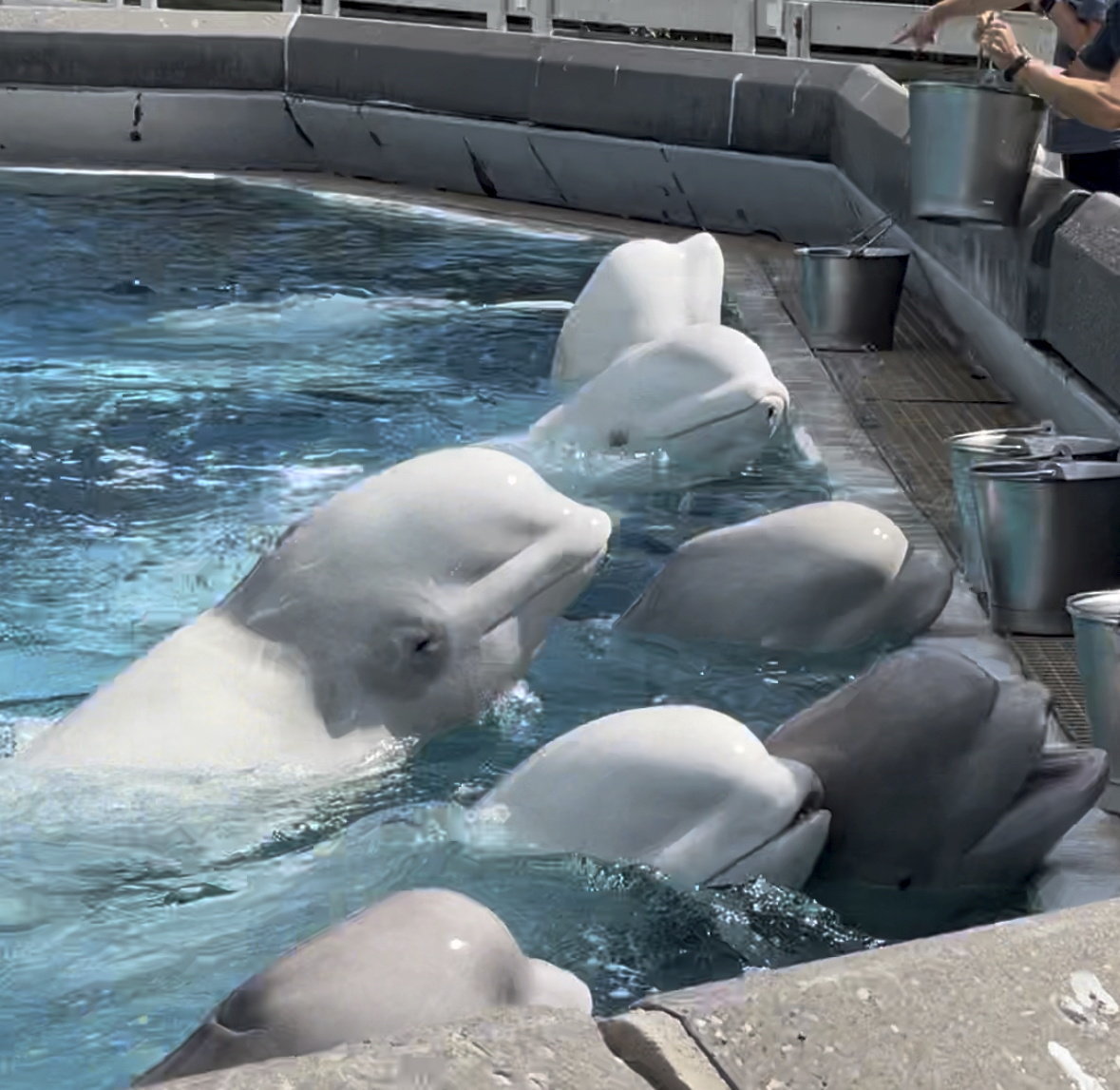
The whales are fed by staff
SWNS
Demers, an employee of Marineland for 12 years, was later sued by the park for allegedly plotting to steal a walrus called Smooshi with whom he had purportedly developed a close relationship. “Two years ago we actually settled,” Demers said, adding that under the deal it was agreed that Smooshi and her calf would be rehomed to another facility.
A year after Demers went public the investigative documentary Blackfish was aired. It exposed the mistreatment of a killer whale in captivity at SeaWorld, showing that confinement caused psychological distress, aggression and shortened lifespans.
The documentary became a touchstone in discussions about animal welfare and captivity ethics. Attendance at SeaWorld dropped by roughly 30 per cent in 2014, the year after the documentary was released, alone. Two years later it announced it would end its orca breeding programme and gradually phase out theatrical orca shows.
• Exploitation labelled as ‘conservation’ is the latest way to lure tourists
In the same year, the California Orca Protection Act legally banned breeding orcas in captivity or using them in entertainment performances. In 2019, Canada passed a near identical act, known as the “Free Willy Law”, further crippling operations at Marineland after years of declining attendance and accusations of animal abuse.
A series of animal deaths further tarnished the park’s reputation. In May 2019, it was announced that the 18-year-old walrus Apollo had died of heart failure. It was the fourth walrus death at Marineland within two years.
In recent years, 19 beluga whales and one killer whale — who had not interacted with another orca since 2011 — have passed away, according to data compiled by the Canadian Press. Beluga whales have a lifespan of about 60 years, but tend to have shorter lives in captivity.
In August last year the park was fined under Ontario’s animal cruelty laws for keeping three black bears in a cramped cage for months without sufficient water.
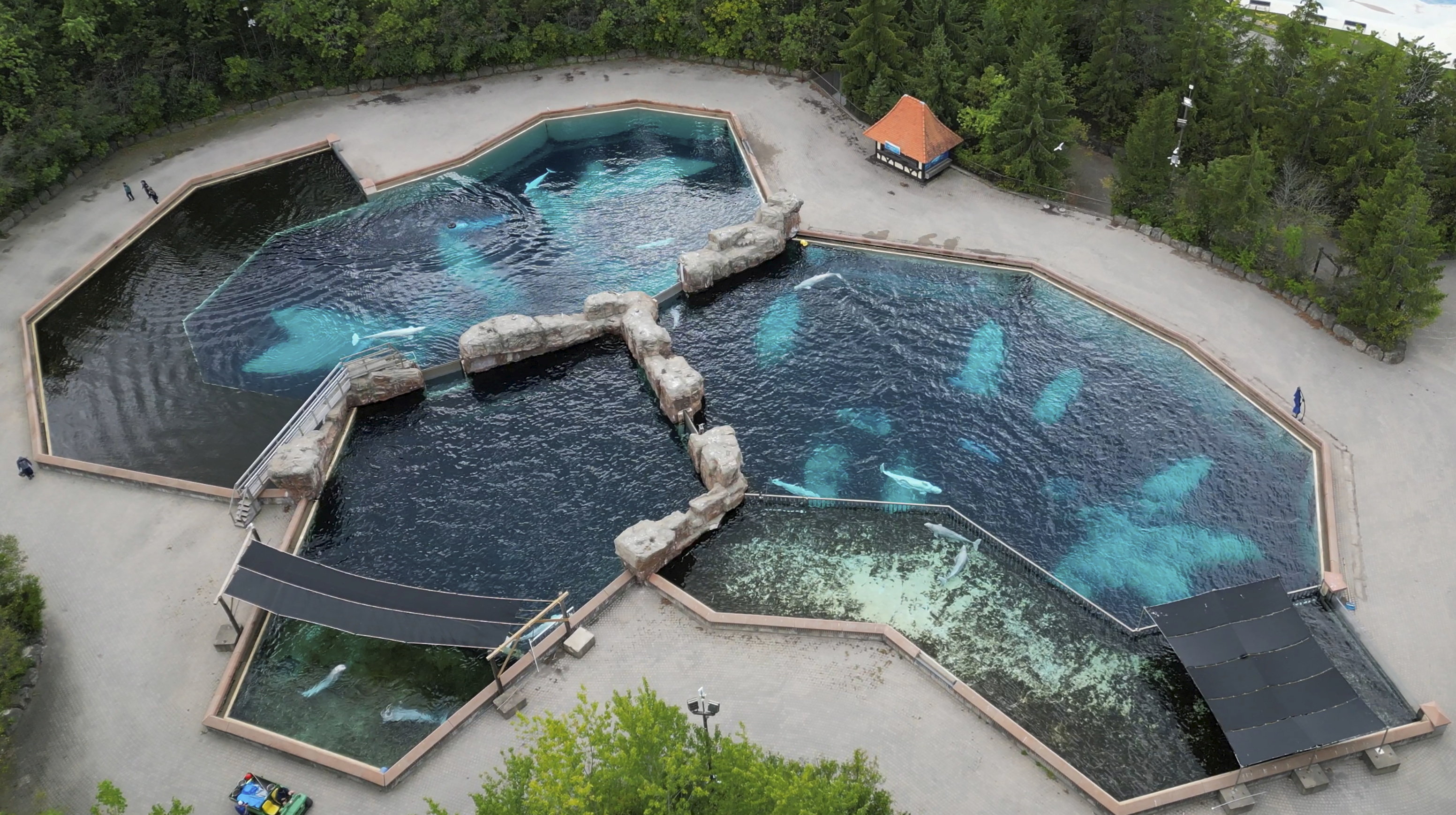
Drone footage of the whales’ enclosure
SWNS
Marineland has denied Demers’s allegations. In previous public statements the park said animal rights activists had repeatedly and falsely “sought to equate any animal death with alleged ‘abuse’ by the facility caring for the animals”. It said facilities were inspected “dozens” of times a year and that the park’s animals were cared for by specialists who make “every effort to save them” when they fall sick.
Marineland also said it had spent several years attempting to find a permanent home for its belugas. “The humane relocation to an accredited facility abroad was the only viable option to ensure our beloved whales remained alive and received the care they deserve,” it told the Canadian Press.
As appetite for visiting animals in captivity has waned over the past decade, and after a series of controversies Marineland’s decline has felt inevitable.
For now, the future of Marineland’s belugas remains uncertain. Although the park could in theory euthanise its whales, which would cost far less than the $2 million it is paying every month for their upkeep, Demers does not believe it will come to this.
“It will never happen. It could never happen,” he says. “No person would ever participate in such a thing. No veterinarian would ever put their name on it.”
Instead, he believes it far more likely that the 30 belugas will be split up and meet a variety of fates: some may be relocated to facilities in the US, some may be seized by the Canadian government and continue to receive care at Marineland courtesy of the taxpayer, and some could be eventually transported to China. Releasing them into the wild, however, is not an option. “They won’t have any natural instinct and would likely starve to death,” Demers says.
A coalition of private investors, led by Knapp Capital Management, a firm in New Jersey, has meanwhile proposed turning Marineland’s property, which has yet to find a buyer, into the “world’s first global inland sanctuary” for the park’s animals.
“There’s still a lot of cards on the table,” says Demers. “I try to stress that when one door closes, more open with all these headlines happening. We’ll see.”