
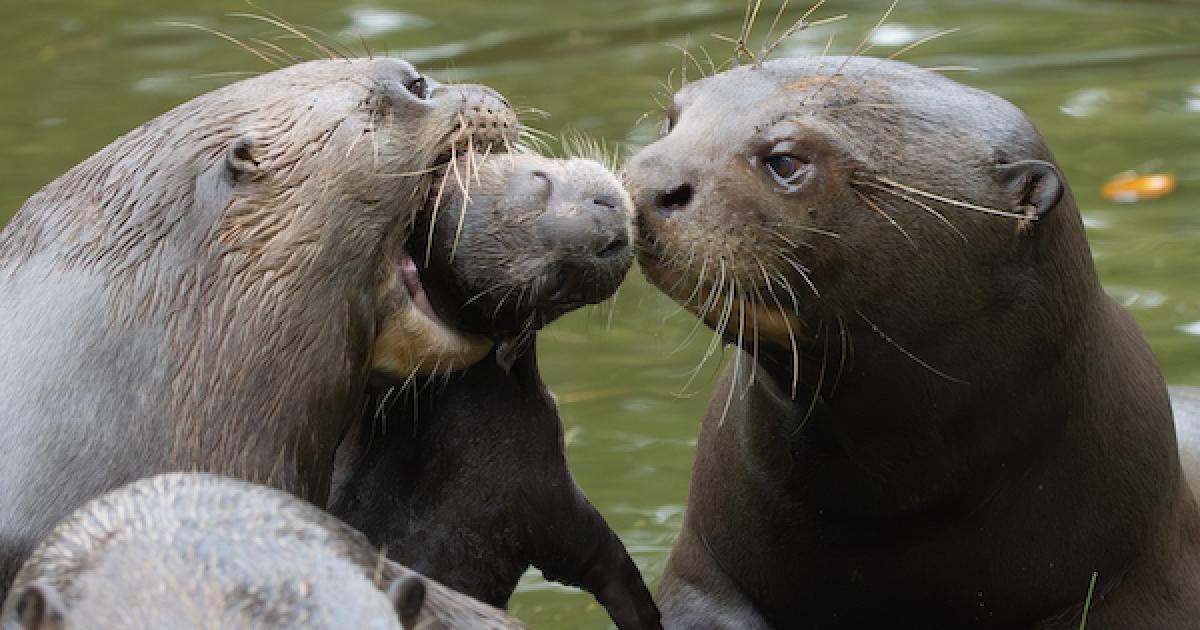
New Forest Wildlife Park welcomed the arrivals of the critically endangered South American mammals on August 2, but the news has only just been revealed after their health check clearance earlier in October.
The cubs, one female and two males, are healthy and were born to parents Ibera and Simuni.
It means that the park, near Ashurst, now has more than half of the UK’s entire captive population of the species, and the most in the world.
The park says that the arrivals mark “another milestone in the fight to save a species teetering on the brink in the wild”.
One of the cubs having their health check earlier this month(Image: New Forest Wildlife Park)
“To hold the world’s largest collection of giant otters is both an honour and a responsibility that we take seriously,” said Jason Palmer, curator of collections.
“They are disappearing from their native Amazon habitat at an alarming rate, and what we’re achieving here in the New Forest all aids the species’ future.”
Among the three new arrivals, keepers have been particularly charmed by one of the male cubs, who has already earned the nickname “mini Simuni.” The youngster has a distinctive large throat patch remarkably similar to his father’s, which is a unique identifying feature and strong family resemblance.
“It’s fascinating to watch Simuni bring out this little one who looks just like him,” says keeper Elizabeth McNamara.
“The throat patches on giant otters are like fingerprints where they are completely unique to each individual, so seeing such a strong resemblance between father and son is quite special.”
Visitors to the park can see the family in action, with the three cubs being taught how to swim and play by their older siblings Karanambu (born January 2023), brother Guapo (December 2023), and sister Ari Rana (summer 2024).
One of the three new giant otter cubs at New Forest Wildlife Park(Image: Clare Lodwidge)
The cubs are most active and visible during the day, particularly after feeding times, when the adult otters bring them out to explore and play.
As Simuni’s mother and sister also reside at the wildlife park, the park’s breeding programme has now produced multiple generations, demonstrating the type of long-term success that conservationists aim for when working with endangered species.
At the age of 15, Simuni is the oldest giant otter in Europe to become a dad again.