
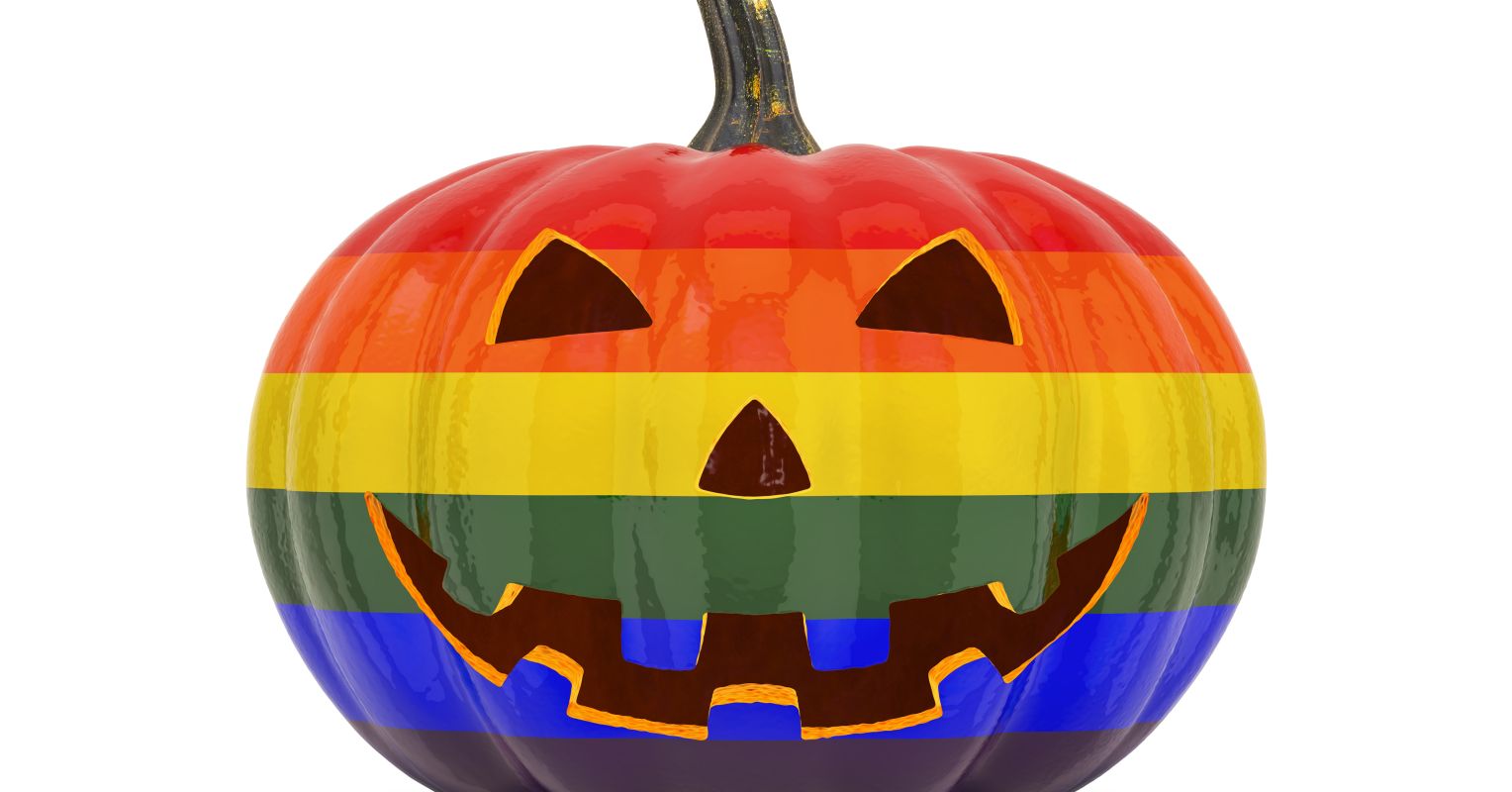
You might have heard that Halloween is colloquially called “the gay Christmas” in the queer scene. Indeed, Halloween is a celebration that many queer people are fond of. In the last week of October, multiple Halloween-themed parties are organised, and it has become part of the queer culture. But why so?
The History of Halloween
Halloween, celebrated on October 31, has its origins in the Celtic pagan festival of Samhain, over 2,000 years ago, marking the end of the harvest season and the beginning of winter. The night of October 31 into November 1 was the transition into the Celtic New Year, representing the end of one cycle and the beginning of another. On that night, it was believed that the boundary between the physical and spirit worlds was thin, leading to traditions of honouring ancestors and the dead. Ancient celebrations often included lighting bonfires and performing divination rituals. When the Romans conquered Celtic territories, their festivals honouring the dead merged with Samhain traditions. Centuries later, as Christianity spread, the Church replaced pagan rituals with Christian ones. The Christians designated November 1 as All Saints’ Day, or All Hallows’ Day, making October 31 All Hallows’ Eve, which eventually became Halloween.
The Mexican cultural counterpart to Halloween, another well-known festival, is Día de los Muertos—Day of the Dead. The Pre-Hispanic indigenous traditions have roots in the ancient civilisations of Mesoamerica, long before the Spanish colonisation. Indigenous peoples such as the Aztecs and the Mayans believed that life and death were part of the sacred cycle, like planting and harvest. They believed death led to renewal. Their ancient festivals were connected to the natural and cosmic cycles of agriculture and the solar calendar, especially the harvest season. In today’s Mexico, Día de los Muertos is celebrated on November 1 and 2 to remember loved ones who have passed away. It is a festive time, not a frightening one, as death is seen as part of life.
Halloween and Queer Culture
Halloween is often a favourite annual celebration within queer communities, as it is an opportunity to embrace themes that are meaningful to them, such as self-expression, creativity, and liberation. LGBTQ+ people face social judgments, discrimination, and oppression about how they should dress, act, or present themselves publicly. Halloween, with its modern tradition of costumes and transformation, offers a space allowing LGBTQ+ individuals to explore their queer creativity without judgment. Halloween also carries deeper meanings for some LGBTQ+ people, as the themes of life and death, light and darkness, and spirituality are embedded in the queer psyche as a result of past and current discrimination.
Life and Death
During the epidemic of AIDS, being gay was closely associated with death. During that time, death was a daily conversation and occurrence in the queer communities. This collective trauma still has echoes in queer people’s sense of self and their relationship with life and death. Many gay men who would have been our queer community’s elders today died tragically young, and they often died alone. Today, there are still some countries that impose the death penalty for being gay. Honouring the dead in our queer communities is a significant celebration of queer love, union, community, and connecting with queer “siblings,” our history, and social justice.
Light and Darkness
Homosexuality is largely seen as “bad,” or as part of “darkness,” in many religious discourses. The mainstream religious narratives, particularly concerning gay men, are that being gay is “a sin” or “an abomination,” and that queer people are damned to go to “hell” for eternity. Halloween is a great opportunity for queer people to counter this pervasive narrative by reclaiming the “darkness” into their own festival by making it sexy and fun—turning the “abomination,” the monstrous, into tantalizing sensual beauty. Queer people also play creatively with “dark” figures like the “Devil,” the creature of hell, and the “vampire,” creature of the night, partly as dark humour (the kind of humour many queer people love) in parody of the damnation narrative, and partly to honour and celebrate queer people’s sense of belonging and community in the in-betweens of society, by embracing the taboo, countering societal and religious prohibitions, and showing that they don’t need to fit in one societal box.
Embracing Spirituality
Just like many non-religious people celebrate the Christian holidays of Easter and Christmas, many can enjoy celebrating Halloween without any religious roots. However, the topic of religion for queer people is often a painful one, as many religions overtly discriminate against them. While some queer people want to completely separate from any religiosity, others may want to find a safe space to explore spirituality. It can be helpful to distinguish between religion, which could be described as man-made institutions with dogmas, and spirituality, which focuses on connections with what is beyond the purely physical realm, felt from within, not a place of worship, and in a relationship with the powerful nature and cosmos, not a God figure. Paganism is arguably the most queer-friendly religion and/or spiritual space, so celebrating Halloween, originally a Pagan festival, could be a meaningful embrace of spirituality while being joyfully queer.