
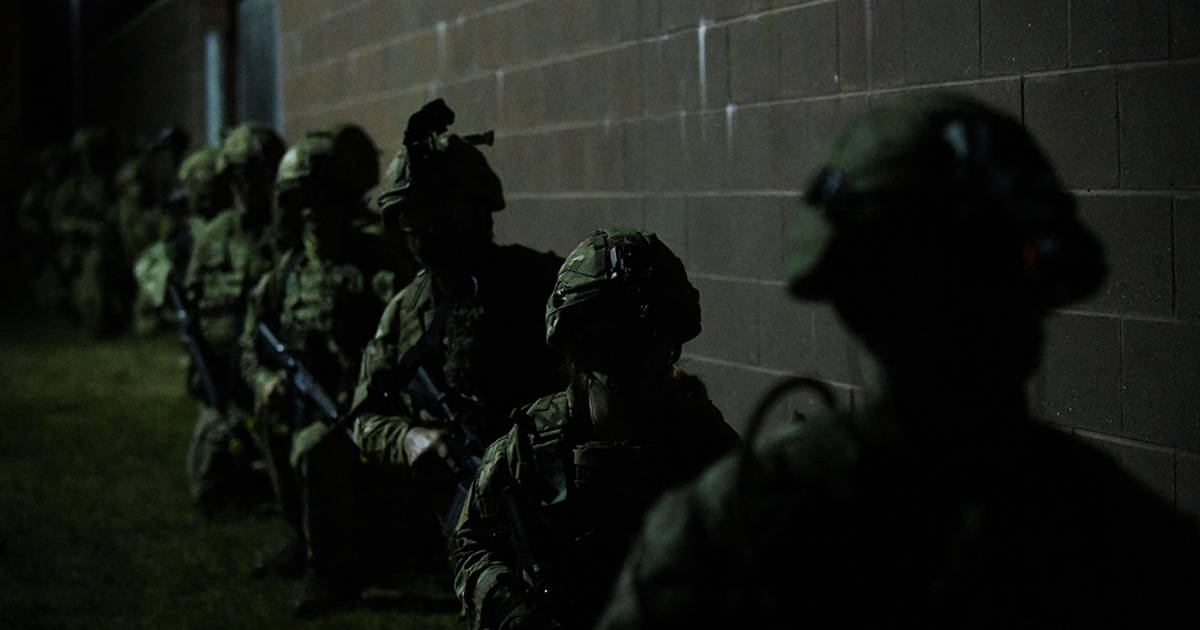
Mobilising a second echelon without equipping them would expose catastrophic shortfalls in tanks, artillery, enablers and collective training infrastructure. It would constitute a failure of moral and legal duty inviting political scandal.
This is not theoretical. During the Iraq and Afghanistan campaigns, poorly-equipped reservists were sent into combat in vulnerable Snatch Land Rovers, resulting in preventable deaths. In a future war with Russia, the consequences would be far greater, with the possibility of thousands of preventable casualties as a result of peacetime inaction.
Industrial Defence in Depth
Equipping a second echelon is not simply a matter of duplicating the regular force structure. Novel solutions such as dissimilar rearmament, adopting cheaper, simpler platforms and weapons designed to be mass-produced, must be seriously explored. These may not win in a peer-to-peer contest on day one, but the second battle will be a different form of conflict to the first.
Britain must also address the broader question of defence in depth. This includes stockpiles, industrial surge capacity, casualty replacement and renewed legal frameworks for mobilisation. The Defence Readiness Bill is an opportunity for this Government to contribute to the solution of this problem. But as it stands, the UK has not yet demonstrated a credible plan to regenerate and increase the scale of combat power beyond the first weeks of a war.
Endurance is Deterrence
A doctrine of endurance must now replace the illusion of decisive battle. Deterrence does not come only from exquisite readiness or technological overmatch. It comes from convincing a potential adversary that, even if they land the first blow, we can absorb, reconstitute and continue to fight. Russia does not need to outgun NATO; it only needs to outlast it.
To deny them that pathway to victory, the UK must urgently invest in its ability to regenerate force, sustain operations and endure the long war. This means funding reserve transformation, building a second echelon and facing up to the politically uncomfortable truth that war readiness is more than a day-one force.
Without this, Britain risks repeating the mistake that so often characterises modern warfare, preparing for the first battle, but not the next.