
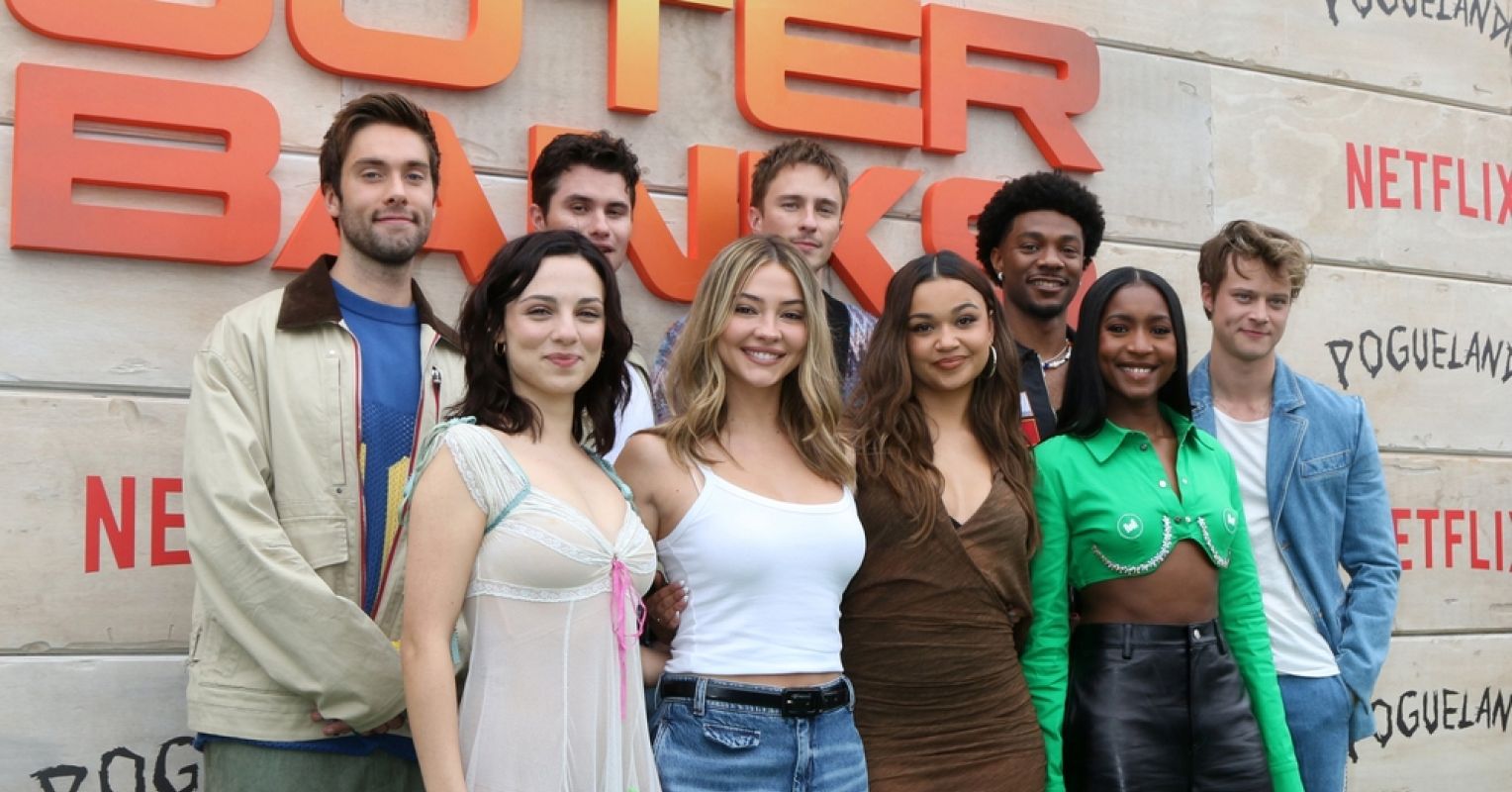
When Outer Banks first dropped on Netflix, co-created by Josh Pate, Jonas Pate, and Shannon Burke, it looked like a teen treasure hunt drenched in saltwater and adrenaline, but at its core, it’s a story about friendship and belonging. What keeps Gen Z hooked isn’t just the speedboat chases or the stunning views; it’s the endearing characters and the emotional stakes. These kids live in a world of unreliable adults, fractured families, and blurred moral lines, and they are all longing for what we all long for: unconditional love.
Attachment Theory 101 and Why It Fits the Pogues
Attachment theory, first developed by John Bowlby and expanded by Mary Ainsworth, describes how early caregiving experiences shape our ability to connect and trust. When those early bonds are unstable or abusive, people often grow into adults who expect love to be something they must prove worthy of.
• Secure attachment develops when love is consistent.
• Anxious attachment forms when love feels unpredictable.
• Avoidant attachment emerges when vulnerability is punished or ignored.
• Disorganized attachment arises when the source of love is also the source of fear.
In Outer Banks, each character represents a version of these attachment patterns, shaped by early trauma and redefined through chosen family.
JJ Maybank: The Boy Who Mistook Chaos for Love
JJ’s world is chaos. Raised by a father who was emotionally erratic and physically violent, he grew up in a home where the source of love and protection was also the source of fear and pain. Rudy Pankow plays him with raw, kinetic vulnerability, equal parts swagger and heartache.
His “tests,” provoking fights, sabotaging plans, taking reckless risks, and disappearing when emotions run high, are his way of confirming whether the Pogues will still come for him. He expects abandonment, so he beats it to the punch. Underneath, he is a boy asking, If I fall apart, will you still come find me?
Psychologically, this aligns with an avoidant and disorganized attachment style, a mix of self-reliance and fear of intimacy. JJ acts out before anyone can reject him. He hides pain behind humor, chaos, and bravado. Still, JJ’s story offers rare moments of vulnerability. In one haunting scene, he stands up to his father and ends up in defeat and agony. When his friends comfort him, he lets them. It becomes a turning point in his arc: The moment he allows himself to be witnessed in his pain, he starts to change. Slowly, JJ begins to learn how to both give and receive love, and with enough consistency and presence, a belief that he might be lovable after all begins to form.
John B Routledge: The Anxious Adventurer
Chase Stokes gives John B a steady desperation. After his father’s disappearance, he becomes the anchor of the Pogues, yet his stability is built on uncertainty and guilt. His anxious attachment shows through impulsivity, risk-taking, his fixation on keeping the group together, and his struggle to maintain control.
John B confuses love with rescue, believing that if he saves everyone, they won’t leave. His search for treasure doubles as a search for his father and for a sense of safety that keeps slipping through his hands.
Kiara Carrera and Pope Heyward: The Secure and the Skeptical
Madison Bailey’s Kiara is the group’s moral compass. She is nurturing yet assertive and has the capacity to hold love and conflict at once.
Pope, played by Jonathan Daviss, is cerebral and cautious, crushed by the pressure and expectation of saving himself. His guardedness reads as avoidant; he intellectualizes emotion as self-protection. Yet beneath that logic is a deep yearning for unconditional love.
Sarah Cameron: The Ambivalent Bridge
Played by Madelyn Cline, Sarah is caught between two worlds, the wealthy Kooks and the rebellious Pogues. Her attachment pattern mirrors that split, craving closeness while fearing rejection. She runs toward connection but flinches when it gets real.
Her family dynamic deepens that conflict. Her brother, Rafe Cameron, played by Drew Starkey, embodies the other side of the same wound. Rafe externalizes his pain through violent outbursts, while Sarah turns hers inward through people-pleasing and escape. Both are products of emotional neglect and conditional love, reacting in opposite ways to the same absence of safety.
Sarah’s journey is one of integration. She learns she does not have to abandon herself to belong to another. In her relationships with both John B and her chosen family, she begins to understand that love does not have to come at the cost of betrayal.
The Pogues as Chosen Family
When parents fail, peers become attachment figures, a phenomenon seen in real-world trauma recovery. The Pogues function as a chosen family, a safety net stitched together from loyalty and a shared mission. Chosen families can’t erase early wounds, but they can create new ways of relating.
Every season of Outer Banks loops through the same emotional rhythm: connection, rupture, reunion. Someone leaves. Someone returns. Someone almost dies. Someone is saved at the last second. It’s exhausting and familiar to anyone who’s lived through inconsistent love.
That cycle of rupture and repair mirrors the psychological dance of insecure attachment—the fear of loss followed by the relief of being chosen again. But that’s also what gives the show its heart.
Audiences, especially Gen Z viewers, see themselves in these emotional contradictions. Raised amid social fragmentation, many are building chosen families both online and off, forming micro-communities where they feel seen. Outer Banks reflects that impulse: the need for belonging when traditional systems fail.
Outer Banks reminds us that the family that saves you isn’t always the one you’re born into, but the one you choose.