
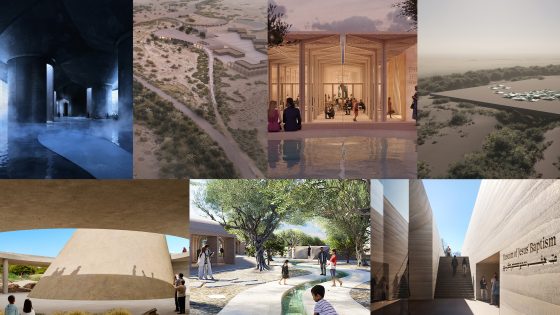
The UK-based Stirling Prize-winner is one seven teams competing for the commission to create the museum at Bethany Beyond the Jordan, a UNESCO World Heritage Site on the east bank of the River Jordan, where it is traditionally believed Christ was baptised.
The other finalists are: Bethlehem-based AAU Anastas; Dublin-headquartered heneghan peng architects; Studio Anne Holtrop of Bahrain and The Netherlands; Tatiana Bilbao ESTUDIO from Mexico City; New York’s Toshiko Mori Architect; and New Orleans-based Trahan Architects.
The finalists – whose concepts now feature in an online gallery – will be interviewed by the competition’s advisory panel later this autumn and an overall winner is expected to be announced in early 2026.
The project is supported by the Church of Jesus Christ of Latter-day Saints and is scheduled to open in 2030 to mark the bimillennial of Christ’s baptism. Once completed, it is expected to receive around 400,000−450,000 visitors annually.
Key aims of the $30 million project include creating a ‘story-led museum and garden in a sacred place surrounded by a preserved wilderness’ and creating a ‘global symbol of peace, hope and spiritual renewal’.
The museum will form the centrepiece of a wider Baptism Development Zone masterplan and is intended to enhance the spiritually significant landscape for pilgrims and visitors from around the world.
The project is led by the Foundation for the Development of the Lands Adjacent to the Baptism Site. Tharwat Al Masalha, chair of the Jordan Foundation’s Board, said: ‘We are delighted to share seven visions from some of the world’s most talented architects for our new Baptism Museum at Bethany.
‘The museum will help visitors better understand the site’s history and communicate the sacrament of baptism – the exhilaration of renewal, of new hope. We are encouraged that teams have responded to the exceptional setting adjacent to the celebrated UNESCO World Heritage Site.
‘We are creating both a living entity that visitors will engage with and cherish, and a legacy: a museum that will be a global symbol of peace and hope. We are looking forward to the detailed assessment and selecting a winner.’
Malcolm Reading, competition director at Malcolm Reading Consultants, which is managing the competition, said: ‘We congratulate all the competitors on the quality of their response to a highly complex and ambitious brief. The prize here is to create architecture that is equal to the demands of the climate, resonates with new audiences and is timeless.’
The finalists
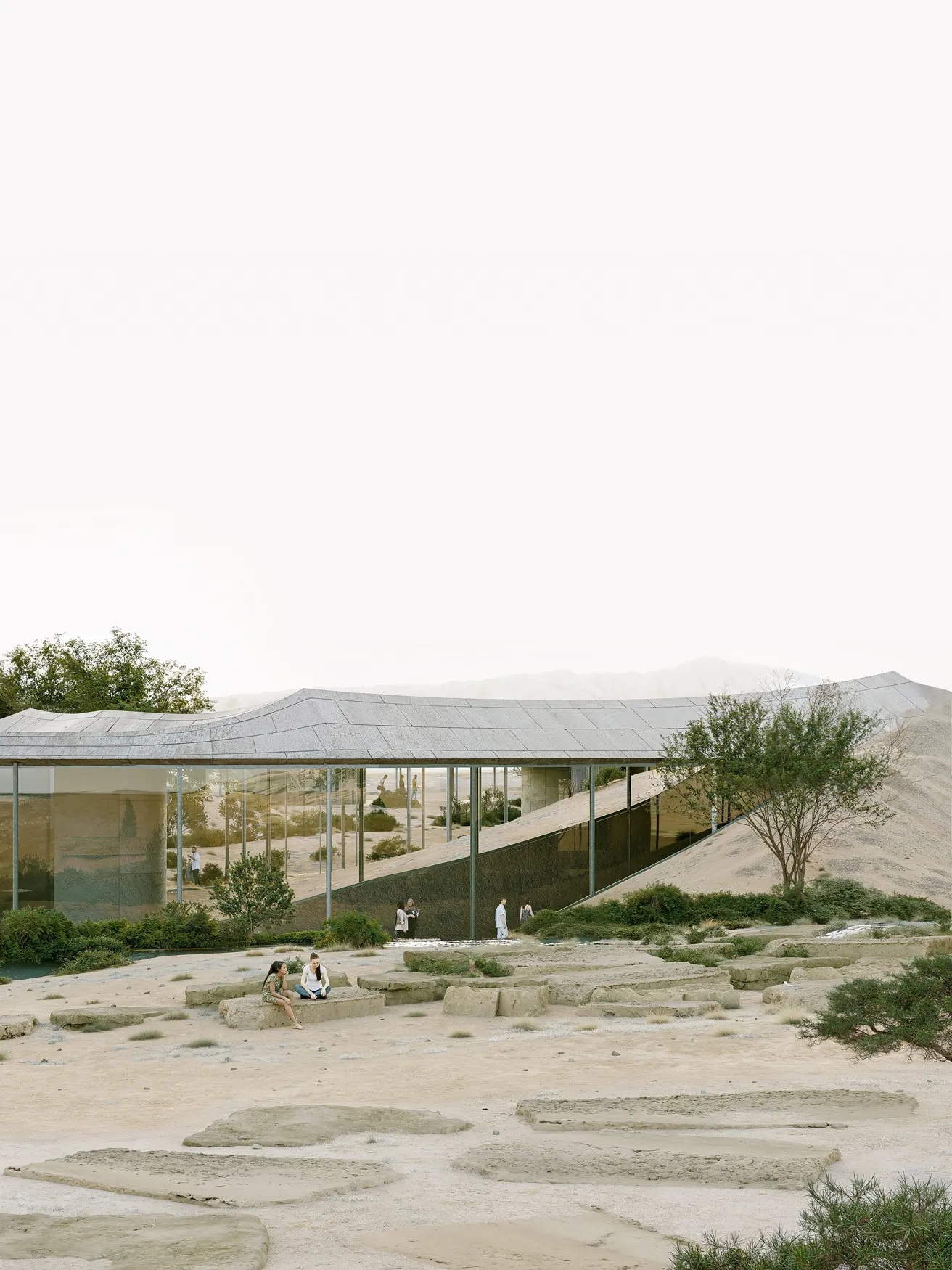
Finalist: AAU Anastas (Palestine / France / Jordan)
AAU Anastas (Palestine / France / Jordan)
With Landscape Design – Florent Clier; Exhibition Design – dUCKS; Engineering – Webb Yates; and Lighting Consultant – Studio Gelatic.
Located at the intersection of the Great Rift Valley and a deep geological depression, the Baptism Site’s extreme environment, marked by intense heat, low oxygen, and vanishing water, shapes its spiritual and historical meaning. Unlike traditional sacred sites, it is not a monument but a place of transformation, embodying passage, exposure, and fragility.
The proposed museum responds to this condition not as an object, but as a landscape instrument: a sinuous stone path that guides visitors through light, matter, and climate. Built from local basalt, it blends with the terrain, adapting to native ecologies and environmental extremes. Rather than offer mechanical comfort, it provides thermal awareness – shade, air, and silence – emphasizing the sacred through experience.
Sustainability is understood as embodied intelligence, not technological performance. As water disappears, the museum becomes a vessel for memory, registering environmental shifts and sustaining faith not through preservation, but through a dynamic relationship with the land, time, and atmosphere.
aauanastas.com
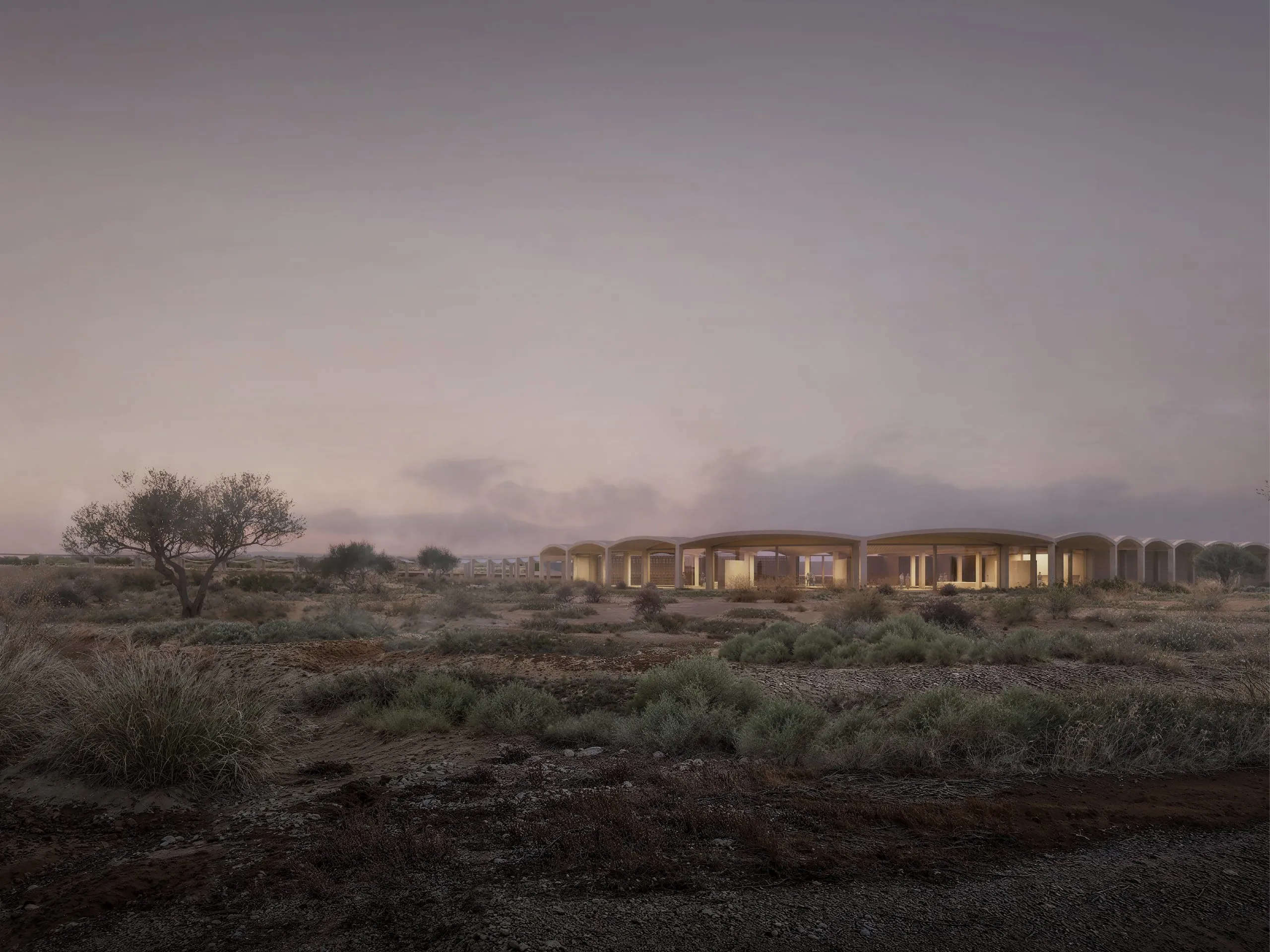
Finalist: heneghan peng architects (Ireland)
heneghan peng architects (Ireland)
With Landscape Design – Agence Ter and Lara Zureikat; Exhibition Design – Cookies; Engineering – Arup; and Lighting Consultant – Kardorff.
To preserve the two-thousand-year-old spirituality of Al-Maghtas, the museum immerses itself within geology and bonds with the stratigraphy of its site. It resists the temptation to rely on metaphor or storytelling and listens carefully to the whispers embedded within its land.
Though the river no longer flows as it once did, its presence endures – not only in memory, but in the land itself. The soil becomes the witness and bearer of that sacred history, retaining the imprint of water long receded. As the land subtly depresses near the museum edge it forms a tributary gesture carved by time now reimagined.
Along the tributary, water is not always seen, but always possible. When it comes, it moves freely through this line depression – an image of spiritual and ecological renewal. It allows the land to speak of what it once carried, and what it still might hold again.
hparc.com
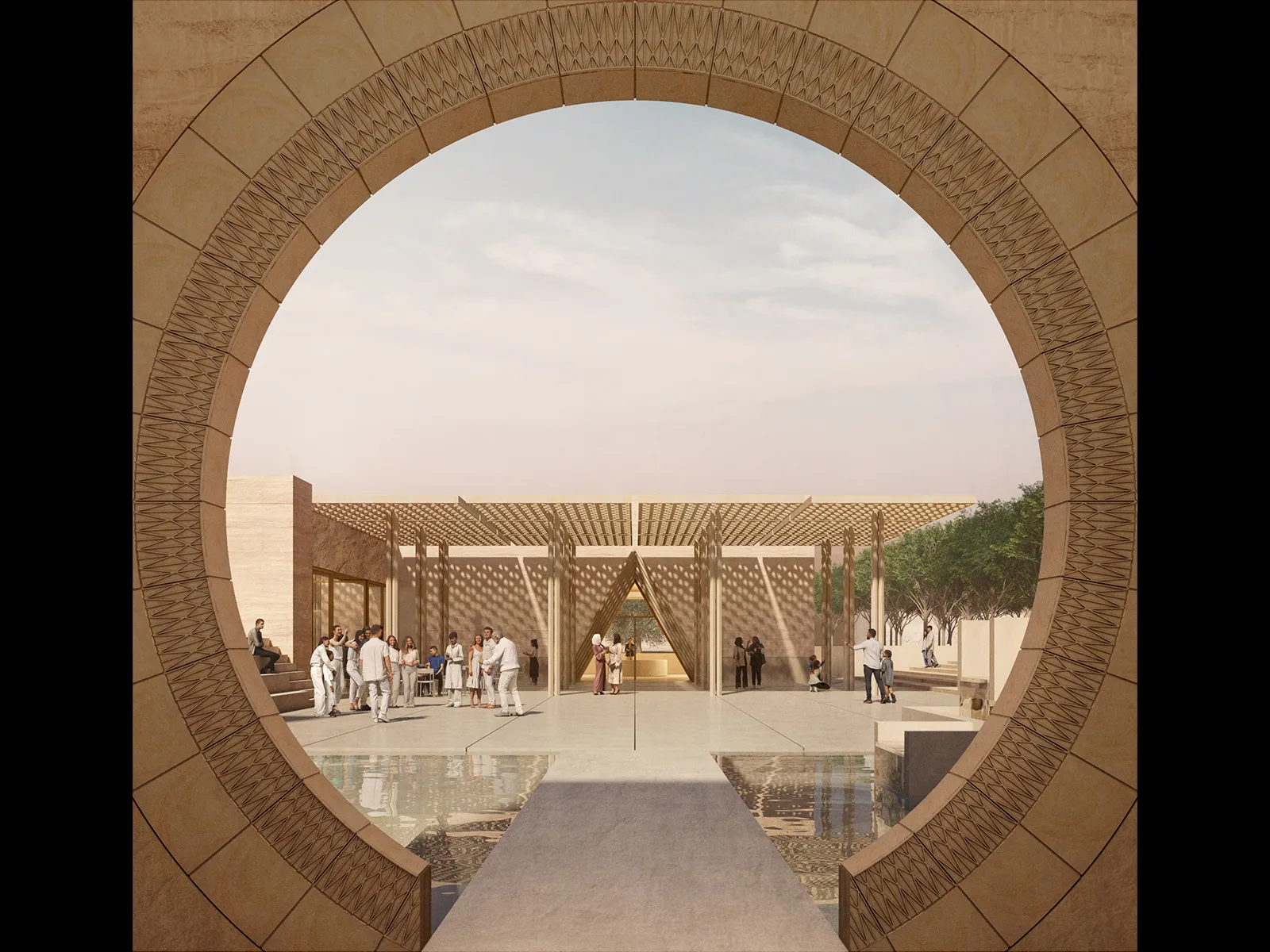
Fianlist: Níall McLaughlin Architects (UK)
Níall McLaughlin Architects (UK)
With Landscape Design – Kim Wilkie Landscape; Exhibition Design – Nissen Richards Studio; Engineering – Arup; and Lighting Consultant – Studio ZNA.
The museum is an east-west journey. It combines permanent allegorical elements with flexible galleries. Exhibition spaces are held between deep walls containing displays, circulation, and services. The materials – rammed earth and stone – come from the land nearby and can be built by local labour and resources.
Descending into the earth from an arid wilderness garden you cross a water-filled rift and re-emerge into the light to a fruitful paradise garden. The eastern entrance and western exit face each other across a public square. The facing doorways are a triangle and a circle, emphasizing a life in Christ as the Alpha and Omega.
Between them, an open stepped landscape rises onto the roof. We imagined it as an elevated archaeological site with mosaic floors between low stone walls. From this raised public space, you can view the valley of the Jordan River and the pilgrimage route to the Baptism Site.
niallmclaughlin.com
Finalist: Studio Anne Holtrop (Bahrain / Netherlands)
Studio Anne Holtrop (Bahrain / Netherlands)
With Landscape Design – Atelier Miething and Mazen Daqaq; Exhibition Design – Imagination; Engineering – Atkins Réalis; and Lighting Consultant – Rogier van der Heide.
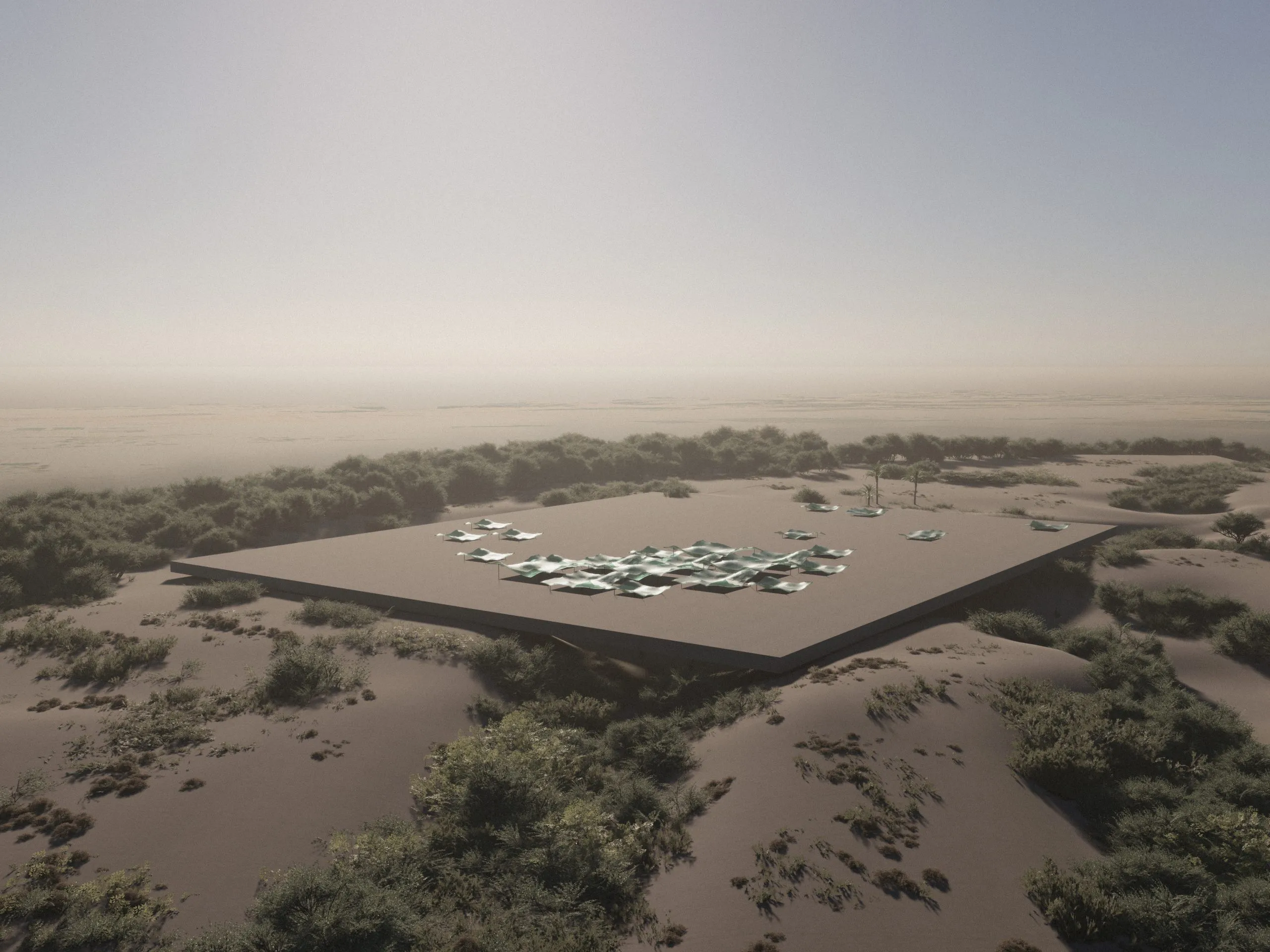
Our proposal for the Museum of Jesus’ Baptism is situated within a landscape of pristine wilderness. Its setting preserves the natural environment, reflecting the site’s spiritual and historical significance, and aligns with the protected status of the surrounding area.
The museum is not conceived as a discrete structure placed upon the site; rather, it takes the form of a single, expansive roof that follows the natural topography. The spatial concept is defined by two main elements: the subtle shaping of the landscape to create distinct spatial experiences, and the careful curation of light and shadow in response to the programmatic needs.
The landscape design honours the site’s symbolic wilderness while enhancing it in understated ways. A tree nursery bridges cultivated and native environments, supporting plant research and transplantation. Green corridors link the museum with the pilgrimage path, offering shade and framing key views. The existing wilderness is preserved to highlight resilient vegetation, natural water management, and the raw climatic character of the site.
anneholtrop.nl
Finalist: Tatiana Bilbao ESTUDIO (Mexico)
Tatiana Bilbao ESTUDIO (Mexico)
With Landscape Design – Bureau Bas Smets; Exhibition Design – Tatiana Bilbao ESTUDIO; Engineering – Sener; and Lighting Consultant – CUBE.BZ.
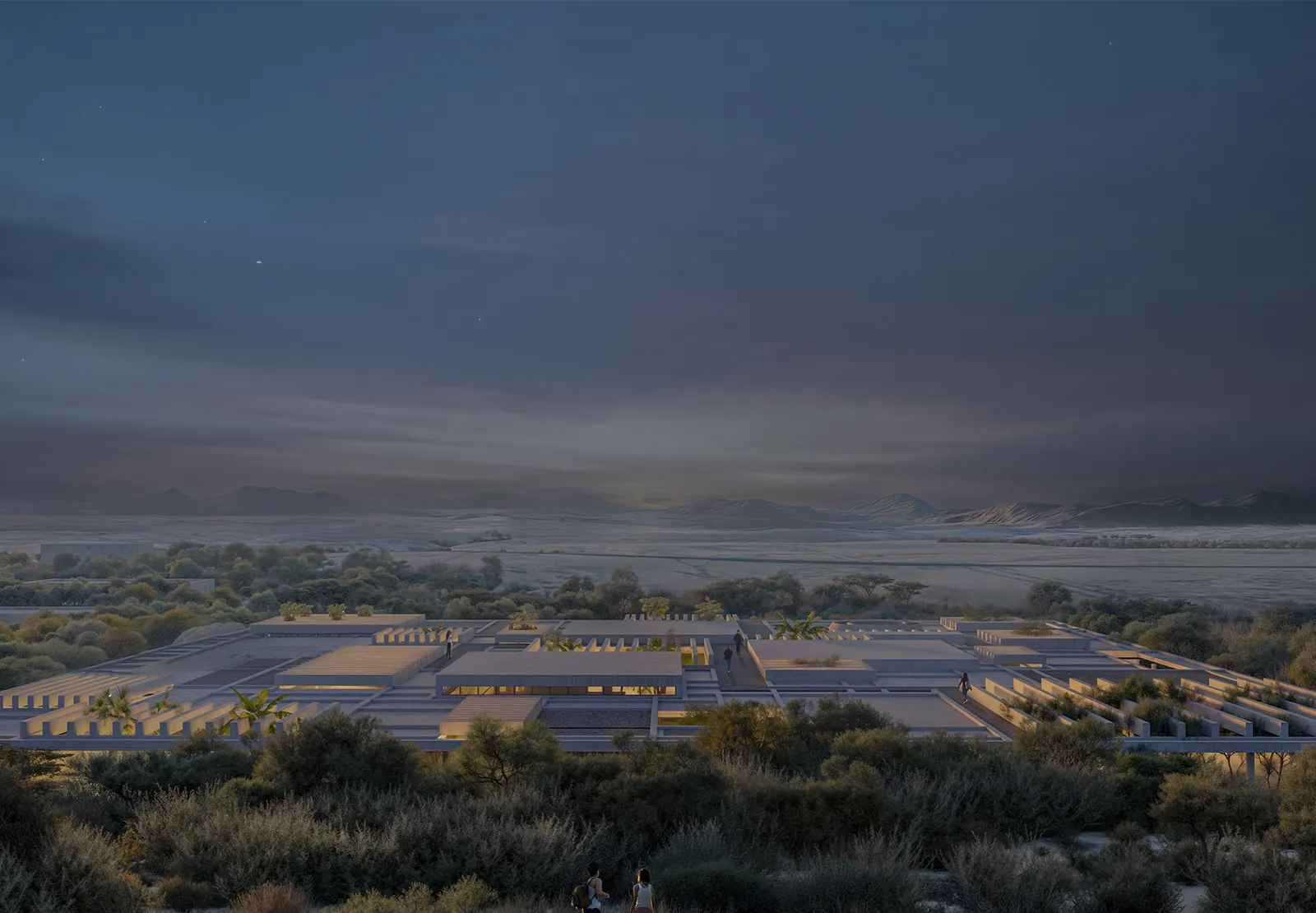
The site lies at the confluence of two complementing forces: the geometric order of the cultivated fields and the organic, meandering flows of the wadi systems. From this meeting point emerges our project, a space shaped by both geometry and water, structure and movement.
The concept of baptism, rooted in the idea of immersion, becomes our guiding principle. Here, immersion is both physical and spiritual: you enter beneath a vast hovering roof that provides shade, nurtures trees, and hosts the program within. Water is ever-present, circulating through the project, guiding movement, and reappearing as humidity, reflection, and growth. It defines the atmosphere, transforming the space into an experience rather than a building.
To enter this place is to be immersed in landscape, in light, in water, a contemporary evocation of the baptism of Jesus, where architecture becomes a vessel for education and connection.
tatianabilbao.com
Finalist: Tatiana Bilbao ESTUDIO (Mexico)
Toshiko Mori Architect (US)
With Landscape Design – West 8; Exhibition Design – Atelier Tsuyoshi TaneArchitects; Engineering – Arup; and Lighting Consultant – Kilt Planning.
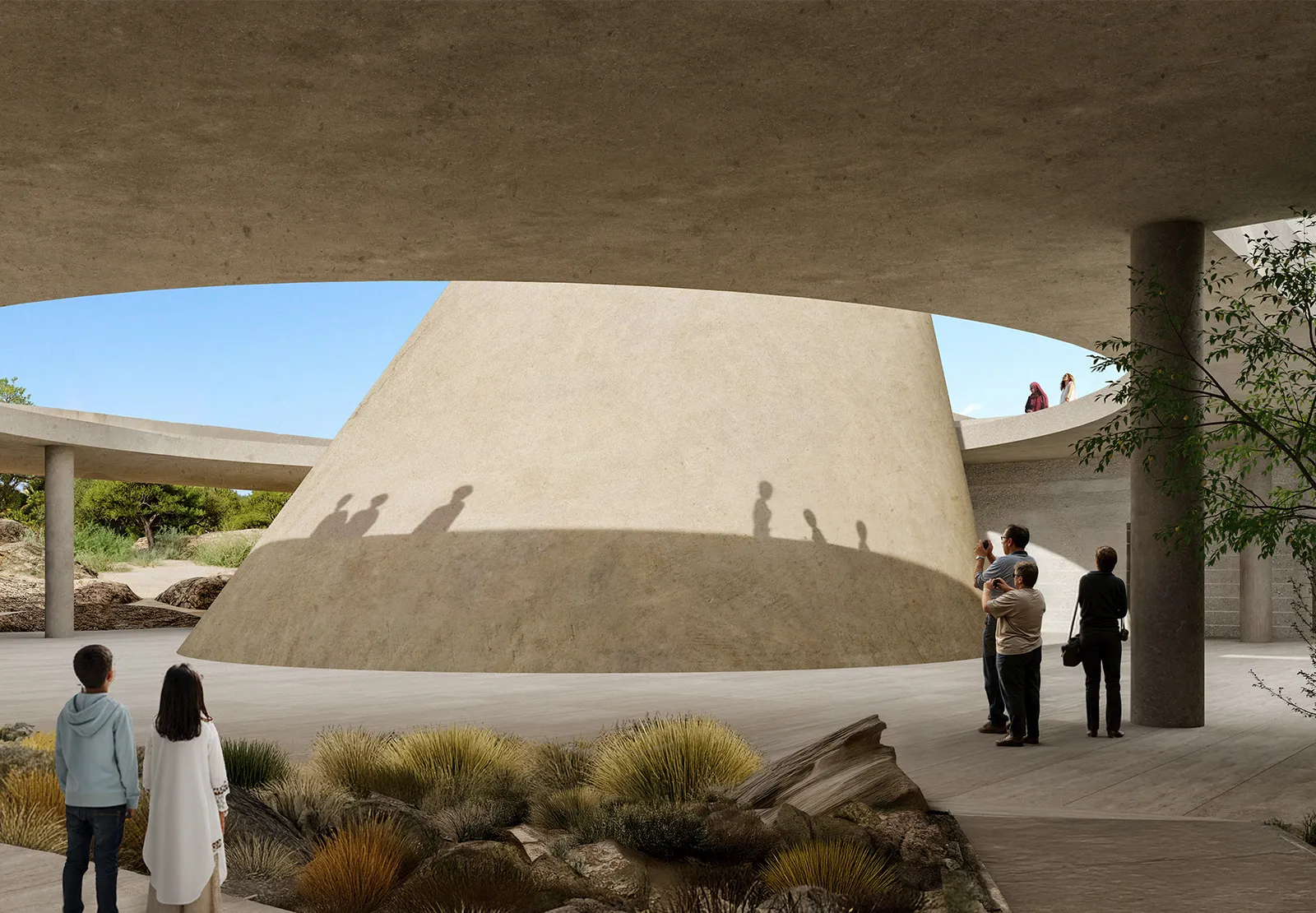
Our project for the Museum of Jesus’ Baptism envisions a modest, contemplative sequence of structures – an expression rooted in humility, authenticity, and reverence for place. Conceived as an ode to the simple dwelling of John the Baptist, the museum is built from local clay and stone using traditional vaulted construction, connecting cultures and faiths across time.
The design creates a timeless presence that belongs to its setting both physically and spiritually, offering a place where history, faith, and geography converge. The museum unfolds as a series of pavilions and gardens that explore botany, geology, archaeology, and anthropology, revealing how nature, culture, and faith intertwine in this sacred landscape. Woven between the pavilions, the gardens invite wandering, reflection, and engagement with water and light as unifying elements.
Through restraint and resonance, the project creates a peaceful, reverential experience that honours John the Baptist while celebrating the enduring, universal message of faith and renewal from Bethany Beyond the Jordan.
tmarch.com
Finalist: Trahan Architects (US)
Trahan Architects (US)
With Landscape Design – Doxiadis+; Exhibition Design – Ralph Appelbaum Associates; Engineering – Buro Happold; and Lighting Consultant – Tillotson Design Associates.
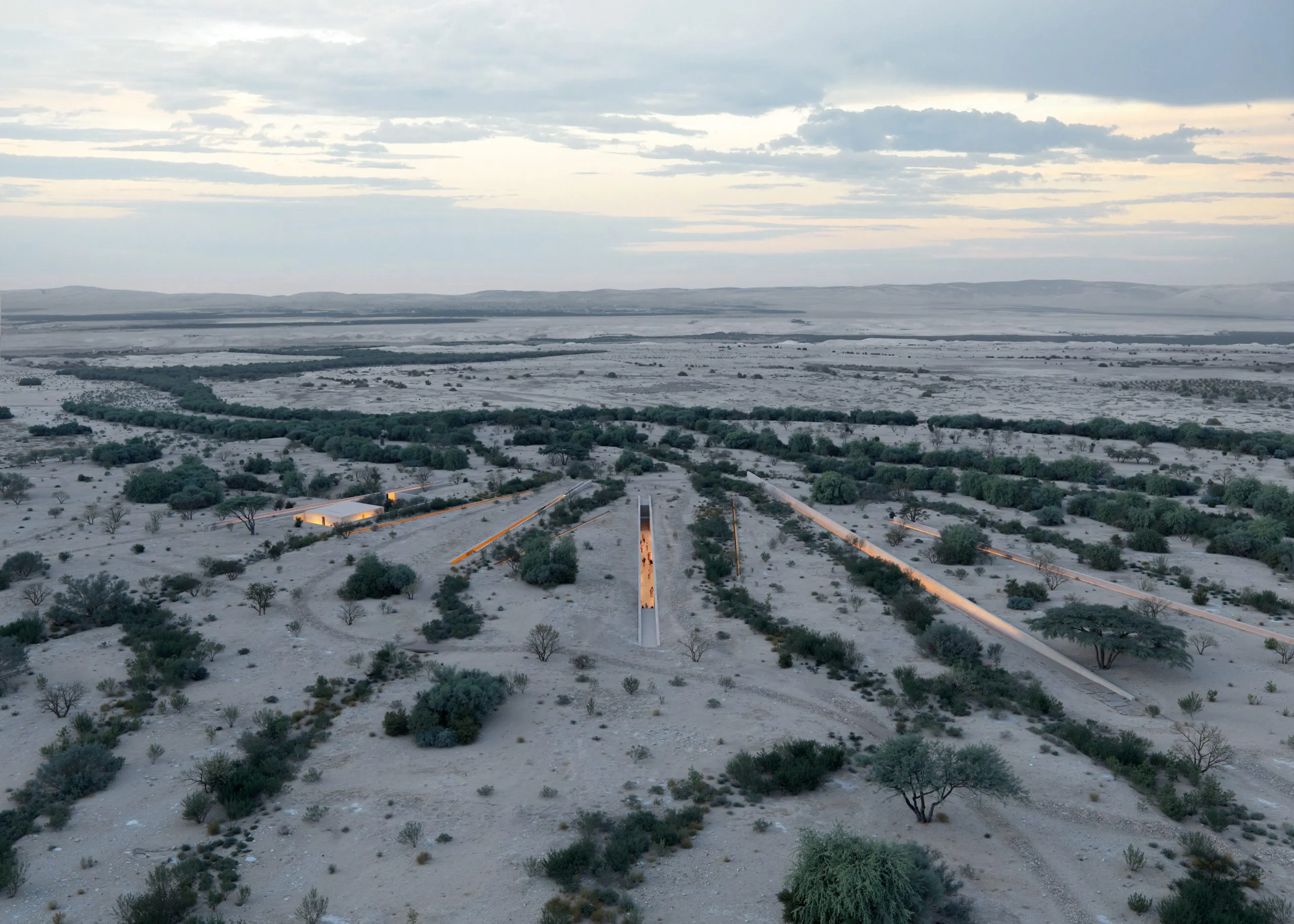
Every drop of water that falls on the future site of the Museum of Jesus’ Baptism flows to Al-Maghtas on the banks of the Jordan River – the UNESCO World Heritage Site of Jesus’ Baptism. Our proposal honours this sacred story by restoring the ecological network of thin wadis that carry water to the river, healing the fractured watershed.
The below-grade museum enhances this fragile system, allowing water to flow naturally across the site. Above ground, native plantings restore and shape paths in the landscape, guiding visitors through a wilderness on their contemplative journey. Underground galleries interpret Wilderness, Water, and Witness, each with a courtyard framing the sky and immersive spaces beneath restored wadis.
The museum is a peaceful node along a pilgrimage route, fostering stillness through humble architecture built from locally sourced rammed earth. Visitors descend into the Earth, then slowly ascend toward the sacred site, mirroring the Baptismal act.
trahanarchitects.com