
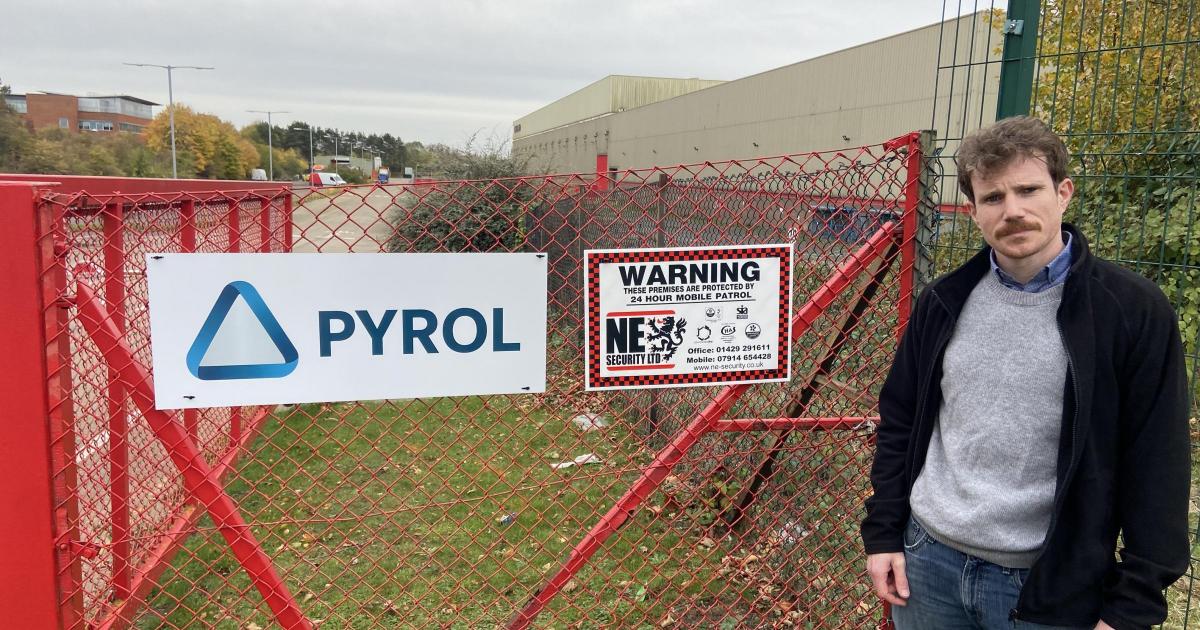
Liberal Democrat campaigner Simon Thorley has called for an intervention to halt plans for the Endolys thermal pyrolysis plant at the former Cleveland Bridge site due to health concerns.
The company has pledged to invest up to £120 million in the region and create 120 jobs with the installation of pyrolysis oil production units.
But Mr Thorley, who previously stood as a Tees Valley mayoral candidate, said an alternative site should be considered.
He said: “Don’t let Labour and Conservative politicians hoodwink you into believing this is a simple, safe recycling plant. Google what a plastics pyrolysis plant does and make your own mind up.”
“I’ve made mine up, and we can’t allow it here.”
Pyrolysis is a thermal decomposition process that can chemically break down plastic into its constituent oil and gas.
But Tees Valley mayor Ben Houchen disputed the claims and praised the impact the new facility would have on jobs and investment in the region.
The Conservative said: “Redevelopment of the former Cleveland Bridge site in Darlington, which caused devastation for local families when it closed, is exactly the kind of project our area needs, turning a disused site into good quality jobs for local people.
“It’s genuinely bizarre and worrying that instead of backing this investment and the jobs it brings, local Liberal Democrats would rather talk it down and keep a prime industrial site closed, with not a single job being created.
“Let’s be clear, for as long as I’m mayor, we are pro jobs, pro investment, and pro business. We will treat this drivel from the Lib Dems with the lack of credibility it deserves.”
Endolys said plastic film is one of the most challenging plastic materials to recycle in the UK, with no current large-scale recycling facilities available and limited kerbside collection.
The first phase of the development will see six units process 60,000 tonnes of shredded plastic film waste into 40,000 tonnes of pyrolysis oil each year. All of the film waste will be sourced from municipal waste facilities.
A spokesman added: “We will be following the statutory planning process and environmental permitting regime. Advanced plastic recycling through pyrolysis is not about incineration or burning. The process takes place within fully enclosed vessels and within a building.
“It does not involve combustion and, in fact, diverts materials away from incineration and landfill, delivering an estimated 170,000 tonnes of CO2 savings per year.”