
Stay informed with free updates
Simply sign up to the Technology sector myFT Digest — delivered directly to your inbox.
Tech companies will be subject to audits of the social media algorithms used to promote what children can see on their feeds in the next phase of a crackdown under the UK’s Online Safety Act.
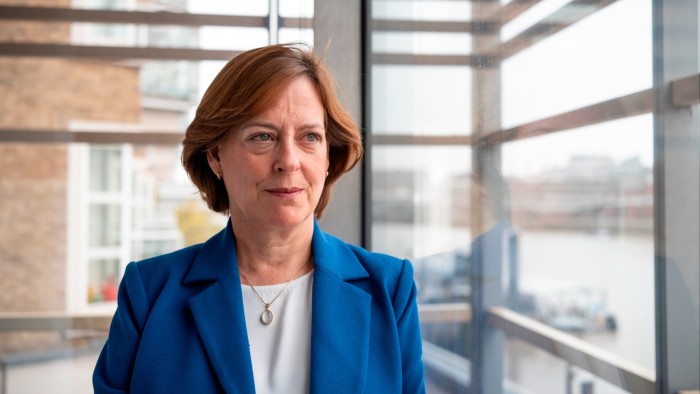
In an interview with the Financial Times, Ofcom boss Melanie Dawes warned social media companies that they would face enforcement action if they could not prove that their algorithms stopped those under the age of 18 from seeing harmful content.
She also revealed the UK media regulator has held talks with US tech groups about how new AI models fall under the Online Safety Act, with Ofcom wanting age verification to be built in so children cannot be exposed to harmful or pornographic content from chatbots or generative AI tools.
Ofcom began enforcing a series of strict new government restrictions brought in by the Online Safety Act in July, including a requirement for any tech social media platform carrying adult material to stop children from accessing it.
Dawes said the act was working, with the major social media and adult websites having brought in age verification. More than 12 high-risk sites are blocked or are no longer available in the UK, including two suicide forums and at least five pornography sites. Ofcom has also imposed its first fine for not complying, on the US image-based bulletin board 4Chan.
Dawes said Ofcom would now step up efforts to “push them on the things that they’re not so willing to do”.
Content moderation of algorithmically-driven feeds and recommendations for sites such as YouTube, Roblox and Facebook would be scrutinised for adult content, she said.
“Have they changed the way the algorithms work so that children don’t get that material shown to them? That’s a big focus for us,” she said. “[Are there] anti-grooming protections in place so that children’s feeds only accept children’s profiles and can’t be directly messaged by people they don’t know?”
As part of this work, Ofcom can order tech sites to do “an algorithmic audit” over these feeds. “You may see some enforcement action from us in the next few months if we don’t start to get the answers that we’re looking for on the algorithmic side of things,” Dawes added.
She said the act had seen “good early progress, but it’s a very, very, very long road ahead . . . we’re trying to turn around a couple of decades where the internet has been age blind”.
Dawes recently visited firms in California to talk about the rules, including how they relate to AI platforms being developed. There have already been instances where AI chatbots have given problematic answers, while generative AI is now being used in making pornographic content.
“[The US trip] was making it absolutely clear that — under the OSA — new services need to be properly risk assessed, including AI,” she said.
Dawes said Ofcom already had a relationship with OpenAI, which has agreed that ChatGPT falls under the act. When pushed on X’s Grok, Dawes said that “X is a service that we regulate, and chatbots will often be user-to-user services and therefore caught under the act”.
She added: “One of the features of generative AI is that it isn’t always possible to predict what it’s going to do and what it’s going to say, and that’s why safety needs to be considered up front. The industry did not get this right 20 years ago when social media was first launched.”
Ofcom has been a target for rightwing lobby groups from the US as well as Republican politicians given what they see as a threat to freedom of speech under the act.
Republican politicians, including Senator Scott Fitzgerald and Congressman Jim Jordan, have accused the Online Safety Act of being a “censorship law” and the topic has been raised in US-UK trade negotiations.
Dawes declined to comment on a social media post this week by US billionaire Elon Musk that “civil war in Britain is inevitable”. His X platform said the Online Safety Act risks “seriously infringing” free speech.
Recommended

Dawes confirmed that Ofcom had met the House of Representatives judiciary committee in July, saying that bodies engaged in “civil and constructive dialogue”. She added that — as in the UK, where the motivation to protect children under the act remains popular — in Washington “there’s a lot of support for protecting children online”.
She said: “We’re here to deliver for the British public. There’s a lot of public support in this country for the changes that we’re trying to bring about. If anything, people are asking us to do more and faster.”
Traffic to porn sites has dropped by about a third in the UK since age assurance measures were put in place in July. However, larger porn groups have warned that internet users are moving to the smaller, less scrupulous websites that have ignored the law.
Dawes admitted that “there are clearly some sites that have not complied, and for some of them, their business is growing as a result”, but said that “we are working our way through enforcement”.
Ofcom currently has 69 investigations into websites that have not met the rules, but this is a fraction of the tens of thousands of adult sites.
Dawes said the use of virtual private networks to circumvent age assurance measures — by making the user appear to be accessing the internet from outside the UK — had initially doubled to about 1.5mn, but has since dropped to around 1mn.
She said that adult sites had not reported a surge in VPN use but that Ofcom would be doing work to find out if children have been using VPNs.