
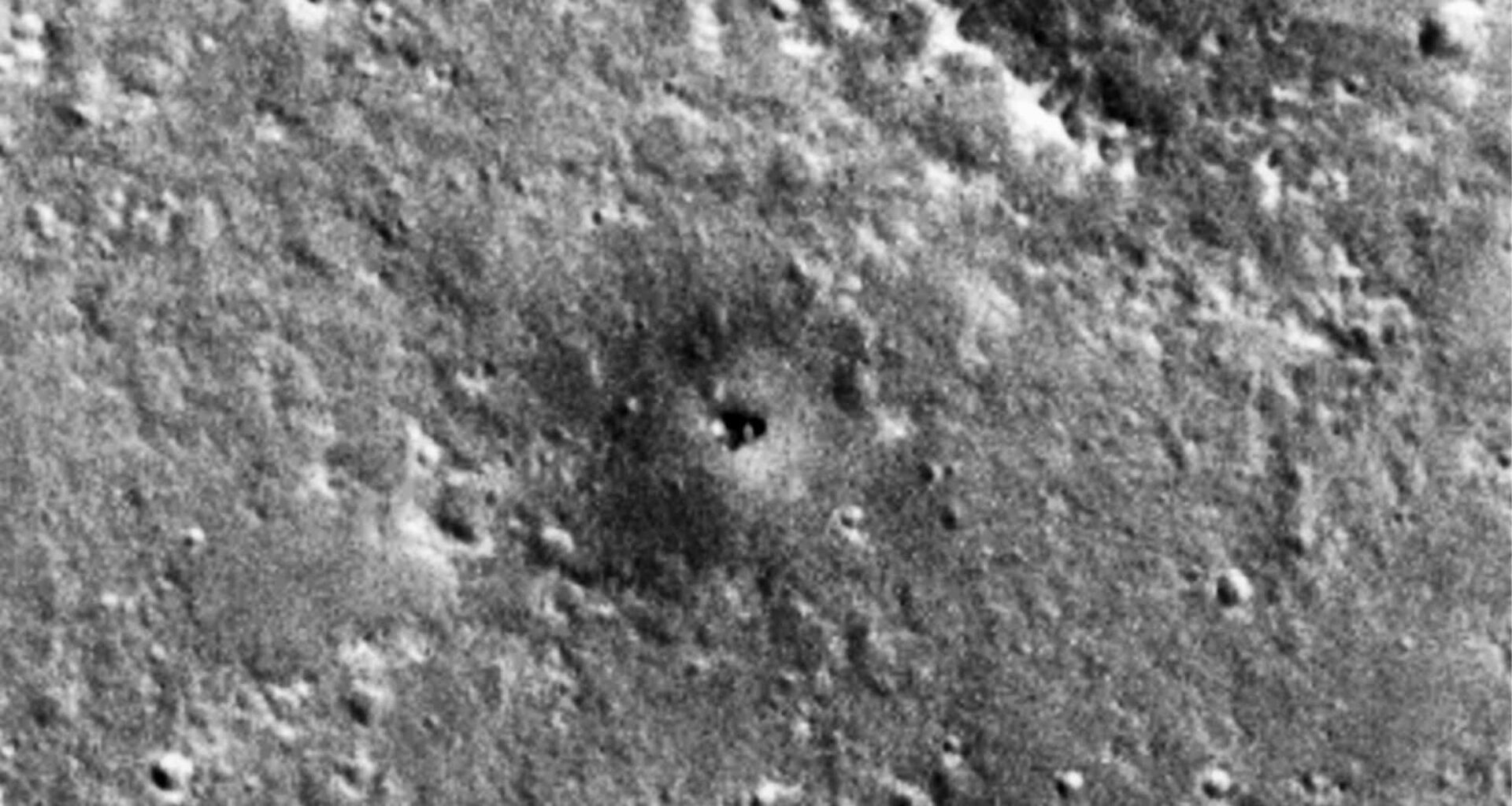
Launched in 2018, the InSight mission aimed to study the Red Planet’s deep interior. Unlike its rover cousins, Curiosity and Perseverance, the stationary lander was not built to roam. Instead, it dug deep into the Martian crust, recording over 1,300 seismic events and helping researchers understand the structure and evolution of rocky planets. The mission officially concluded in December 2022 after solar panels became too dust-covered to generate power.
NASA’s new image is more than a sentimental snapshot. It serves as a scientific checkpoint, allowing researchers to study how quickly Martian dust accumulates—a small but surprisingly significant detail in the effort to understand surface changes and geological timelines on Mars. It also reopens public interest in the tools and technologies left behind in space, especially those that once offered us daily updates from a world 225 million kilometers away.
A Frozen Explorer Covered in Dust
The recently shared image from the Mars Reconnaissance Orbiter (MRO) shows the InSight lander resting on the barren plains of Elysium Planitia, a smooth equatorial region selected for its scientific value and safety during descent. In the image, the lander’s signature circular solar panels are still discernible, though coated in a fine layer of red dust. According to Interesting Engineering, the visual deterioration offers clues about how Martian dust affects surface structures over time.
NASA published the image with a brief note: “Can you spot @NASAInSight?” The comment, posted on the social platform X, underscored the lander’s fading presence while reminding audiences of its previous scientific contributions. The dust patterns observed not only chart the passage of time but also help estimate the age of other nearby surface disturbances.
Dust accumulation is one of the primary hazards for solar-powered missions on Mars. While nuclear-powered rovers like Perseverance continue to roam, the InSight lander was ultimately undone by the very environment it studied. This reliance on sunlight, and its vulnerability to dust storms, sealed the robot’s fate.
Can you spot @NASAInSight?
The retired lander was recently spotted by the Mars Reconnaissance Orbiter. By studying InSight’s landing site over time, scientists can see how quickly dust accumulates, which helps estimate the age of other surface disturbances. pic.twitter.com/ZsazACkZSs
— NASA Mars (@NASAMars) May 6, 2024
Seismic Legacy and a Changing Perception of Mars
Between 2018 and 2022, InSight recorded over 1,300 marsquakes, including what NASA described as a “monster quake.” These readings, captured by the lander’s ultra-sensitive seismometer, allowed scientists to peer into Mars’ crust, mantle, and core. One of the mission’s major contributions was reshaping the long-standing belief that Mars was a geologically inactive planet.
According to Supercar Blondie, InSight helped refine our understanding of the planet’s iron-rich core and active seismic processes. These findings placed Mars closer to Earth in terms of its internal activity, at least historically, and supported the theory that the Red Planet still harbors a warm interior.
The lander also offered daily weather reports, capturing wind data and ambient temperature fluctuations. NASA even noted a low, haunting rumble caused by Martian winds, with estimated speeds of 10 to 15 mph. These insights gave scientists a more complete environmental profile of Mars—useful data for future missions and eventual crewed exploration.
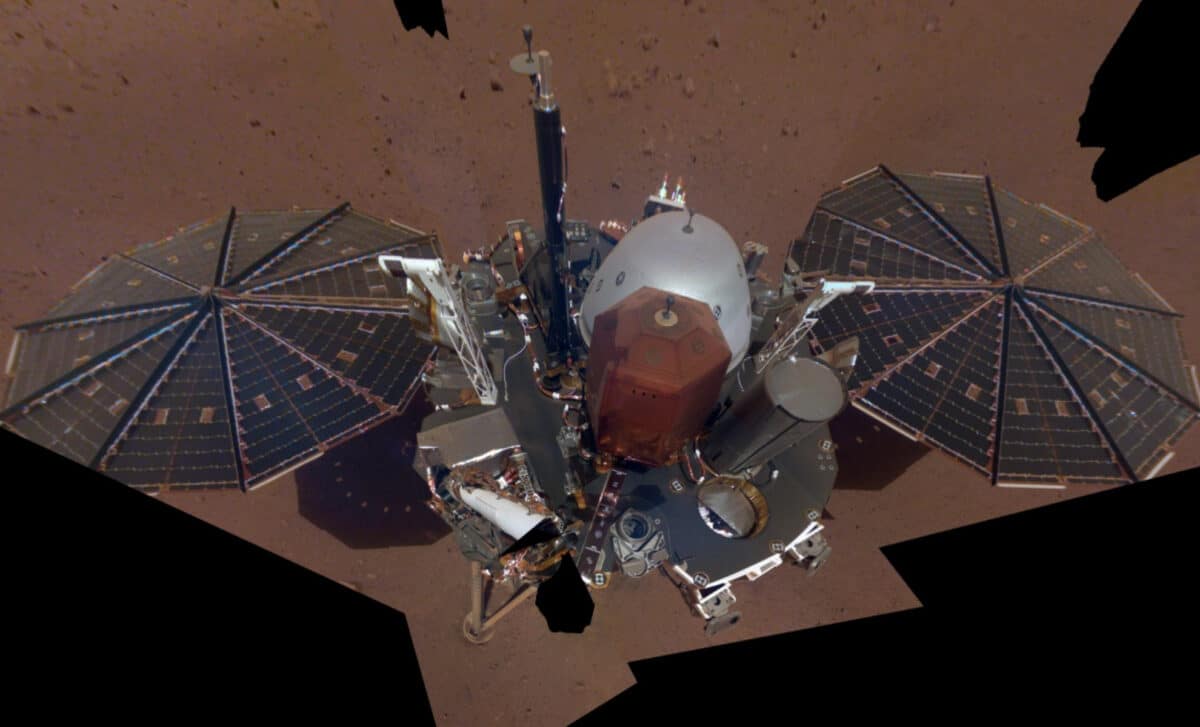 NASA InSight’s first full selfie on Mars – © NASA/JPL-Caltech
Final Messages and Symbolic Silence
InSight’s end came quietly, marked by a final transmission on December 20, 2022. Shared publicly on NASA’s social media, the farewell message read: “My power’s really low, so this may be the last image I can send… my time here has been both productive and serene.” The tone was personal, echoing the way many felt about the robot’s prolonged silence.
The mission team had long anticipated the shutdown due to the inevitable dust accumulation on the lander’s solar arrays. Unlike rovers that can shake off some dust through motion or use alternate energy sources, InSight was left exposed and vulnerable, slowly draining until it could no longer respond.
My power’s really low, so this may be the last image I can send. Don’t worry about me though: my time here has been both productive and serene. If I can keep talking to my mission team, I will – but I’ll be signing off here soon. Thanks for staying with me. pic.twitter.com/wkYKww15kQ
— NASA InSight (@NASAInSight) December 19, 2022