
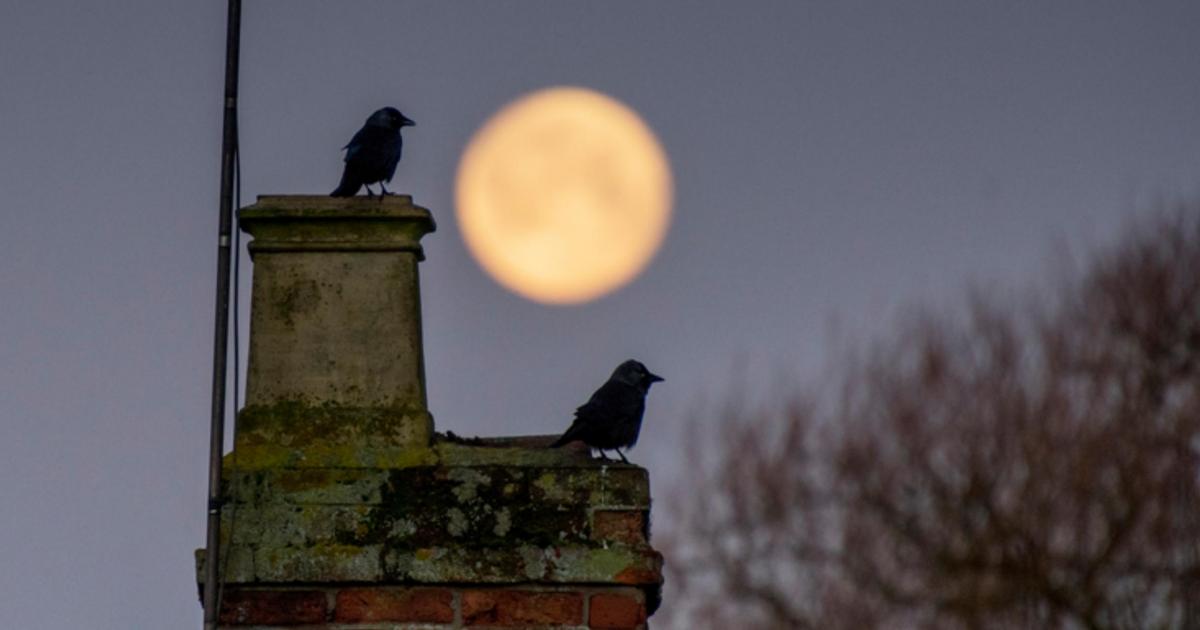
Here is what you need to know.
What is a supermoon?
A full moon can be called a supermoon when it looks bigger than normal.
This happens when the moon is positioned closer to the Earth.
The moon’s distance from the Earth varies because it does not orbit in a perfect circle – it travels in more of an oval shape.
Why is November’s supermoon special?
The first full moon of November is called a Beaver Moon.
This year’s Beaver Moon will be the second of three consecutive supermoons, after October’s Harvest Moon and before December’s Cold Moon.
READ MORE: Whopping 58lb carp caught at lake in Norfolk
The Beaver Moon will be closer to the Earth than the supermoons in October and December, making it the biggest and brightest of them all.
How do I see the supermoon?
The Beaver Moon will be at its fullest on November 5 – when plenty of people will be out celebrating Bonfire Night.
It will also be visible for a couple of days either side of November 5.
For the best views, head outside shortly after nightfall and look east.
What will the weather be like in Norfolk during the supermoon?
According to the Met Office forecast, it will be around 16C in Norfolk on the evening of November 5.
The skies will be a little cloudy and there is a 10pc chance of rain between 6pm and 7pm, which dips to a 5pc chance of rain between 7pm and 11pm.
What are the best places to see the supermoon in Norfolk?
The moon will look most impressive in areas with little light pollution.
Popular skygazing spots in Norfolk include the coast, the Norfolk Broads, RSPB Titchwell Marsh and Kelling Heath Holiday Park.