
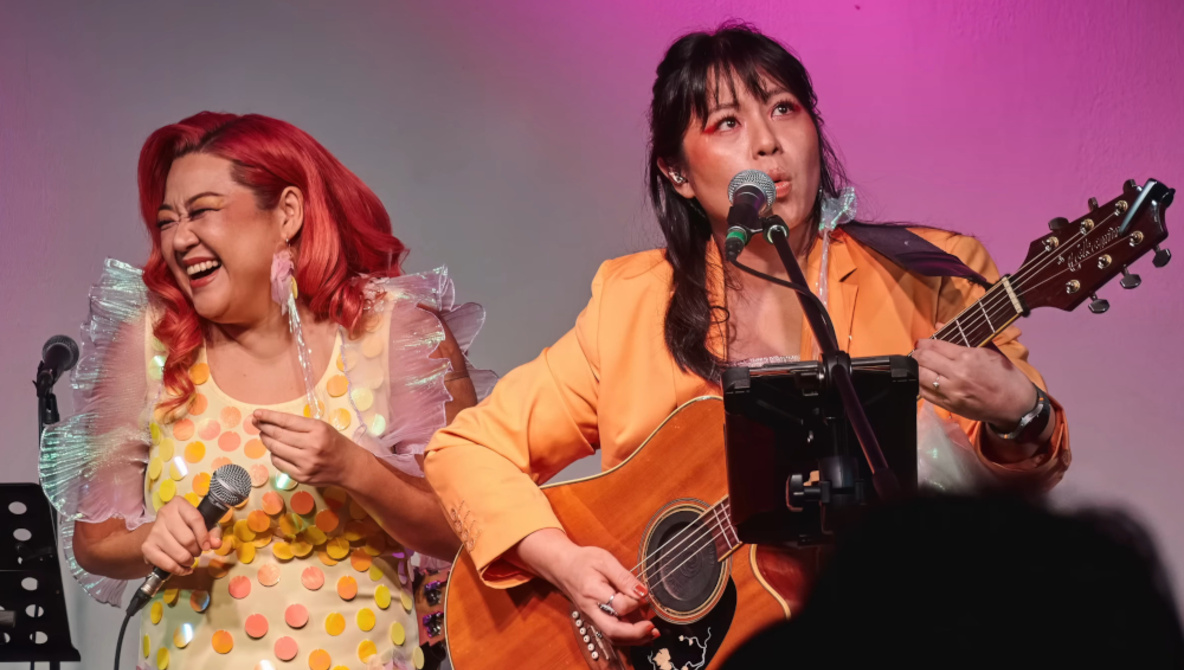
Concerts force you to work in low light with unpredictable motion and strict seating, which makes reach, stability, and restraint matter more than price. This video shows how a cheap tele zoom can handle a concert and still deliver lifelike results that many photographers assume require pro glass.
Coming to you from Robin Wong, this clear, no-nonsense video spotlights the OM SYSTEM M.Zuiko Digital ED 40-150mm f/4-5.6 R lens. Wong attends as a regular audience member with a fixed seat and keeps the kit lightweight to stay discreet and mobile in a crowded hall. You see how the 40–150mm range covers wide stage context at one moment and tight expressions the next without leaving the chair. The lens looks and feels basic, but it renders sharp files with believable color and contrast across the range. That combination gives you reach and simplicity when venues frown on bulky gear.
Wong pairs the lens with an Olympus EM10 and leans on in-body stabilization to counter the modest f/4 to f/5.6 aperture while keeping shutter speeds fast enough to stop head shakes and quick gestures. Target shutter speeds hover around 1/250 to 1/320 s to keep motion clean, with ISO raised without hesitation. You get a steady reminder to favor timing and sharpness over a fear of grain, since blur ruins a moment more than visible noise. The files look natural instead of waxy or neon, which happens when heavy-handed processing tries to rescue tough light. That makes this setup practical for small concerts, community events, and travel stages where you can’t roam.
Key Specs
Focal Length: 40 to 150mm (35mm equivalent: 80 to 300mm)
Aperture: Maximum f/4 to f/5.6, minimum f/22
Lens Mount: Micro Four Thirds
Minimum Focus Distance: 2.95′ / 90 cm
Magnification: 1:6.25 macro reproduction ratio, 0.16x magnification
Optical Design: 13 elements in 10 groups
Aperture/Iris Blades: 7, rounded
Focus Type: Autofocus
Image Stabilization: No
Filter Size: 58 mm (front)
Dimensions: ø 2.5 x 3.27″ / ø 63.5 x 83 mm
Weight: 6.7 oz / 190 g
The shooting constraints are the point, not a handicap. As an audience member, you won’t control lighting or position, so the compact build and 80–300mm equivalent framing matter more than extra stops. If the performers don’t stand still, a higher ISO and decisive timing keep the set crisp at the peak of movement. If the venue is strict about large lenses, this stays under the radar while still reaching the far mic stand. If your expectations are set by phones, you’ll notice fewer artifacts and a more realistic texture on skin, instruments, and clothing under colored LEDs.
You also get a useful mindset check. Chasing the latest body or a faster 70–200mm won’t fix hesitation, sloppy framing, or poor anticipation of the moment. Wong’s approach prioritizes discipline over gear status, which shows up in the clean edges, balanced exposure, and consistency across the set. When you practice nailing timing and composition while accepting ISO trade-offs, the “budget” label stops being a limit and starts being a filter that forces better choices. When the assignment is personal work from a seat you paid for, a small kit that delivers reliable sharpness often beats carrying a trunk of lenses with nowhere to set them down. Check out the video above for the full rundown from Wong.