
(Credits: Far Out / United Artists)
Wed 5 November 2025 21:19, UK
On November 26th, 1976, The Band danced their ‘last waltz’ in a farewell performance at the Winterland Ballroom in San Francisco, California.
The Canadian-American group assembled their contemporaries to join them onstage, with Neil Young to Bob Dylan attributing The Band’s influence on their work, turning the night from sombre to celebratory.
Guitarist Robbie Robertson invited filmmaker Martin Scorsese to document the occasion, who captured what would become one of the most pivotal music documentaries of all time in the form of The Last Waltz. Recalling the concept for the film to Rolling Stone, Scorsese described it as being “structured like a musical tapestry. The music of The Band being influenced by different strains of music throughout America”.
His perspective elevated the film from a live concert document to a depiction of music history, and a nod to the folk tradition, showing the mutual influence of musicians within their insular worlds.
On Thanksgiving Day, an enviable lineup of musicians descended on San Francisco alongside the icons, including Muddy Waters, Ringo Starr, Ronnie Wood, Van Morrison, Neil Diamond, Mavis Staples and Joni Mitchell. With The Band performing as a backing group, each artist appears in the film as though by surprise, an anticipatory debut of some of the era’s biggest voices.
Early in the night’s set, Young, who had flown cross-country to attend, walked onstage, acknowledging, “It is one of the pleasures of my life to be able to be onstage with these people tonight”, before they launched into their performance of ‘Helpless’.
 (Credits: Far Out / Press)
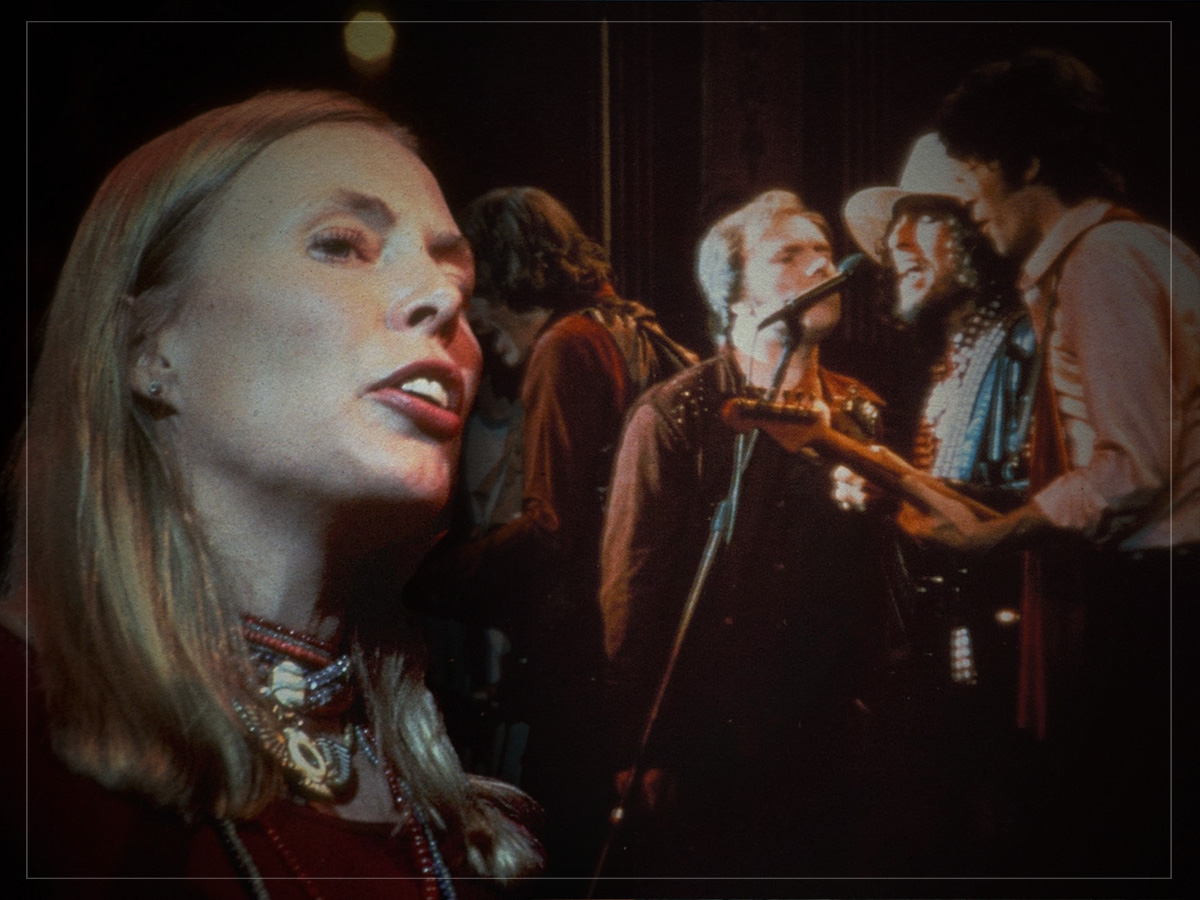
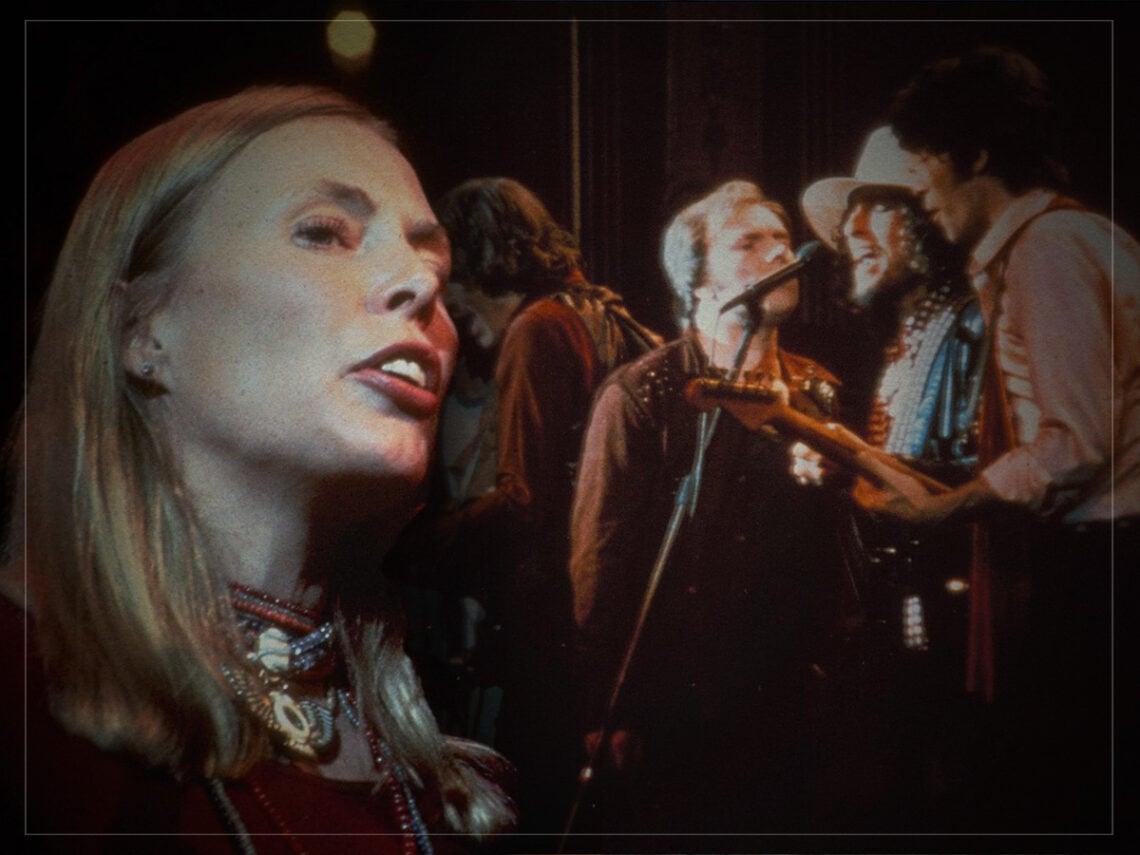
Upon the chorus, merging with the organ’s song, Mitchell sings backing vocals, appearing not onstage, but backstage, shown in The Last Waltz as a silhouette hidden in the shadows. The idea to have Mitchell sing without revealing herself was not her idea, but Robertson’s, wherein, during a rehearsal for the show, the guitarist saw an opportunity.
“When Neil Young sang ‘Helpless’,” Robertson recalled, “Joni did a high background vocal that sent shivers through the hall. In the show, Joni wasn’t going to perform until after Neil, and I did not want to give away her appearance before that.” Asking Scorsese to instead film her from behind the curtain. Robertson envisioned one of The Last Waltz’s most memorable moments.
“When Joni Mitchell’s high falsetto came soaring in from the heavens,” Robertson says, “I looked up and I saw people in the audience looking up too, wondering where it was coming from.”
Mitchell’s sorrowful vocals added yet another layer of emotion to the already mournful song with unprecedented impact, which she would follow up with her songs ‘Coyote’ and ‘Furry Sings The Blues’ from her then-forthcoming album Hejira, and a rendition of ‘Shadows and Light’ from her previous album, The Hissing of Summer Lawns.
Her performance is one that Robertson remembers with the image: “She seemed to glow in the dark”. Indeed, her presence on stage with The Band was a stellar moment, though he recalled the performance as possibly “the most challenging of the night”, explaining, “Her syncopation and chord structures kept you on your toes”.
Mitchell remained effortless, giving beautiful and timeless renditions of her soon-to-be classics, and her presence in The Last Waltz, whether it was behind the curtain or centre stage, remains one of the most core moments of the film, and showcases her as a masterful force.
Related Topics