

How much have house prices really gone up in your area in the past 20 years? The popular discourse would suggest that they have soared almost everywhere. And yet the reality is far more nuanced than that.
An analysis carried out for The Times of every parliamentary constituency in Britain has found that, while prices have indeed risen by an average of 95 per cent since 2005 in nominal terms, they have only gone up by a modest 9 per cent when inflation is taken into account.
Plus, when it comes to where specifically prices have risen in the past 20 years, Britain is deeply divided. In 26 per cent of constituencies — overwhelmingly in the northeast, Wales and parts of the southwest — prices are actually lower than where they were in 2005 if you factor in inflation. By contrast, in London, the southeast, parts of the Midlands and the northwest, they are likely to have grown considerably.

London has dominated house price growth over the last 20 years
GETTY IMAGES
So why the sluggish growth, when the ten years before — between 1995 and 2005 — were so buoyant? It’s all down to the lasting and uneven legacy of the financial crisis of 2007-08, and the fact that many areas are still yet to recover.
“Real house price growth has been muted and unevenly distributed over the past 20 years,” Lucian Cook, the head of residential research at Savills, says. “Tougher economic conditions heralded the end of inflation-busting housing growth.”
Where is hot and where is not since 2005?
London has dominated house price growth over the past 20 years, with 17 out of the top 20 parliamentary constituencies having the strongest growth, even after the consumer price index of inflation is taken into account. The areas that have grown the most in price are those that have either been the most desirable for wealthy families because of business, work or lifestyle opportunities, or are affordable for young professionals.
Kensington and Bayswater, and Walthamstow (a 67 per cent rise even after inflation, with prices reaching £1.85 million and £563,109 respectively) are the two strongest risers in the capital, while Tottenham (63 per cent), Hackney North and Stoke Newington (62 per cent), and Lewisham West and East Dulwich (61 per cent) are next in line.
However, the nature of price rises in London and the southeast has been vastly different from other areas of the country — and here the figures expose further layers.
In London and the southeast, most of the growth happened before 2015, at which point the capital maxed out on affordability and price rises slowed drastically — a factor exacerbated by rising stamp duty, particularly the one that hit landlords from 2016. Indeed, since the mortgage crisis from September 2022, prices have gone into reverse in many more affluent parts of the city, as buyers simply cannot stretch to purchase expensive homes with mortgage interest rates now averaging upwards of 4 per cent. “Growth since 2015 reached an affordability ceiling, with average incomes unable to keep pace,” says Cook.
By contrast, the pattern in some of the more vibrant areas of the northwest and Midlands — plus the southeast’s more affordable areas — is precisely the opposite. For example, the top performer for real-terms house price growth over the 20 years is Blackley and Middleton South in suburban Manchester — but here, price rises actually accelerated in the past decade, gaining 50 per cent of the area’s 71 per cent 20-year rise, as property investors and buyers started looking for value after being priced out of more expensive areas like London.
“Having seen lower than average price growth in the 20 years to 2015, it was well-placed to capitalise on the UK entering the second half of its housing market cycle and the resurgence of Manchester in particular,” says Cook.
Overall, however, London is the only area where there have been no constituencies with house-price falls over 20 years. And despite recent blips, the southeast has had the best of two decades of growth.
• UK house price tracker: will property values go up or down in your area?
Which areas have fallen the most?
At the other end of the scale, house prices have fallen the most, and consistently, over the past 20 years in areas where the economy has stagnated and deprivation has risen — leaving demand for housing weak. These areas tend to be overwhelmingly white, with poorer educational attainment levels, declining industry or tourism, and have older than average populations. Many are struggling seaside towns, where Reform are in the ascendancy.
To that end, broken down by region, 74 per cent of parliamentary constituencies in the northeast have suffered a real-terms decline in value since 2005. Another centre of decline is Wales (falls in 44 per cent of areas).
The worst-affected individual constituencies are seaside resorts in severe decline. Prices in Blackpool South, one of Britain’s most deprived parliamentary constituencies, have fallen 25 per cent in 20 years when inflation is factored in (sitting at an average of just £144,925), while other prominent coastal price-fallers are Southport (22 per cent dip, down to £240,272), Blackpool North and Fleetwood (down by 20 per cent to reach £178,755), and Scarborough and Whitby (down 18 per cent, to £224,985). All of these areas have prices well beneath the national average.
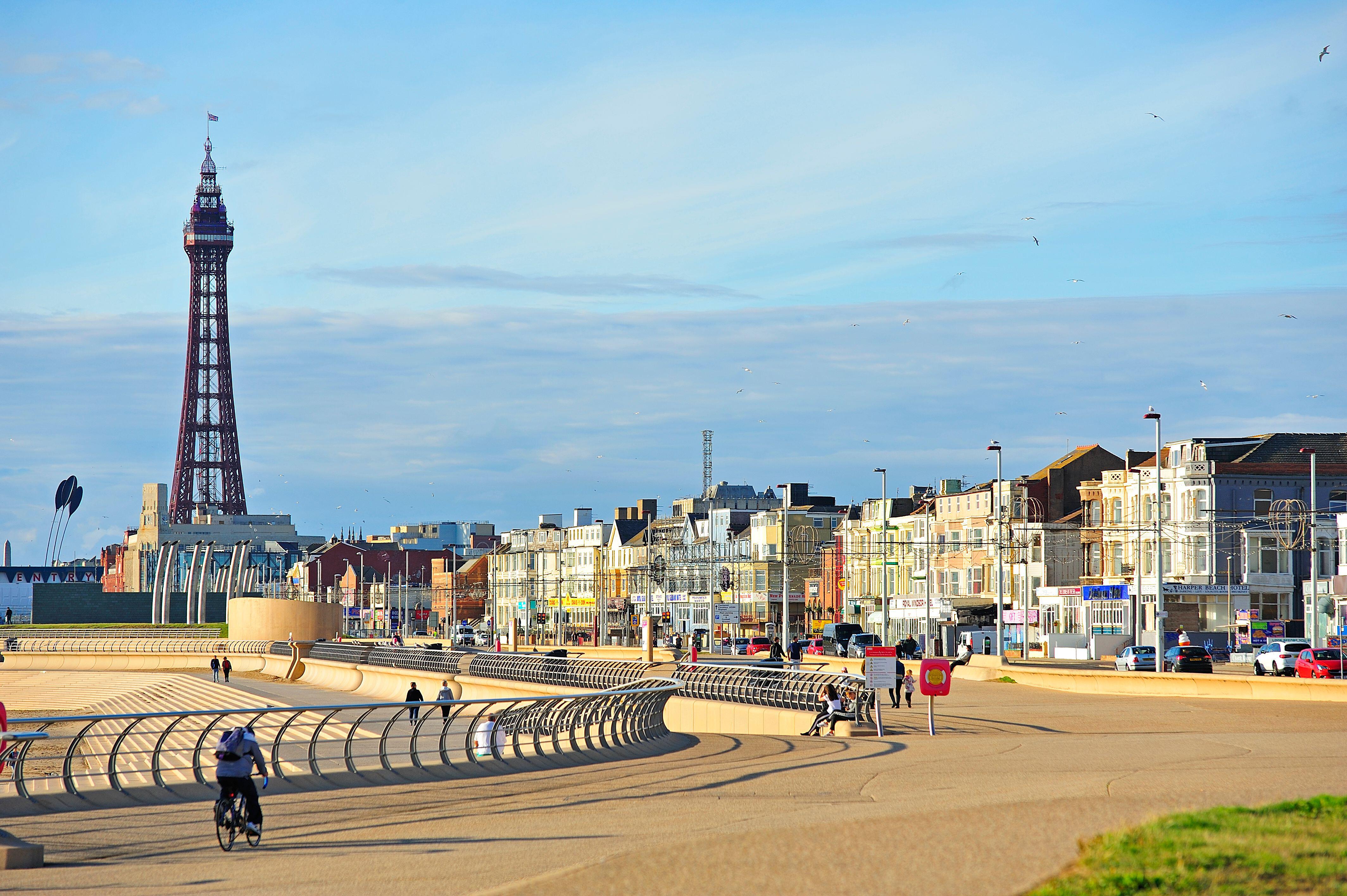
Prices in Blackpool South, one of Britain’s poorest constituencies, are down 25 per cent in real terms over 20 years
ALAMY
Elsewhere Aberdeen South, a market heavily linked to the fortunes of North Sea oil, has had the most dramatic change in fortunes within that two-decade period. Here, house prices rose strongly in the period 2005-15, but have fallen by almost 50 per cent in real terms over the past ten years alone, as Britain’s political energy priorities changed.
• Read more expert advice on property, interiors and home improvement
The impact of mortgages and taxes since September 2022
In London, a picture of subdued growth from 2015 went into reverse post-2022, as expensive mortgages made it harder for buyers to stretch to homes that are out of their reach. In swathes of London in recent years, prices have fallen steadily as a toxic combination of pricey mortgages, higher property purchase tax (stamp duty) — even for first-time buyers — and a lack of affordability have combined to slow sales. In the most expensive areas, this is most acute, as high-end buyers are put off by non-dom rules. First-time buyer mortgage payments now take up 34.3 per cent of their take-home pay, in contrast to 15.3 per cent in 1996, at the start of the housing boom.
Data from PropCast, a housing data analyst, found that some of London’s residential markets are in deep-freeze, with as few as one in ten homes advertised for sale being under offer in middle-class areas in August. This is the precise statistic in EC2 (Shoreditch and Hackney), and the picture is similar in NW4 (Hendon and Brent Cross), where there has been large-scale development, but only 12 per cent of homes up for sale are attracting interest. In W1 (Mayfair, Fitzrovia) it’s 8 per cent.
Some of previously booming London areas have experienced serious price falls since their post-Covid peak, with the City of London down nearly 20 per cent in three years.
And yet, there are affluent areas where special circumstances create a bubble of property market business. Cambridge, home to a huge science and technology boom in the past 20 years, has been a notably strong performer with a 28 per cent increase in prices after inflation.
PropCast says that this market remains buoyant even after mortgages went up — with 50 per cent of for-sale homes under offer here in August. This microclimate is likely to be sustained as the government invests in infrastructure around the so-called Oxford-Cambridge Arc, including by building a new town at Tempsford, between the two cities, and development taking place in a number of old military bases.