
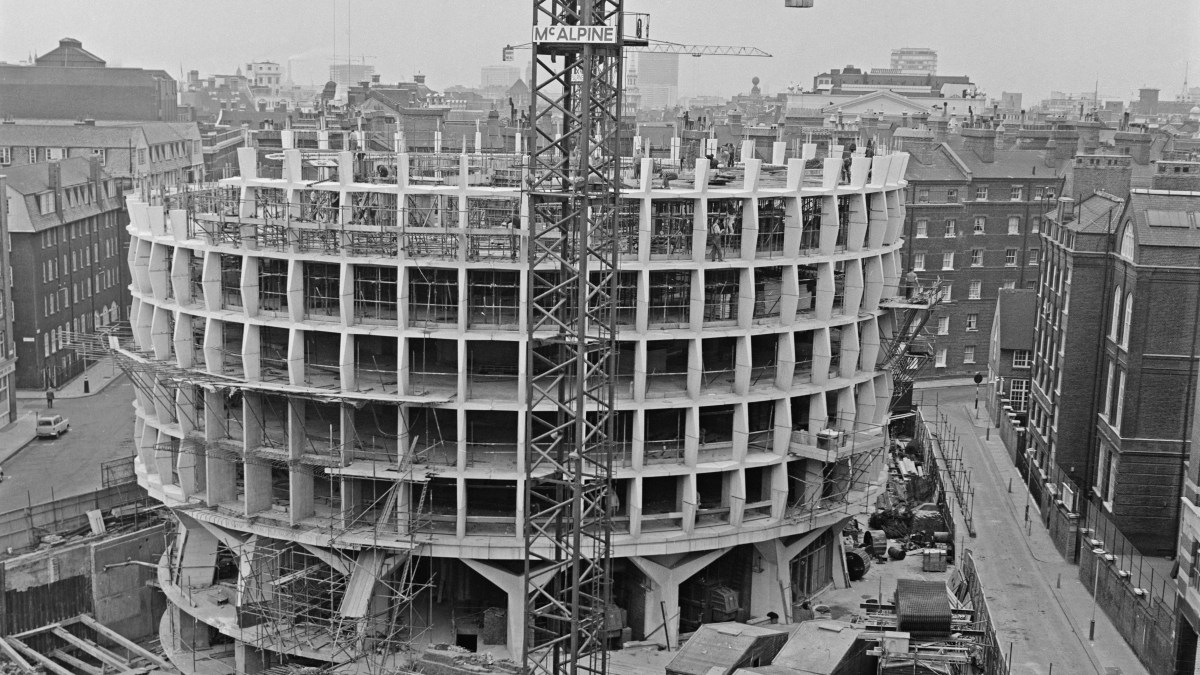
In a sea of glass boxes, choosing to renovate an unashamedly brutalist 1960s office building on Kingsway, in Holborn, is an unusual approach to London development.
Space House, a beacon of mid-century architecture built in 1968, has been given a 21st-century facelift. But in a sign of the increasing importance of reusing old buildings, rather than knocking them down, 90 per cent of the original structure — a distinctive 17-storey cylindrical tower linked to a rectangular block by an enclosed bridge — has been retained for a fresh generation of office occupiers.
Not everyone likes it. In fact, most people don’t, says Tyler Goodwin, the founder and chief executive of Seaforth Land, the retrofit-orientated Canadian developer behind the scheme. “If you create a unique building like this, then 25 per cent of people will love it,” he says. “The other 75 per cent will look at it and say, ‘I don’t get it.’ But I don’t really care about them. I care about the people who love it and who will pay a premium for something different.

The interior of Space House, which has been praised by Historic England as “one of the most important redevelopment projects of our time”
JAMES BURNS
“This is a quirky building,” he adds, waving a hand around the orbital ground floor reception where the furniture is in keeping with the time period — “vintage, but not kitsch” — and the music is exclusively played on vinyl. “In so many cases one office building is the same as the next, as the next. This one isn’t. It’s unique.” He pauses to take a bite out of an edible coffee cup courtesy of the building’s eighth-floor Clubhouse baristas — “We are trialling these. Less waste. They might be the next big thing. Although you only have about 45 minutes to drink your coffee before it starts to leak.”
The jury is out on the cups, then. But what about the building itself? A potent combination of modern amenities and ambitious sustainability standards wrapped up in an original 1960s façade, the former headquarters of the Civil Aviation Authority has been hailed as one of the coolest new office developments in London by the UK’s brutalist-phile Twentieth Century Society.
• The slew of new skyscrapers towering over London’s neighbourhoods
But the developers say Space House is about so much more than demonstrating the allure of vintage charm. Reopened at the end of last year after a four-year redevelopment, and praised by Historic England as “one of the most important redevelopment projects of our time”, could this once maligned grade II listed high-rise prove that retrofitting and repurposing London’s existing commercial stock is not only an environmentally conscious development choice but one that can be delivered to critical acclaim?
A tough sell
“I’m Canadian, and in North America the mid-century modern movement stood for postwar optimism and a manifestation of exuberance,” Goodwin says. “As a kid growing up in Vancouver, I used to go to the incredible HR MacMillan planetarium to have a smoke and watch the Pink Floyd skylight shows. My God, it was amazing. For us, these architectural landmarks were icons.
“During that same postwar period in the UK, staunch traditionalists wanted to bring back Georgian, Edwardian and Victorian design. That resulted in a really complex dynamic around mid-century style.”
Indeed, when Space House — so-called after the Apollo missions that dominated the headlines during its original construction period — first hit the London skyline in the late 1960s, the response was not one of wild exuberance.
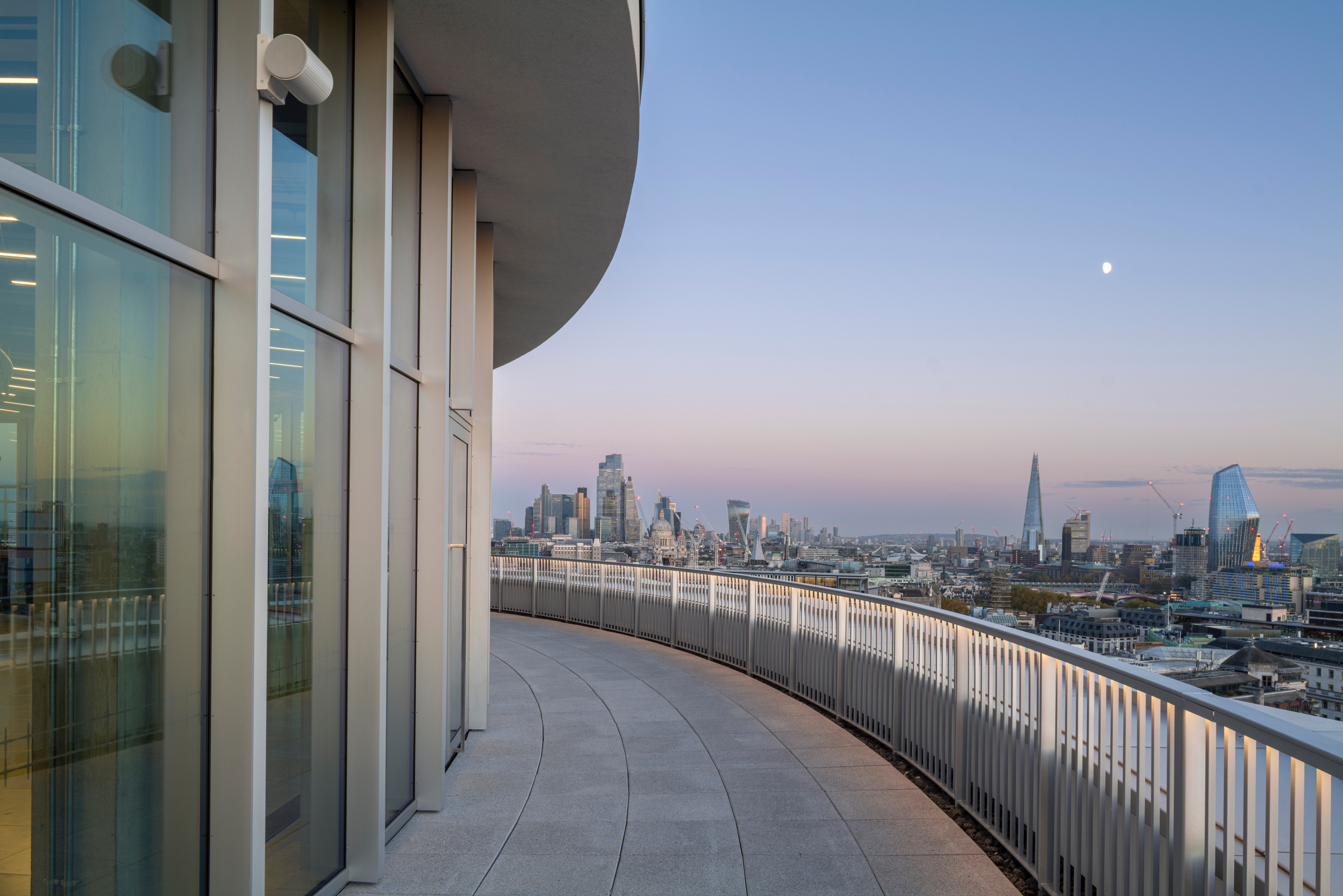
The building offers rooftop views across London
GARETH GARDNER
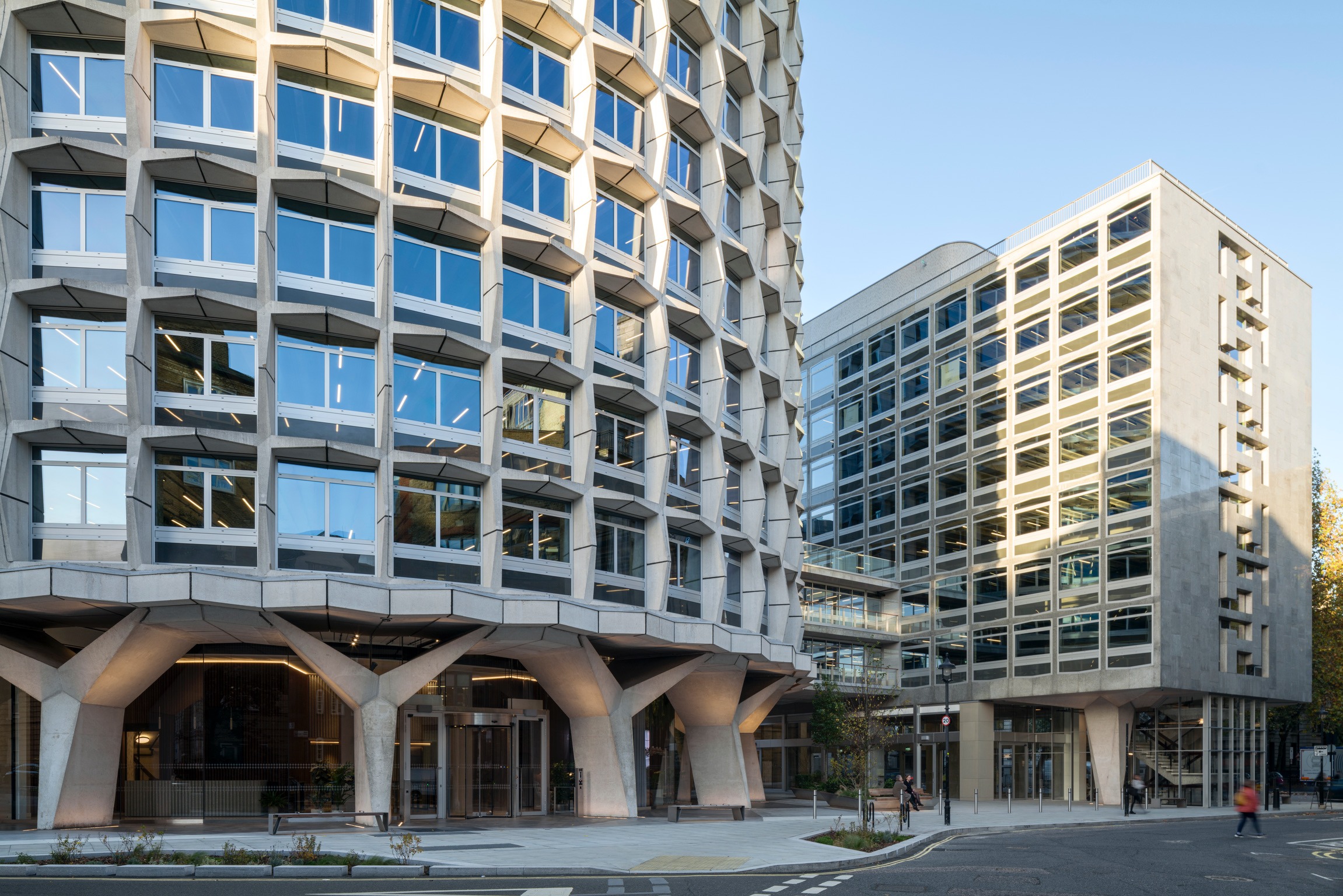
The response to the original building was initially lacklustre
GARETH GARDNER
Designed by Richard Seifert and Partners for the developer Harry Hyams, it was one of a clutch of city landmarks built in the wake of the 1950s commercial property boom bearing the Seifert stamp, including the NatWest Tower (now known as Tower 42) and Centre Point — all projects widely viewed as aesthetically insensitive at the time. Richard Seifert himself — a Swiss-British architect considered by many to be the man who introduced the high-rise office block to the UK — was no stranger to criticism. He even managed to get on the wrong side of Princess Margaret, who expressed her dislike of his Royal Garden Hotel, which overlooked her garden at Kensington Palace.
Now, nearly 60 years on, many believe that the tide of opinion is turning on London’s mid-century office buildings, and Seifert’s works in particular.
“Right now, London is whispering Richard Seifert’s name,” says Martyn Evans, the creative director at the developer Landsec. “His buildings are having their moment — and it feels like a rediscovery, a quiet celebration. Space House is striking, stubborn, futuristic. Its recent revival has peeled back decades of wear to uncover the sculptural brilliance that lay waiting beneath. This isn’t nostalgia. This is affirmation. Seifert’s buildings weren’t fleeting gestures or fashionable curiosities. They were designed to last and to matter.”
• Simon Jenkins: ‘London was a city of streets; now it’s a city of towers’
The power of provenance
Is this mounting appreciation for previously unpopular buildings being powered by sensitive, painstaking restorations such as Goodwin’s? Almost certainly. There are the environmental factors to consider — refurbishing rather than rebuilding Space House saved an estimated 10,000 tonnes of carbon emissions, according to the project architects Squire & Partners — but there is also much to be said for the power of provenance. The history, the original features, stepping off one of London’s busiest streets and walking into a lobby that feels like a Mad Men set (with less cigarette smoke and friendlier reception staff) — that all holds value.
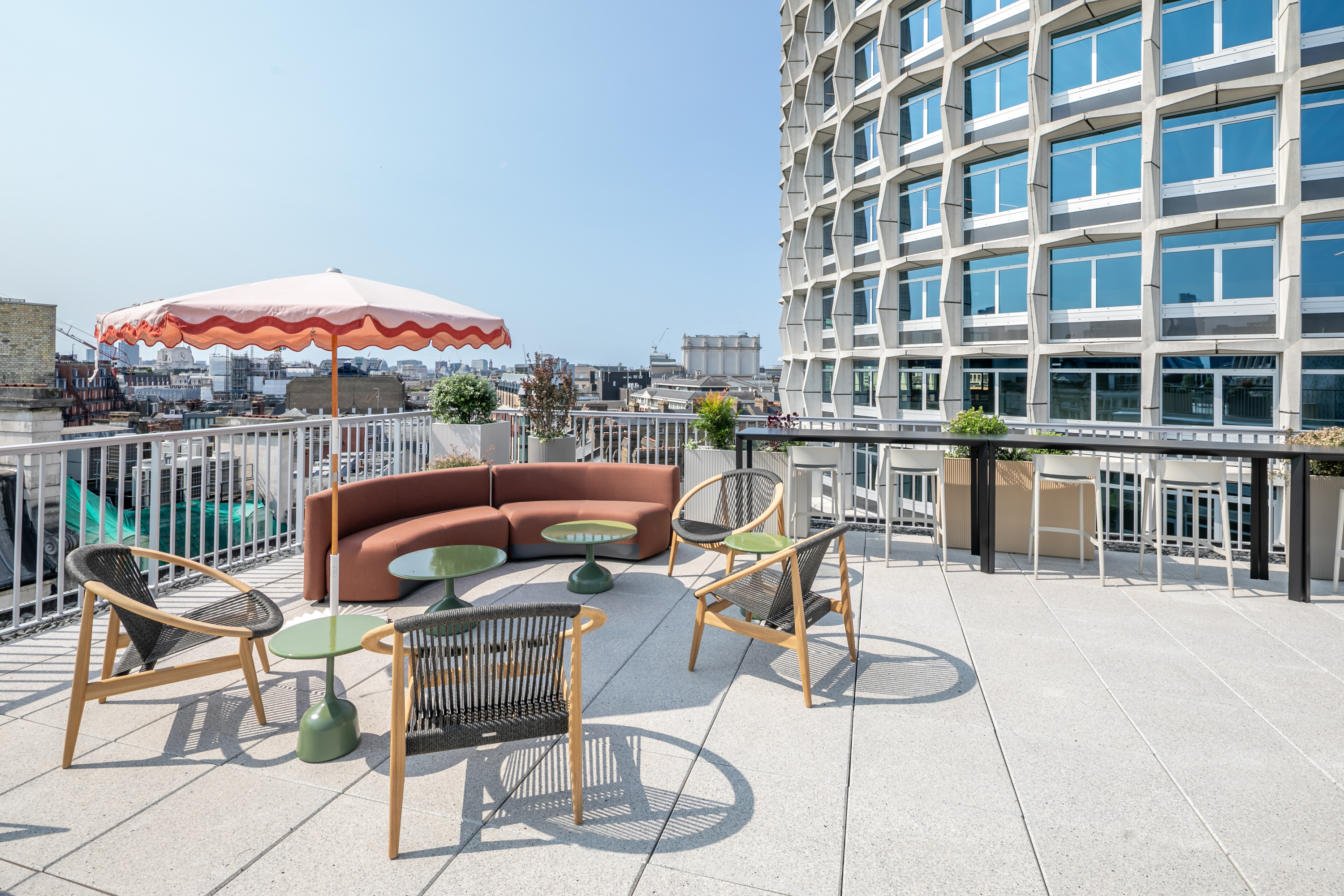
The Clubhouse on the eighth floor of Space House
JAMES BURNS
It wasn’t always easy, says Goodwin, who approached the redevelopment like an archaeological dig — constantly ready to evolve and pivot in response to discoveries made along the way. Such as when a piece of original terrazzo tiling was uncovered and promptly used as the inspiration for the lobby floor tiles, or when a stairwell was recreated using a photograph provided by the grandson of someone who worked on the original build. “This guy approached us during the public consultation period with this old black and white photo and we were like, holy shit, we didn’t even know that stairwell existed,” Goodwin says. “We had already designed something different, but we went back to Historic England and said, ‘We kind of have to do this.’ And so we did.”
Could Space House spark a resurgence of similarly effective restorations across the city? Maybe. But it will require a band of developers and architects with nerves of steel to pull it off. “I can’t tell you how many people sowed the seeds of doubt over the years running up to the completion of this project,” Goodwin says. “With a glass box building, people know where they are. This was not that. People really, really didn’t get Space House until the launch, when they came up to me and said, ‘Ah, we see it now. You’ve smashed it.’”