
Over 90% of the city’s drinking water comes from the underground aquifer, researchers say.
Prof Martin Smith, from the university’s school of applied sciences, said: “When polluted water from our roads seeps into the aquifer, it’s not just a scientific problem – it’s our drinking water, our children’s health, and our local environment at stake.
“Projects like the Wild Park rainscape make sure the water we rely on every day is safe.”
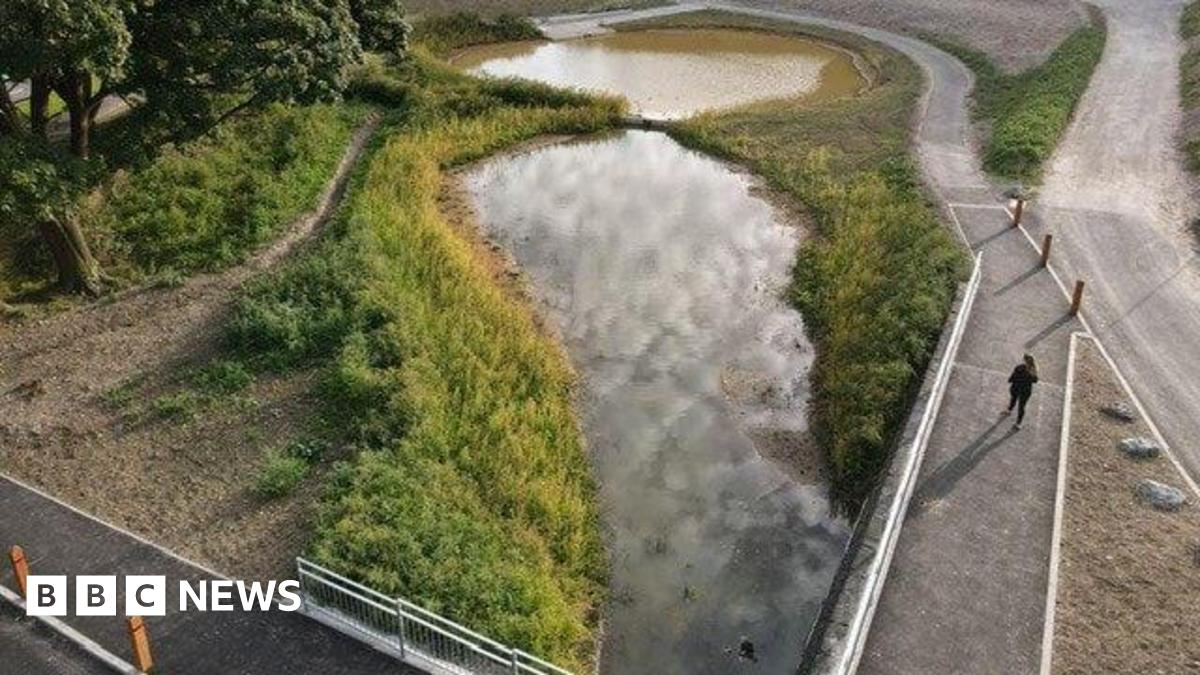
The project, which had been planned for six years, involved planting reed beds and wetland plants, trees, and a wildflower meadow to collect rainwater and filter out pollutants, according to Brighton & Hove City Council (BHCC).
Before construction began, the university team monitored runoff from the A27 and found water in the area contained higher levels of contaminants than recommended.
Lead, a remnant from older fuels, chromium from road markings, and polyaromatic hydrocarbons from tyres and asphalt were all present.