
GSMArena Team,
9 November 2025.
1. Introduction, specs, unboxing2. Design, build quality, handling3. Our lab tests – display, battery life, charging speed, speakers4. Software, performance5. Camera, photo and video quality6. The competition, our verdict, pros and consvivo X300 specificationUser opinions and reviewsReview comments (27)
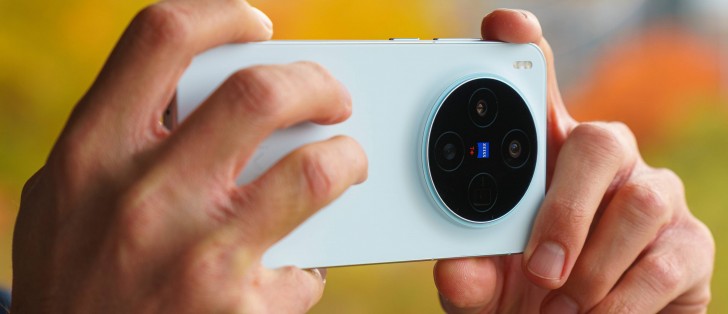
A total of four high-end cameras
The vivo X300 is a step down from the Pro in terms of hardware, but a solid update over the X200 Pro mini’s kit. It brings a new 200MP primary and a massively upgraded 50MP AF selfie cam.
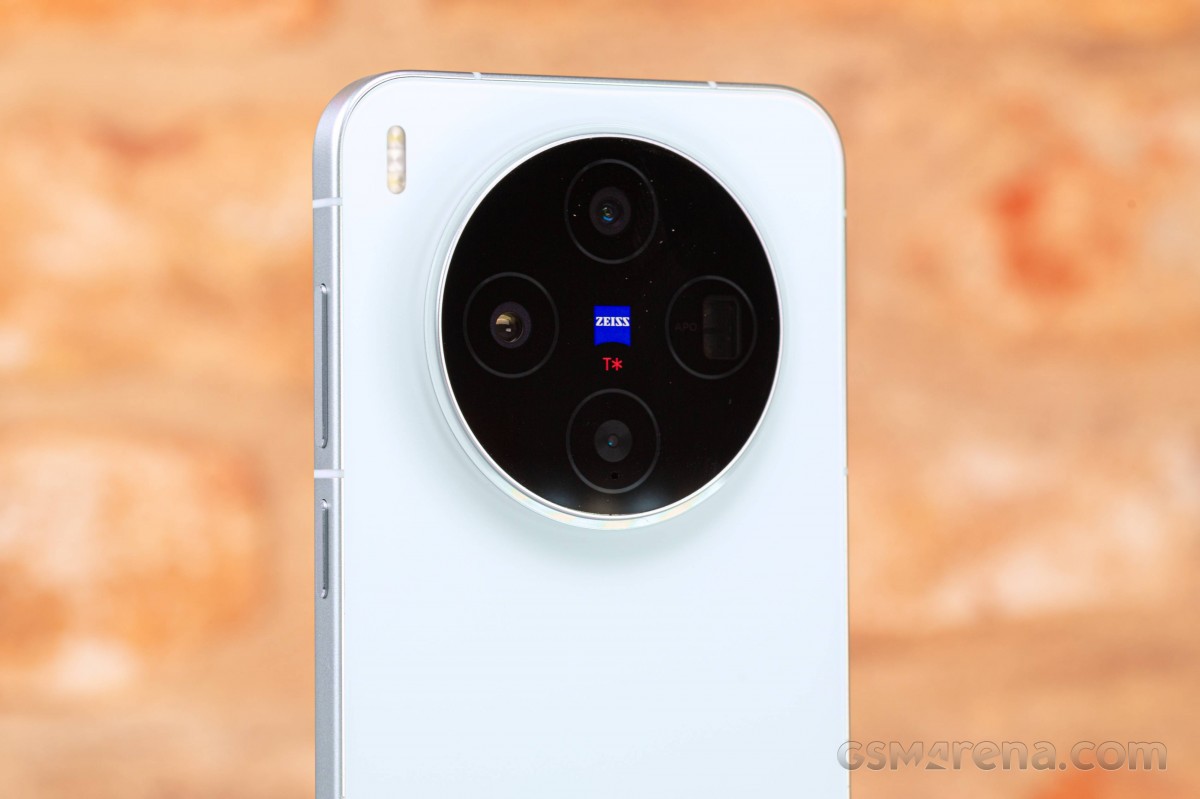
The main camera relies on a 200MP 1/1.4-inch ISOCELL HPB sensor (the same in X300 Pro’s telephoto).
The zoom camera uses a 50MP LYT-602 1/1.95-inch sensor behind a 70mm f/2.57 lens. The new chip supports vivo’s VCS technology and brings an 11.9% better noise sensitivity in low light. Despite having a smaller sensor, the 70mm optic earns the same rigorous Zeiss APO certification as the X300 Pro’s telephoto.
The selfie camera is a big upgrade over the old unit. It’s now a 50MP sensor with autofocus. It’s the same sensor as on the ultrawide camera on the back, just coupled with different lens.
Wide (main): 200MP Samsung ISOCELL HPB (1/1.4″, 0.56µm-2.24µm), f/1.68, 23mm, PDAF, OIS; 4K@120fps
Telephoto 3x: 50MP Sony IMX 602 (1/1.95″, 0.8µm-1.6µm), f/2.57, 70mm, multi-directional PDAF (14cm-∞), OIS; 4K@60fps
Ultrawide: 50MP Samsung ISOCELL JN1 (S5KJN1, 1/2.76″, 0.64µm-1.28µm), f/2.0, 15mm, PDAF; 4K@60fps
Front camera: 50MP Samsung ISOCELL JN1 (S5KJN1, 1/2.76″, 0.64µm-1.28µm), f/2.0, 24mm, AF; 4K@60fps
The X300 supports Cinematic Bokeh Video at up to 4k at 60 frames per second (first in the world, they say, but we haven’t been keeping track of this mode specifically). Also, both the wide and telephoto cameras have support for dual-channel electronic image stabilization at 4K up to 120fps. And for true pros, there’s now 10-bit Log video support at 4K at 120fps at all focal lengths.
Main camera – daylight
The default 12MP shots from the main camera are lovely. There is plenty of detail, no visible noise, and punchy but not over the top color rendition. The white balance is reliable and it gets consistently right every scene. We can also praise the wide dynamic range with well-developed extremes, but without crossing towards the artificial look territory.
We shot plenty of scenes with a ton of foliage and other random detail and we are happy to see that it looks really good and natural. The somewhat polished look across the photos doesn’t go overboard and overall, we think the vivo X300 has one of the best wide-angle cameras you can get in 2025.












Daylight samples, main camera (1x)
The camera snaps excellent photos of people, with likable skin tones, well-exposed subjects, and well-developed facial features, true to life. The dynamic range is adequate, the contrast – just right.




Daylight samples, main camera (1x), Photo mode
The portrait mode at 1x delivers outstanding results by increasing the already present bokeh effect in a very pleasant and believable way. We used the Zeiss color style for the photos, which dial back the contrast and the color saturation, but you can use the usual Vivid mode, too.




Daylight samples, main camera (1x), Portrait mode, 23mm
There are two high-resolution modes for the primary camera – 50MP and 200MP.
The 50MP option is recommended for scenes where you may want to extract the maximum detail – be it foliage, text, car plates, etc. The photos offer very good detail, and share the same color, balance, contrast and dynamic range properties of the standard output. Downsizing a 50MP image will make for a bit more detail than its default counterpart and will wash away the polished look.




Daylight samples, main camera (1x), 50MP
There is no point in going to the full 200MP, the images look like upscales from the 50MP variants.




Daylight samples, main camera (1x), 20MP
The 2x zoomed photos are solid and not only usable, but rather great. While the global sharpness has a minor drop, the detail is still good and the rest is as before – likable colors with reliable white balance, good contrast, wide dynamic range, and no noise. The photos still show a rather natural look.








Daylight samples, main camera (2x)
The zoomed photos of people are nothing short of marvelous. You have 2x 46mm for the regular Photo mode, and comfortable 35mm or zoomed 50mm for the Portrait mode. All three exhibit likable bokeh, but the Portrait mode gives you more blur and more creativity.




Daylight samples, main camera (2x), Photo mode 46mm




Daylight samples, main camera, Portrait mode, 35mm




Daylight samples, main camera, Portrait mode, 50mm
Telephoto camera – daylight
The native 3x output of the telephoto camera is impressive across the board – resolved detail, white balance, dynamic range, color rendition. The image processing is mature and aims to keep the natural look of random detail areas like foliage, bricks, decorations.











Daylight samples, telephoto camera 3x
The telephoto camera is as adequate as the main camera to capture people. The photos are not only excellent as far as quality is concerned, but also for the realistic bokeh that comes from the f/2.6 aperture lens.




Daylight samples, telephoto camera (3.5x), Photo mode
The portrait mode offers 85mm and 100mm zoom settings, which result in a bit softer subject, but you can play with the blur level and the colors, and the photos are still as believable and likable.




Daylight samples, telephoto camera, Portrait mode, 85mm




Daylight samples, telephoto camera, Portrait mode, 135mm
You can take 50MP images with the telephoto camera, but we see no point in using this mode – you may or may not get a tad more detail, but the hassle to edit the photo later is not worth it.




Daylight samples, telephoto camera (3.5x), 50MP
The high-resolution sensor is intended to allow you to zoom beyond the native 3x magnification. Vivo is offering 6x and 10x shortcuts, as well as 20x and 30x if you want to go that far.
The 6x zoom is quite alright with good overall detail and otherwise great properties. The sharpness can’t be on par with the 3x zoom, but it’s not that bad.










Daylight samples, telephoto camera 6x
The 10x shots are plenty usable provided you do not have abundance of random detail, which gets smeared or badly miscalculated.










Daylight samples, telephoto camera 10x
Closeups with telephoto
The zoom camera can focus as close as 20cm away and it can shoot some pleasant closeup photos. The samples we took are pleasant with a lot of detail, soft defocused background and saturated colors.




Close-up samples, telephoto camera 3x
You can shoot in 6x zoom, too, and if the right subject and background occur, those can be really great.




Close-up samples, telephoto camera 6x
There’s the usual vivo Super macro mode which gives you a manual focusing option in the viewfinder, plus it can add some computational blur on top of the optical one.
Ultrawide camera – daylight
The ultrawide camera on the vivo X300 takes magnificent photos with high amount of resolved detail, excellent sharpness, likable colors, high contrast and good dynamic range. Even if we could, we wouldn’t change a thing here.







Daylight samples, ultrawide camera
The full-res 50MP images make sense if you want to extract even more detail from the scene compared to the default mode. They are detailed and sharp, colorful, noise-free, and with superb dynamic range.




Daylight samples, ultrawide camera, 50MP
Selfie camera
We are happy with the upgrade of the selfie camera – from a 32MP QB fixed-focus imager to a 50MP AF one.
You can choose between three different FoVs for the front camera – 0.8x (20mm), 1x (24mm), and 2x (50mm). Naturally, the 1x and 2x are zoomed over the default wide-angle output (20mm).
The 0.8x and 1x photos are superb – detail is abundant, the facial features are lifelike, the colors are vivid, and the dynamic range is plenty wide. These are among the best selfies you can get nowadays.




Selfies, 0.8x




Selfies, 1x
The 2x zoomed selfies are quite soft, but still usable.




Selfies, 2x
Main camera – low-light
The main camera is a proficient shooter at night – the photos are clean of noise, well exposed, and with consistent white balance across all scenes. The detail is plenty, the sharpness is adequate, and the dynamic range is wide for nighttime purposes, stopping before the extremes.
The colors are slightly oversaturated and this may not be everyone’s cup of tea, even if they look generally pleasant.








Low-light samples, main camera (1x)
The 2x zoomed photos are average in detail and some smeared noise and/or detail is observable. Still, they are good and usable.








Low-light samples, main camera (2x)
Telephoto camera – low-light
The telephoto camera is as capable shooter as the primary one at night producing detailed photos with excellent qualities like noise reduction, contrast, dynamic range. The colors are still a notch over the top.








Low-light samples, telephoto camera 3x
The 6x zoomed photos are soft with halved detail, but usable in certain cases, we guess.








Low-light samples, telephoto camera 6x
Oddly, the 10x zoom may offer sharper (than the 6x option) photos provided there is not much of a random detail across them.








Low-light samples, telephoto camera 10x
Ultrawide camera – low-light
We liked the ultrawide images – they are well-exposed, detail is enough even if not as plenty as of the other cameras, the dynamic range is properly wide, and there is no noise. The colors are still over saturated.








Low-light samples, ultrawide camera (0.6x)
Video recording
The X300 has plenty of video recording capabilities. For starters, you get 4K30 and 4K60 on all four of its cameras – the three on the back, and the front-facing one. The main camera is also capable of 4K120 at 1x and 2x. The Pro video mode unlocks numerous other framerates – 24fps, 240fps (1080p), naturally, but also a variety of PAL options (25, 50, and 100fps). Pro mode allows for Log recording on the ultrawide and primary cameras with an optional real-time preview with a single preloaded LUT.
The default codec is h.264 but you can switch to h.265. HDR capture is available in all quality settings on all cameras.
There is ‘regular’ video stabilization available in all resolutions and frame rate combos (including 4K120), and it can’t be disabled (not even in Pro mode). There’s also ‘Ultra stabilization’ which offers added stability but limits your resolution to 2.8K (at 30fps works across all modes, at 60fps – on 1x and 2x).
You can check out the playlist below, which includes multiple video samples.
The vivo X300 is an excellent camcorder during the day. Its primary camera captures superb 4K videos with high amount of resolved detail, good sharpness, wide dynamic range and true to life colors. The ultrawide and default telephoto samples are equally good but slightly lacking in sharpness. The 2x and 10x videos are digitally zoomed, so these options should be reserved for emergencies only. The 60fps videos are also solid, with a minor drop in the global sharpness though.
The X300 low-light videos are good on the main camera, but average on the rest. The primary footage has likable rendition with good detail, exposure, lively colors and wide dynamic range. The ultrawide and tele videos are somewhat noisy, but still usable. The 2x and 10x digital zoom levels are not recommended.
Stabilization on the X300 is outstanding. The videos we shot handheld from a standing position from all three cameras look almost tripod-like.