
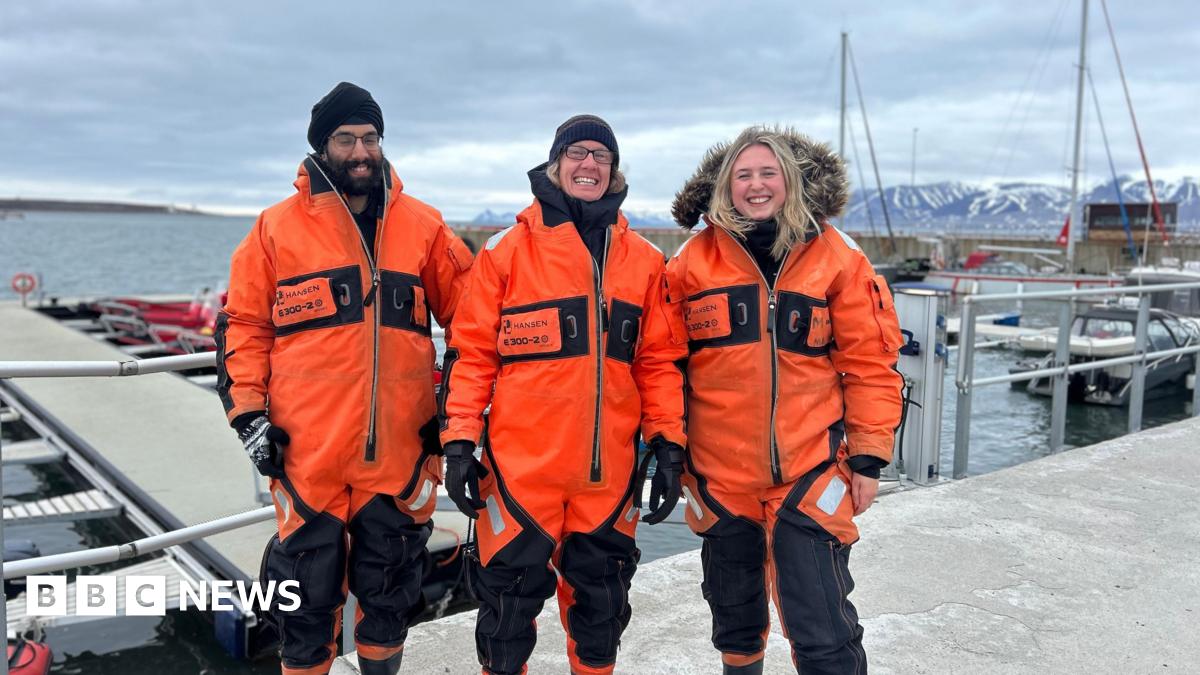
“My first thought flying over the fjords and seeing the ice shelves, I genuinely welled up because it was just so stunning,” she said.
“It really put into perspective that even though I sit behind a desk and look at data and we see these trends, it is really happening and it is really affecting people.”
Climate scientists say the Arctic is warming four times faster than the global average, so accurately tracking temperature changes is essential.
Dr Jasdeep Singh Anand said taking continuous measurements was “very challenging”.
“We’re talking about a region that is 5.5 million square miles and a mixture of open ocean, sea ice, tundra, so satellites offer our best method of viewing this area over a very very long timescale,” he said.
“However, because we’re measuring the temperature indirectly from space, we need assurance that these measurements are correct.”