
Governments failing to shift to a low-carbon economy will be blamed for famine and conflict abroad, and will face stagnation and rising inflation at home, the UN’s climate chief warned on Monday at the start of the Cop30 climate talks.
Simon Stiell, the executive secretary of the UN framework convention on climate change, addressed the gathering of ministers and high-ranking officials from nearly 200 countries, in a stark portrayal of the price of failure on the climate crisis.
“Not one single nation among you can afford this, as climate disasters rip double digits off GDP,” he said. “To falter whilst megadroughts wreck national harvests, sending food prices soaring, makes zero sense economically and politically. To squabble while famines take hold, forcing millions to flee their homelands – this will never be forgotten as conflicts spread.”
He told the opening meeting of the UN climate summit: “When climate disasters decimate the lives of millions, when we already have the solutions, this will never, ever be forgiven.”
The two weeks of talks, hosted by Brazil in the Amazonian city of Belém, will focus on reducing greenhouse gas emissions, setting a path for the transition away from fossil fuels, and providing the finance needed to protect poor countries against extreme weather.
Temperatures have already surpassed the 1.5C threshold agreed under the 2015 Paris treaty for the last two years, but only if that continues for several more years will the rise be judged permanent and a breach of the treaty. Some scientists argue it could still be possible to bring down temperatures to the threshold again, or close to it, through measures such as cutting the powerful greenhouse gas methane and by a rapid switch to low-carbon technologies.
Simon Stiell: ‘Not one single nation among you can afford this.’ Photograph: Bernd Arnold/The Guardian
Stiell said: “The science is clear: we can and must bring temperatures back down to 1.5C after any temporary overshoot.”
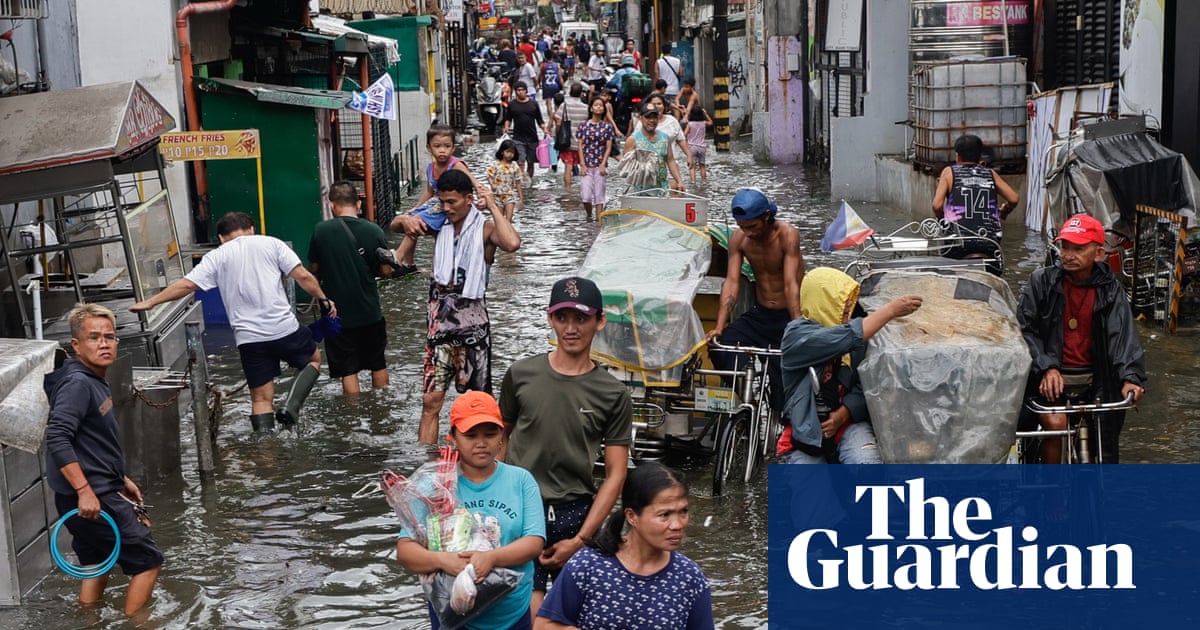
He said the world was already witnessing the impacts of extreme weather, in stronger typhoons and hurricanes, and droughts and floods. The effects were global, he added, causing inflation on commodities such as food.
Seizing the opportunities of low-carbon energy, which is now cheaper than fossil fuels across 90% of the world, would bring jobs and economic growth, said Stiell. He added: “Those opting out or taking baby steps face stagnation and higher prices, while other economies surge ahead.”
Though Stiell warned against “squabbling”, the first day of the conference is likely to be dominated by disagreements over what should be on the agenda for the talks.
Under UNFCCC rules, countries must mutually agree the focus of the summit. Ahead of the start, there were 145 potential agenda items under discussion.
Although the host nation, Brazil, has been working for months to try to ensure countries reach agreement quickly on the agenda, there is still plenty of potential for dispute. Stiell told delegations: “Your job here is not to fight one another – your job is to fight this climate crisis, together.”
André Corrêa do Lago, the president of Cop30, said the process of working out the agenda in this way should not be seen as a problem. “This is a very legitimate way for countries to demonstrate their concerns,” he said.
One of the key discussions will be over the “nationally determined contributions” (NDCs) submitted, which are so far grossly inadequate, and would lead to global heating of 2.5C. The Alliance of Small Island States (Aosis) has asked for an agenda item that would address this, and require the conference to resolve a series of measures to do better. Ilana Seid, Palau’s ambassador and the chair of Aosis, said: “The 1.5C target is our north star. We need to say that collectively we are falling short on that and we need to have a response.”
But that is likely to face severe opposition, particularly from countries in the like-minded developing countries grouping that includes Saudi Arabia and other petro-states. They prefer to interpret the Paris agreement’s dual goal – of holding temperatures “well below 2C” while “pursuing efforts” to stay within 1.5C – as allowing temperatures to rise to 2C, even though several meetings since Paris have reaffirmed 1.5C as the key goal. Scientific advice is that dangerous “tipping points” leading to irreversible changes could be triggered above 1.5C, and before the 2C limit is breached.
The same countries may also oppose attempts to set out a “roadmap” on how to ensure the world fulfils the promise to transition away from fossil fuels, which was made two years ago at Cop28 in Dubai.
Rich countries will also fall under the spotlight for their failure to cut emissions fast enough, and to provide sufficient finance for vulnerable developing countries. Last year, they promised $300bn in financial assistance, as part of a wider goal of $1.3 tn per year for poor countries by 2035, but without a clear plan on how to meet either target. They will be under pressure to flesh out those plans this year.
The Brazilian president, Luiz Inácio Lula da Silva, stressed the importance of emissions reductions during this Cop, even though it is not on the formal agenda. “We need a roadmap so that humanity … can overcome its dependence on fossil fuels,” he said.
He also raised the importance of reducing deforestation and putting people at the heart of climate action, particularly Indigenous communities. Lula launched a fierce attack on those who spread fear and attacked science – an apparently veiled reference to the US president, Donald Trump, who has constantly called climate action a “hoax” and recently bullied smaller nations into weakening action on maritime emissions.
In a defence of the Paris agreement, Lula said the world would be doomed to catastrophic warming of 5C by the end of this century if it were not for multilateral negotiations. “We are moving in the right direction,” he said, but emphasised the need for more urgency in implementation of policies.
“I hope the serenity of the forest inspires in all of us much-needed clarity of thought,” he said.