
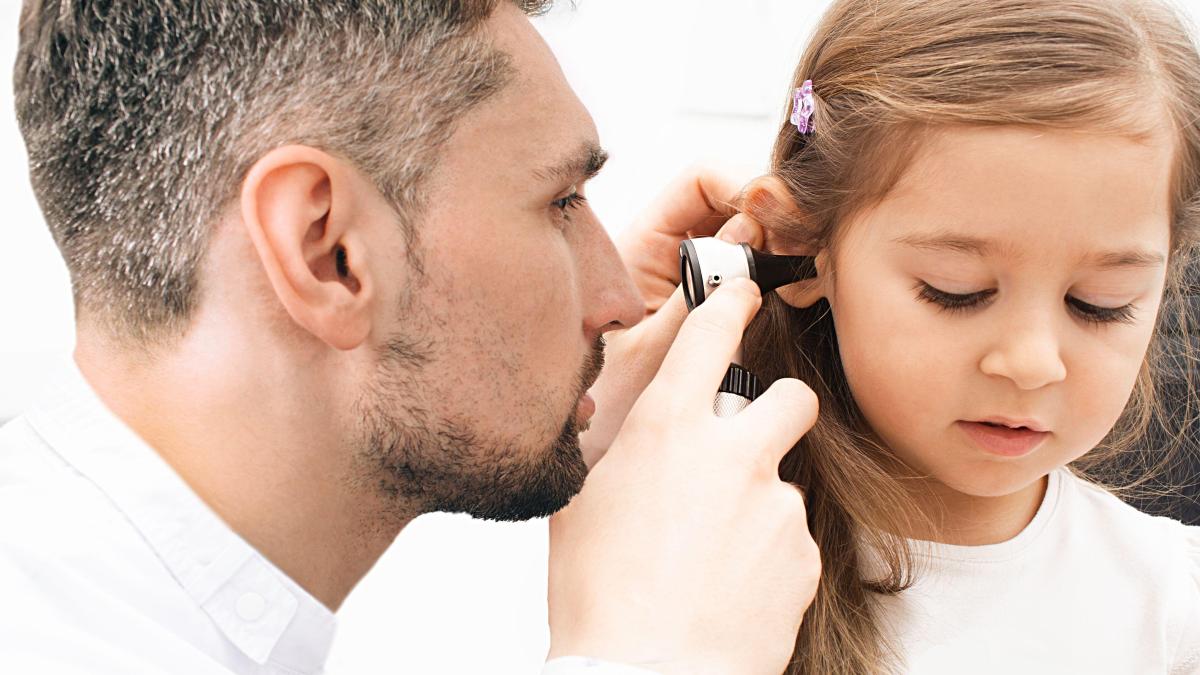
Hundreds of deaf children were misdiagnosed by the NHS for more than a decade with many left permanently disabled, a government inquiry will reveal.
Dr Camilla Kingdon, one of the UK’s leading paediatricians, was commissioned by Wes Streeting, the health secretary, in April to investigate how systemic failings in paediatric audiology services across England were allowed to continue for so long.
There are 139 audiology services across England with many found to be carrying out poor testing on children, misinterpreting results and leaving those with hearing loss waiting too long to be seen.
Deaf children were wrongly given the all-clear when many needed hearing aids or cochlear implants.
Denied any sound to stimulate their brain, a child’s development can be severely affected, causing problems with speech, behaviour and learning. Kingdon said there were examples of children being incorrectly labelled as autistic or classed as learning disabled rather than getting help for their hearing problems.
Kingdon said the errors were a “disaster” for the affected families whose children, she said, will never achieve their full potential.
She called for changes in the leadership at NHS England, which she blamed for ignoring warnings, and urged Streeting to get a grip.
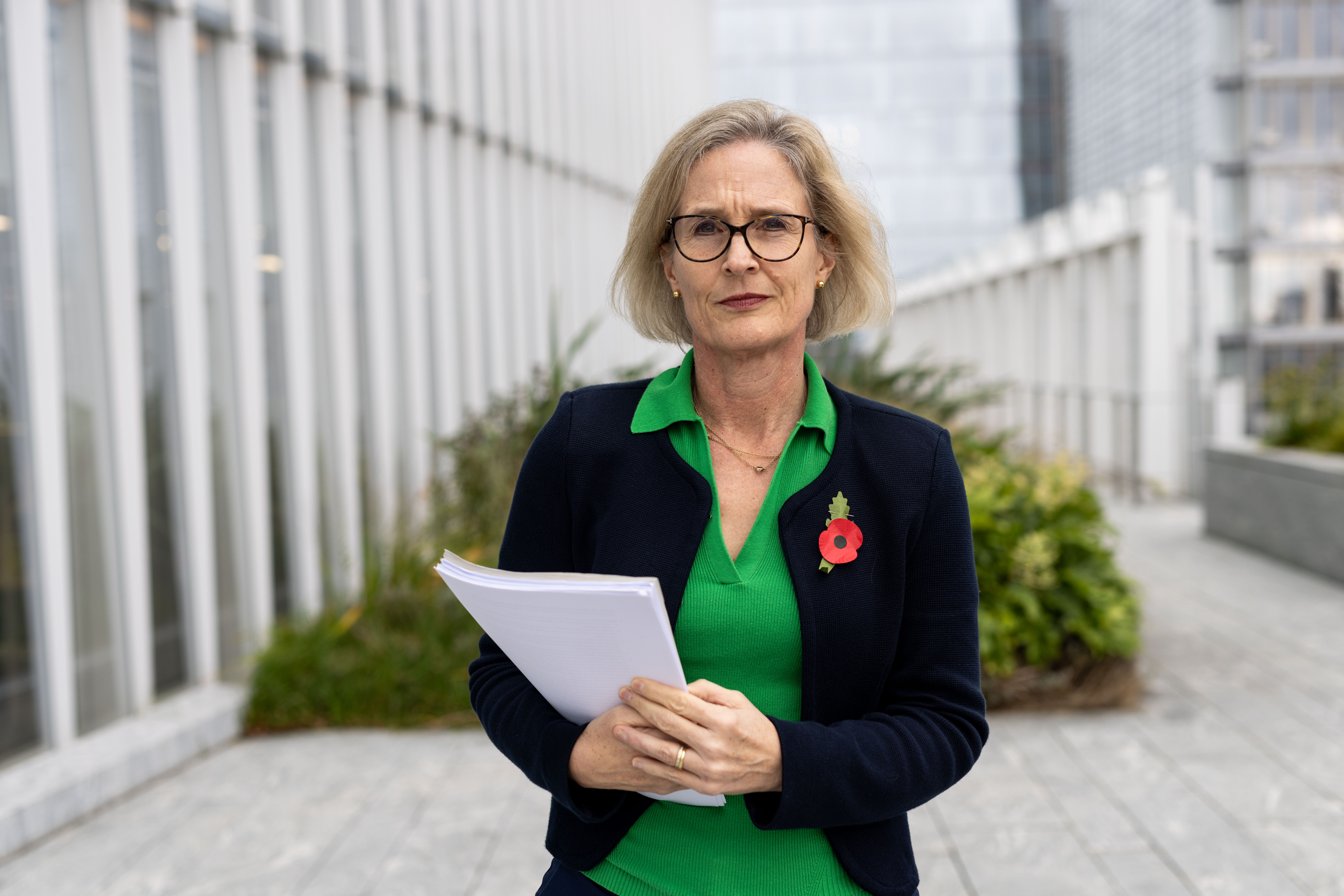
Camilla Kingdon said she was “emotionally devastated” after talking to affected families and staff
VICKI COUCHMAN FOR THE SUNDAY TIMES
“For every year we delay fixing this, more children will come to harm,” she said. “I submitted my report to the Department of Health in August, it is now mid-November. Even in those three months, more children will have been missed. Their life chances forever changed.”
She said 309 children are known to have been harmed after being misdiagnosed by audiology services between 2018 and 2023 but this was probably an underestimate because the problems dated back to 2008. “I’m not confident in anything about this programme. More children could have been harmed,” she added.
Kingdon qualified at the University of Cape Town in 1989 before moving to the UK where she has trained in paediatrics. She now and works as a consultant neonatologist at Guy’s and St Thomas’ NHS Foundation Trust in London.
Her report, due to be published on Monday, reveals how the NHS failed to invest in training, equipment or staff. Even when the problems were identified, NHS England was too slow and failed to properly fund efforts to investigate despite repeated requests by its own staff.
The crisis in paediatric audiology came to light after a similar scandal in Scotland, where NHS Lothian was found to have failed children in December 2021.
NHS England began investigating its own services in 2022, initially identifying five problem hospitals, but took a further 18 months before formally informing ministers in September 2024 — and only then because The Sunday Times was about to publish an investigation, Kingdon’s report will say.
Although she found no evidence of an intent to cover up, she said it was clear senior figures had failed to grasp the seriousness of the challenge.
Requests for funding to investigate the problems “went all the way to the top of [NHS England] and got bounced back and then [NHS England staff] tried again”, Kingdon said. She added: “I think it was a complete failure to recognise what they were dealing with.”
To work as an audiologist, staff complete a healthcare science degree and postgraduate training in audiology. Kingdon found some audiologists received as little as half a day of training before being able to work with children.
Her report will call for audiologists to be professionally registered and only allowed to work in the NHS if they meet certain standards. Currently anyone can call themselves an audiologist with many working in the NHS not registered with any organisation.
Testing services are carried out in hospitals and local community hubs. Testing should be carried out in soundproof specialist rooms using calibrated equipment that measure the response to sound.
In an example of the poor state of services, Kingdon said one centre was working with equipment that was 30 years old. Requests for funding to replace it had been rejected every year.
In another, nurses were forced to carry out the sensitive hearing tests in an office, alongside a printer, with workers regularly walking in to collect paperwork. This put the quality of the tests in doubt.
Kingdon’s report will confirm how senior NHS leaders, including Dame Sue Hill, the chief scientific officer for England, ignored a warning letter sent in 2013 by staff working for the newborn hearing service. It detailed failings that had already been found at that stage and warned plans to scale back quality checks would mean errors would not be spotted and children would be harmed.
“There’s absolutely no doubt that the warning signs started in 2013 by experts in the field,” Kingdon said. “It wasn’t just chatter, it wasn’t just gossip. These were formal letters, formal communications with the relevant people within Public Health England and NHS England and yet they were ignored.
“I could find no evidence any action was taken.”
This was a dereliction of duty by NHS leadership, she said, adding senior individuals needed to be held to account. She declined to name names but said: “If we want this to be a line in the sand and for things to now improve, then I think it needs a different set of people to be leading it.”
It was likely the true number of harmed children would be much higher than the NHS was prepared to admit, she said, and some would never be reached. As of this month, a total of 2,581 children were identified as possibly being at risk between 2018 and 2023, with 768 children yet to be reviewed.
Kingdon, a former president of the Royal College of Paediatrics and Child Health, said she had been left “tearful” and “emotionally devastated” after carrying out more than 100 interviews with NHS staff, managers and a dozen affected families.
She will say in her report she was left “angry” by repeated references to child audiology as being a “Cinderella service”.
She said: “This is a classic example of what I see so much of in children’s health care. Children just don’t get the traction in this country when it comes to really prioritising their health needs. When you call it a Cinderella service, it almost gives you permission to not worry so much about it.”
Kingdon said parents repeatedly told her they had to fight and go into battle for their children with a third saying they felt they were not listened to. In one case a family paid £6,000 to have their child treated privately. Others complained of being made to wait more than a year for time-sensitive appointments.
“We’re the sixth richest nation on the planet,” Kingdon said: “One in 1,000 children will be born deaf and this is a basic service that every country in the world is expected to deliver. I had made an assumption as a paediatrician working in this country all my life that this was fit for purpose and a process that was happening safely, just ticking over in the background. And I discovered it wasn’t.”
Streeting said he had ordered NHS England to do more to ensure every child is reviewed.
He said: “Dr Kingdon’s report exposes a decade of unacceptable failings, not just in the NHS, but in what is now my own department too.
“This isn’t just about children’s hearing services: it’s about what happens when parts of the NHS fall through the cracks because nobody is watching closely enough. As a first step, we will soon be publishing a new framework, using audiology as a case study, to identify canaries in the coal mine and prevent failures across the health system as a whole.”
Meghana Pandit, NHS England medical director said: “We thank Dr Kingdon for her work on this review, which highlights serious structural and systemic issues have led to some children’s hearing services letting children and families down. This is completely unacceptable, and we are sorry for the distress and impact this has caused to parents, children and young people.
“Children deserved better — and that is why we have taken concerted action to improve these services for families and appointed two national speciality advisers for hearing and associated conditions who will oversee the expert clinical support we provide to drive improvement and accountability in local services.”