
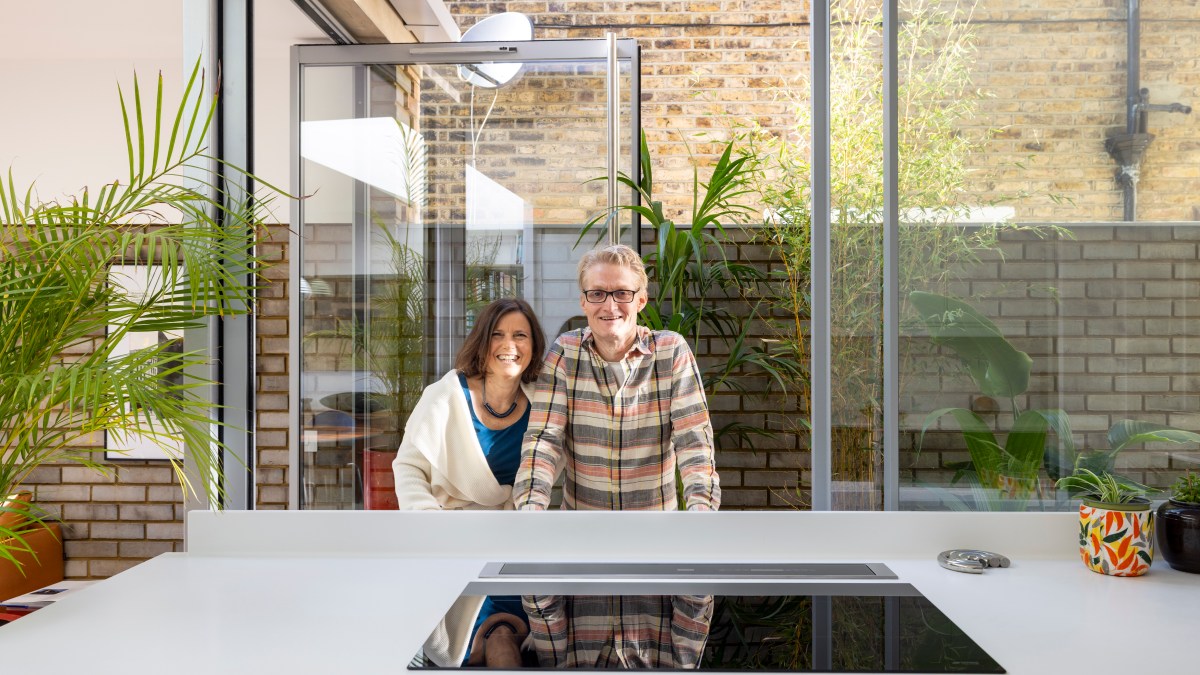
Filling in the side return is the done thing for owners of many terraced houses. A side return, for the uninitiated, is that narrow strip of land in the back garden, between the side of the kitchen and the back of the living room. From above it creates an L-shape footprint and is often seen as dead space, an obvious gap for homeowners to fill when extending.
Steve Cox did things differently, however. In an unusual move, when the architect and his wife, Sabina, extended their townhouse in Balham, south London, they elected not to fill in the side return, sacrificing 107 sq ft of floor space. Instead, he left most of the side return empty. But at the end, the new extension bends right to enclose the strip, creating a courtyard.
The problem with filling in the side return, according to Steve, is that you can’t put windows on the side boundary of terraced houses. By turning the strip into a courtyard, the Coxes brought light deep into the floorplan, and were able to retain the back window of the living room, so as not to lose light there. The courtyard also maximises cross-ventilation: there is a glass pivot door on the far end; a sliding glass window on the side behind the kitchen worktop; and the living room window at the front (the fourth side is the boundary wall). On a summer’s day, with all the glazing open, it’s like being outside.
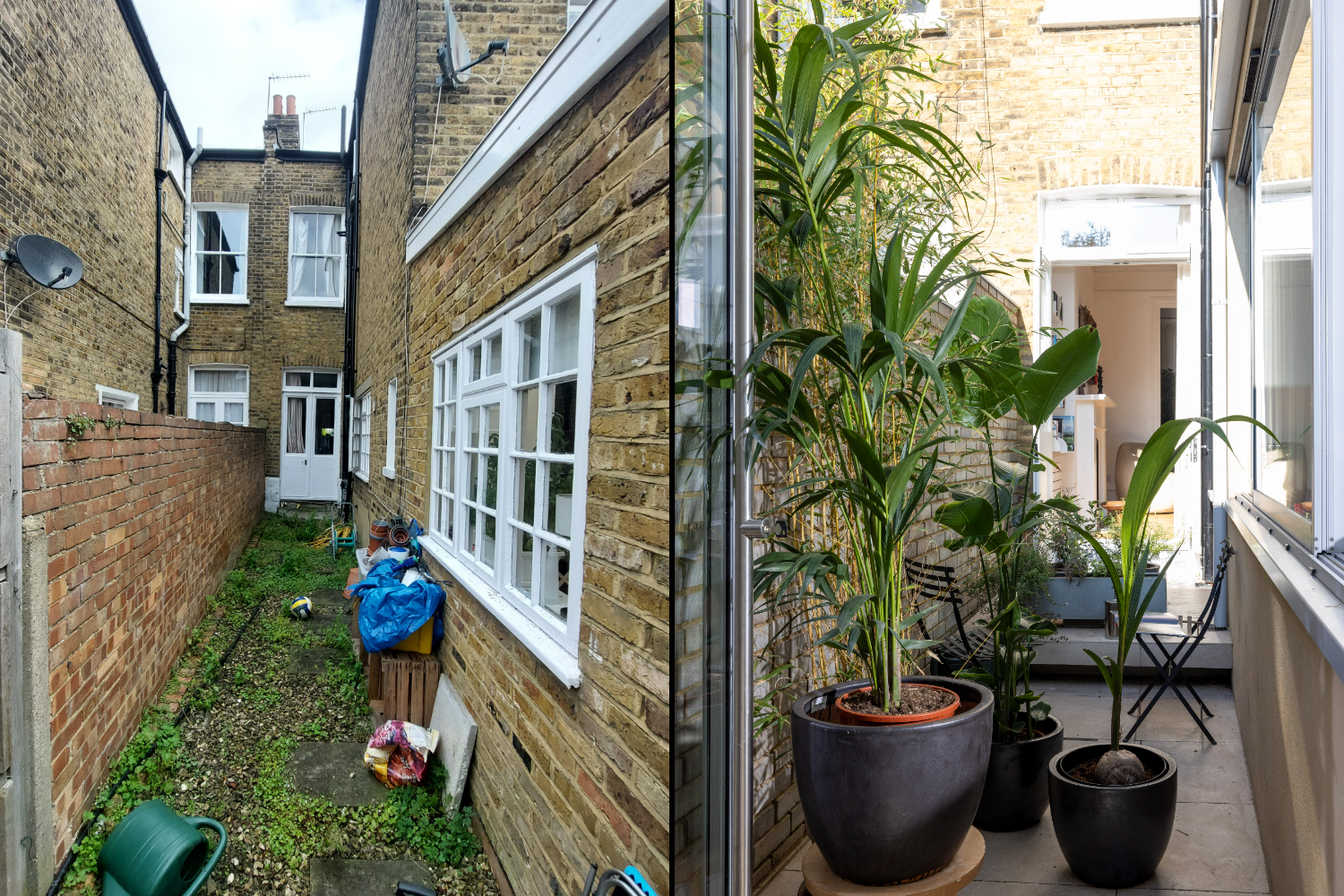
The Coxes’ side return, before and after
“I realised that we weren’t going to gain anything functionally by extending to the boundary wall,” Steve says. “We’d have the same number of units. So instead of the standard Victorian house where you are staring at a wall when you’re washing up or cooking, not only can we look out on a side garden, but we can cook alfresco in the summer. Coupled with all the greenery at the back, it really feels like nature is part of the house.”
• Garden design for beginners: my 10 simple rules
Light and alfresco vibes were something that Sabina craved, so in addition to the courtyard, they have a 3.8m-long skylight. “I’m Italian, so I really like the light and the sun coming into the house,” she says.
“Sabina really needed it, coming from Rome and finding Victorian houses dark, and Britain grey,” Steve adds.

A 3.8m-long skylight floods the kitchen with natural light
VICKI COUCHMAN FOR THE TIMES
To that end, instead of painting walls in the usual off-whites and Elephant’s Breath beloved of London townhouse owners, they’ve painted them in Dulux Diamond Pure Brilliant White.
• We thought outside the box to extend our homes
For the past 15 years, the couple had lived in a smaller, darker house, with a smaller, north-facing garden, nearby. They had kept their eyes out for a property on this street, which has 25m-long south-facing gardens, perfect for light-filled extensions to accommodate them and their two teenage children, Alex and Sara. They found a fixer-upper for sale in 2023, and bought it for £1.5 million. The house had four bedrooms and two bathrooms. After extending the kitchen and converting the loft, they now have five bedrooms, two bathrooms, and two WCs.

The minimalist kitchen opens directly onto the courtyard
VICKI COUCHMAN FOR THE TIMES

Sliding glass transforms the kitchen into an outdoor space
VICKI COUCHMAN FOR THE TIMES
Previously an HMO (house in multiple occupation), the house needed an overhaul, so they spent £38,000 putting in new electrics and wiring, and £50,000 replumbing and putting in a new gas central heating boiler (a Worcester Bosch Greenstar 8000, which cost £1,980; Steve wasn’t sure at the time that air-source heat pumps would work in a Victorian house). They spent £4,200 putting in underfloor heating, but decided against fashionable concrete floors because they are expensive and may crack. Instead they spent £1,680 (or £48 per sq m) on Domus porcelain tiles on the kitchen floor, taking advantage of a 40 per cent trade discount.
They splashed out in some areas — £36,000 on the Maxlight glass (including £7,920 for the glass courtyard pivot door, plus £1,000 for the skylight) — saved on others (£4,000 for Ikea kitchen units), and sometimes went down the middle (£3,960 for the Corian worktops — pricier than laminate but cheaper than granite). When they ripped up carpets they found original Arts and Crafts floor tiles and Victorian pine floorboards, so they cleaned and repaired them. Upstairs they favoured well-priced engineered timber flooring by Boen (£74 per sq m). They chose pale ash floors, which go better with minimalist decor than oak.

With the courtyard key to the project, it was crucial to use high-quality glass
MATT CLAYTON
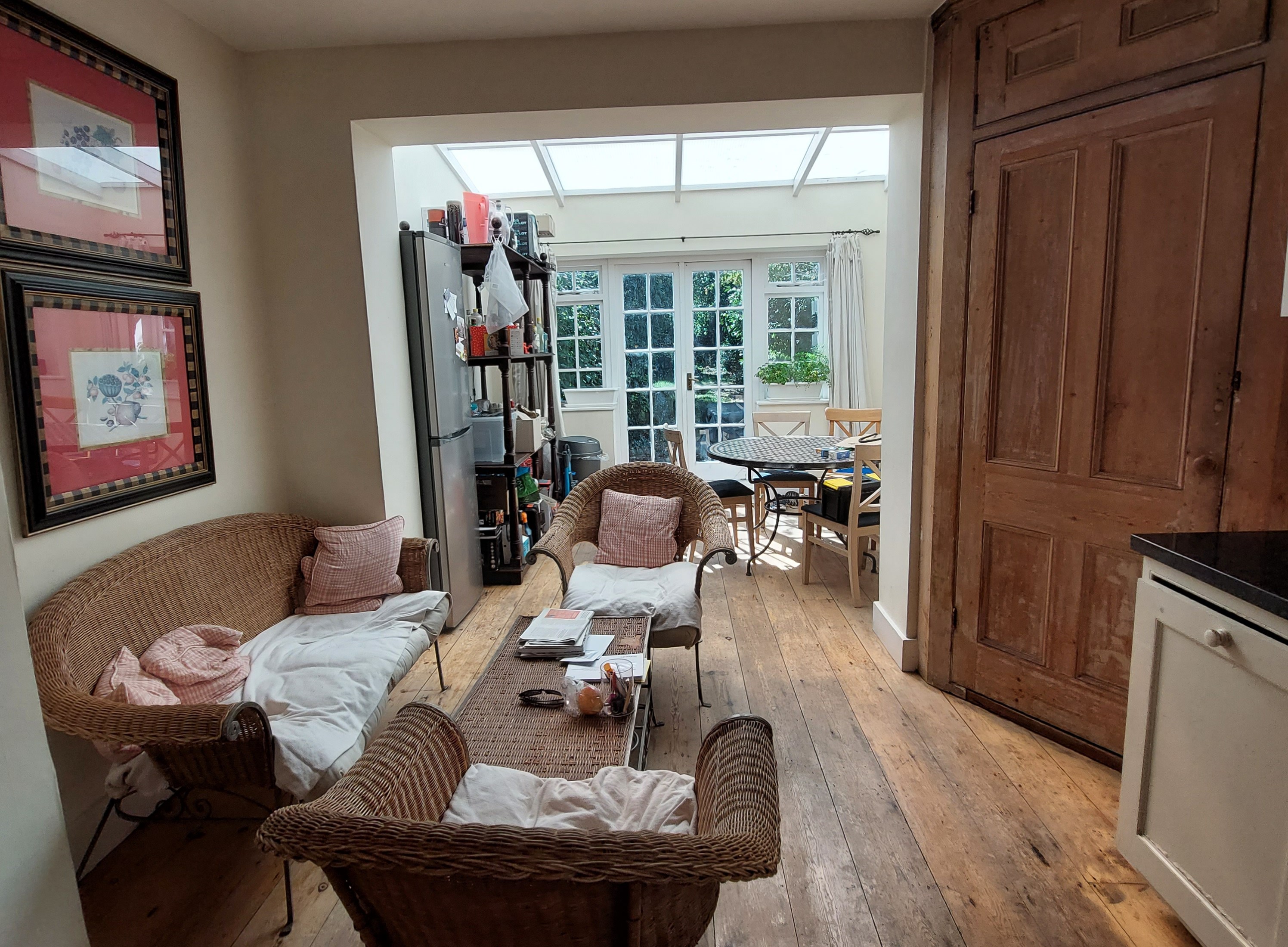
Inside, before the extension
But with the courtyard key to the project, it was crucial to use high-quality glass. Steve chose solar-coated double-glazed panels and doors by Maxlight, which are British-made and manufactured. “If there’s something that’s going to go wrong on projects, it’s usually around the glazing,” he says. “Using a local firm means that, if something goes wrong, at least you’re not waiting for two months for it to come from China.”
• Britain’s most inspiring home extensions
Cox Architects has used Maxlight several times — Steve liked that the company came and measured the window opening twice before installing. “It’s tempting to order the glass before getting the opening measured, but that can be a false economy because when it comes, it might be wrong,” he says.
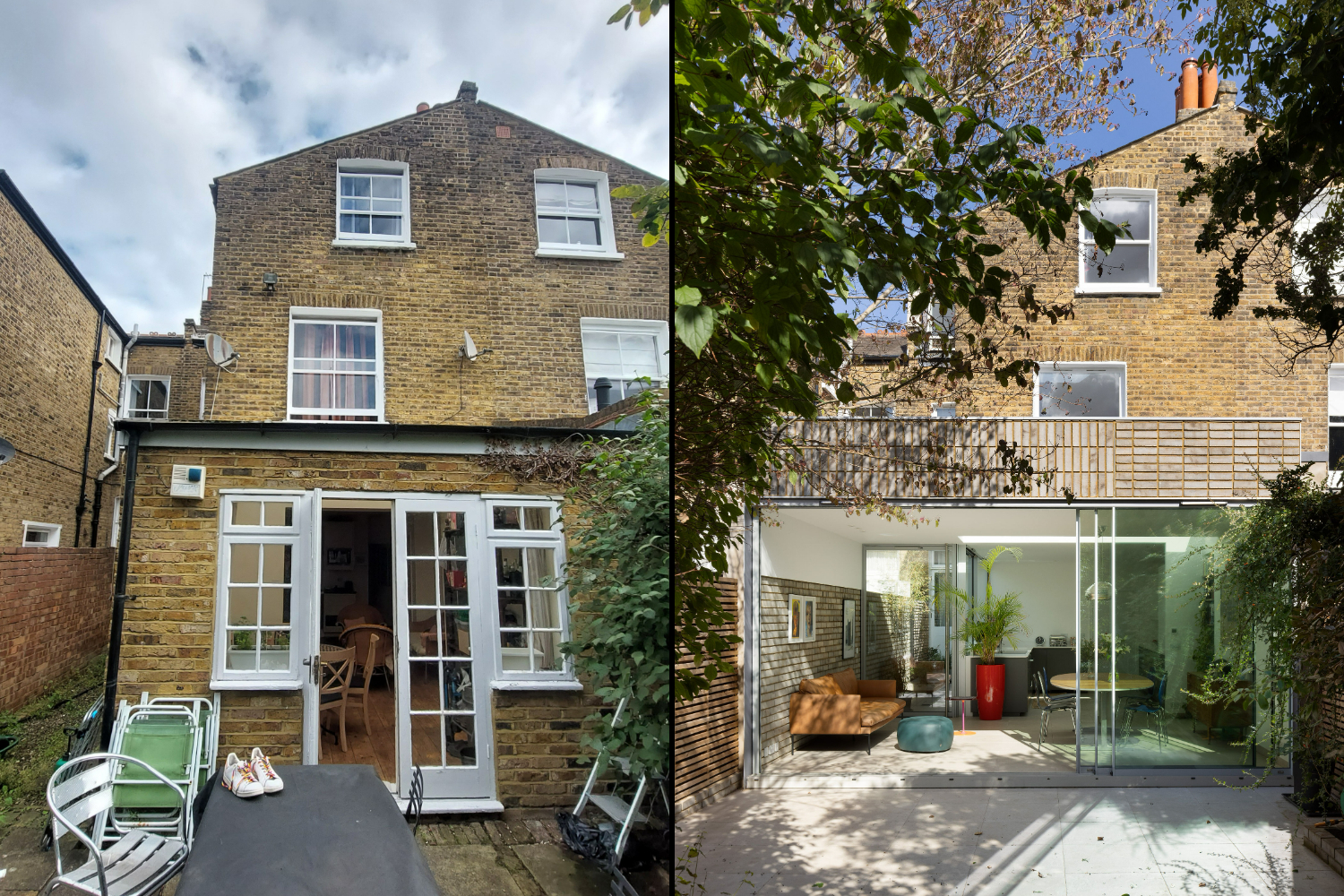
Before and after: Steve clad the extension in textured Sisteron bricks

The courtyard made planners sympathetic to the modern design
MATT CLAYTON
They opted against bifold doors at the back. It would have meant five panels obstructing their view when the doors were closed. The sliding doors have only three glass panels and two slender glazing bars, and open two-thirds of the way.
Steve clad the extension in textured Sisteron bricks by the German firm Wienerberger, found in a reclamation yard and sold at a 40 per cent discount (£2,348).
The brutalist-style bricks offered a stark contrast to the house’s Victorian stock bricks. The contemporary design was a risk in a conservation area, but Steve says the courtyard made the planning department more sympathetic — leaving a gap against the boundary wall is less imposing for the neighbours.

The the courtyard blurs the line between indoors and out
VICKI COUCHMAN FOR THE TIMES
The planners also allowed him to replace the single-glazed original sash windows with double-glazed replicas by Greenwood Joinery (about £21,000 for nine windows).
The biggest challenge of the project was converting the loft. The ceilings weren’t high enough, so they lowered the ceilings in the bedroom below by six inches. Adding 120mm of Celotex insulation to the roof warmed things up, part of the £12,854 plus VAT that they spent insulating the roof, wall and floor.
The total build cost came to £450,000 including VAT. They’ve added 335 sq ft. The couple aren’t sure they would make the investment back if they sold today, but profit wasn’t their motive.
If it had been, they wouldn’t have sacrificed 107 sq ft for the courtyard, they would have filled in that side return. But this was about quality of life — they’re here for the long haul. “Walking in here: the white, the light, the green, it’s relaxing,” Sabina says.
It’s made cooking a pleasure for Steve. “I spend a lot of time at the hob. So to be able to open those glass doors fully into the courtyard, it feels really satisfying.”
The message is clear: if you’ve got a side return, don’t fill it in. Turn it into a courtyard.