
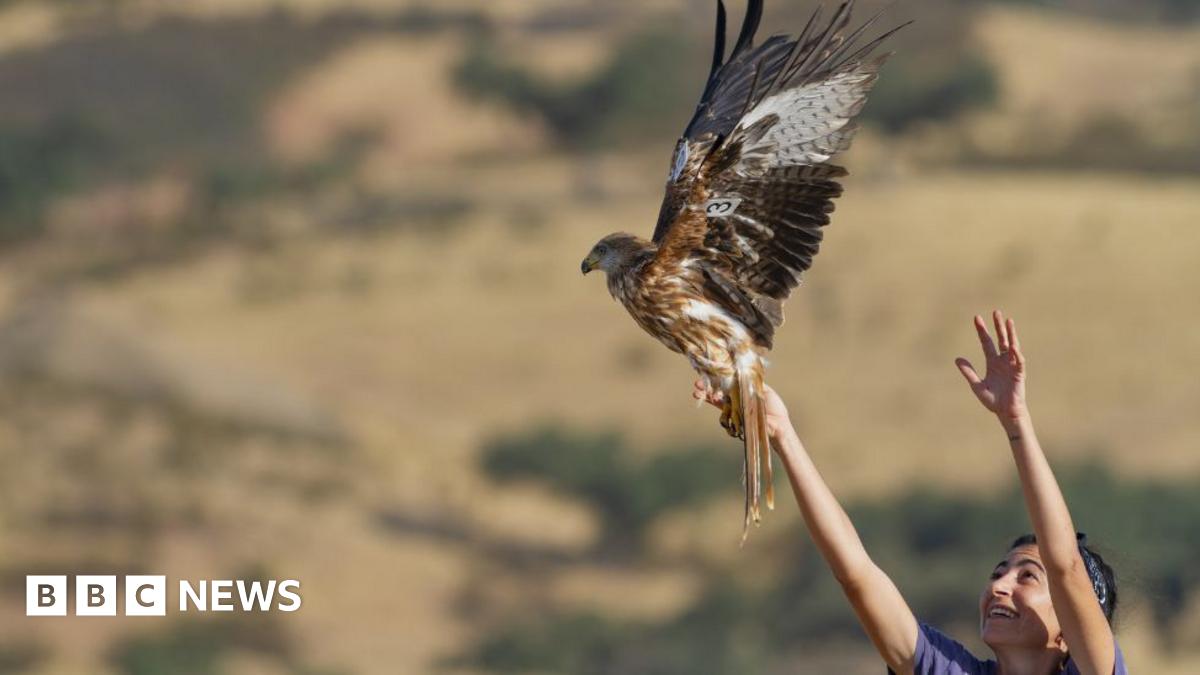
“Now is the exciting moment when they are in the wild, they can learn to search for food, to avoid predators, to interact with other species in the area… thanks to the GPS we are going to closely monitor these birds we have released,” Alfonso tells me.
But this is a nerve-racking time for AMUS field technician Sofia Marrero.
“The mortality for raptors in general is really high during the first years of their life,” she says. “So now it’s a little bit hard because you already know that some of them may not get to sexual maturity, so it’s a bittersweet moment.”
In fact, only about a quarter of the red kites released during the project have survived.
The biggest threat is from predators and natural causes.
In 2023, eagle owls were responsible for killing half of the project’s newly released red kite chicks.
In response, the team at AMUS adapted how and when the chicks are released to increase their chances of survival.