
A 64-year-old cyclist, who was saved by a defibrillator after suffering a heart attack on a notorious East Lothian hill, has set a new personal record on the route.
James Martin, a semi-retired banker from North Berwick, was cycling with his friends through Gifford when he keeled over.
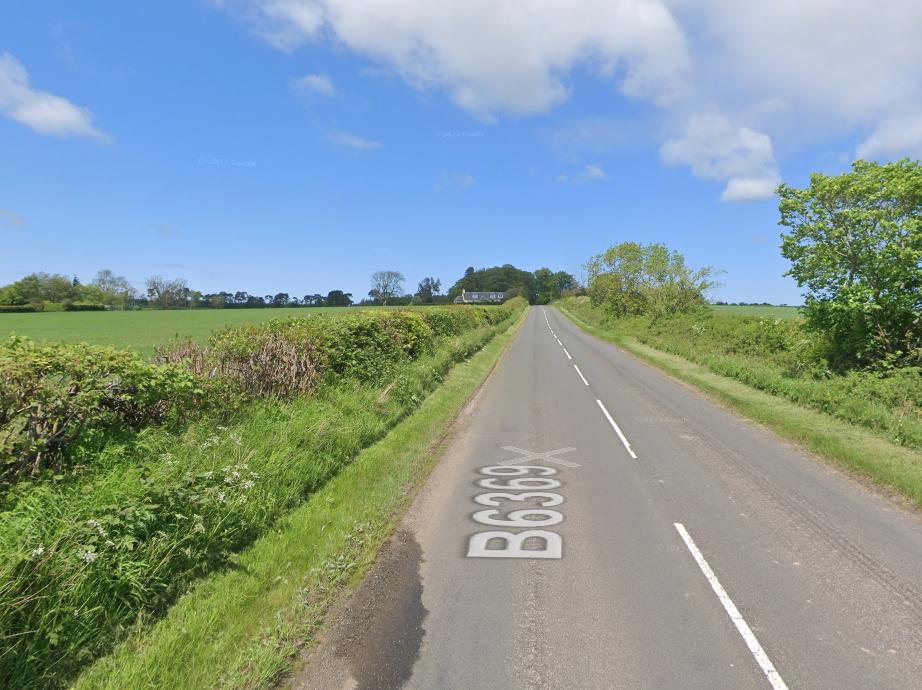
“We set off at 9:29 and I was dead by 11am. My friends and I had stopped for a coffee and were leaving the village on a notorious hill called Cockles Brae.
“I recall leaving the Lanterne Rouge Café, but can’t remember anything else until 12 hours later. I’m never the quickest on the hills and I was at the back, when my friend saw me keeling over. My heart had just stopped, and basically, I just fell off.”
In the fall, Jamie had broken his shoulder and sustained bruised ribs from the CPR. ECG tests a few months later show that his heart muscle is fully recovered after a stent was fitted into his blocked artery.
“I’ve since been back up there and set a personal record,” he said. “I now have more blood going around my body than I have had for a few years because that artery was just getting steadily blocked.
“But I know how lucky I am to have lived to tell the tale.”
Gordon Steel, a retired distiller, was one of the people who performed CPR. He said, “The real lesson for me was keep going. We worked on his for at least 20 minutes, and it was a team effort.
“We gave him four or five shocks with the defib, and each time his heart started but then his pulse faded away.
“The last time we did it, he sounded like a diesel engine, and then his breathing started with some strength and his heart began to beat unassisted. I was very glad to hear he made a full recovery.”
> Passers-by use defibrillator to save cyclist’s life after he is knocked off bike
James also added that “I was aware from an NHS Scot Heart Trial in 2023 that I had small calcification particles in my artery, and I was taking a statin and aspirin to manage this. Perhaps the cycling incident outcome might have been catastrophic otherwise.”
He recently met with the people who saved him, Gordon Steele, and Eleanor Hulme, a retired medic and member of Gifford Community Council, who maintains the village defibrillator.
Eleanor said: “I happened to be passing the scene as the incident occurred, so of course I stopped. Jamie’s friends had already arranged for the defib, which is attached to a wall opposite a popular Gifford café, to be brought to the scene.
“He was in very deep trouble and had five shocks from the defib. Several times, when no shock was advised, he was kept alive only by the chest compressions.
“Given the rural location, the ambulance arrived remarkably quickly within 20 minutes; however, there is no doubt that the defib helped save his life.”
Eleanor is a ‘Circuit Guardian’, a volunteer who ensures that the defibrillator is ready and kept up to date. This is part of ‘The Circuit’, a national defibrillator network that helps emergency services locate the devises.
Jamie was able to meet and personally thank the people who saved his life, as well as the NHS Ambulance Service, Medic One team, and the Royal Infirmary Trauma team.
The meeting was organised by the British Heart Foundation Scotland to encourage people to register their defibrillators and help improve emergency response.
David McColgan, Head of BHF Scotland, said: “Every second counts when someone has a cardiac arrest, so it is wonderful that help was on hand quickly for Jamie.
“His extraordinary story is another reminder about the importance of fast access to public defibs, and it’s great news that over 10,000 are now registered on The Circuit in Scotland.
“It is vital that emergency services know where defibs are so they can direct people to access them quickly and easily. Worryingly, all too often when someone has a cardiac arrest, the location of the nearest available defib is unknown because many of these lifesaving devices are not visible to ambulance services.”
Every minute without CPR and defibrillation reduces the chance of survival by up to 10 per cent. Members of the public can find their nearest register defibrillator at defibfinder.uk